







I just returned from the Asian Science Park Association conference in Shiraz, Iran.[1] One Science Park official asked me, “Companies in our park cannot get any cooperation from the big petrochemical firms. What can we do?”

Without question American CO2 emissions have plummeted, even after being driven into more coal usage due to political concerns about nuclear energy. Cleaner natural gas made the difference but environmental critics say the energy emissions burden simply shifted to developing nations - poor people can't have air conditioning. 

Yet a new study in Nature Climate Change shows that environmentalists don't need to be criticizing the world's poor.  Improving household electricity access in India over the last 30 years contributed only marginally to the nation's total carbon emissions growth.   


Image: NASA

By Monica Grady, The Open University

New research into a rare pathogen has shown how a unique evolutionary trait allows it to infect even the healthiest of hosts through a smart solution to the body's immune response against it.

Scientists at the University of Birmingham have explained how a particular strain of a fungus, Cryptococcus gattii, responds to the human immune response and triggers a 'division of labour' in its invading cells, which can lead to life-threatening infections.

(Vienna, October 17, 2014) Two new pill-only regimens that rapidly cure most patients with genotype 1 hepatitis C (HCV) infection could soon be widely prescribed across Europe. Two recently-published studies1,2 confirmed the efficacy and safety of combination therapy with two oral direct-acting antiviral agents (DAAs), with around 90% of patients cured after just 12-weeks of treatment.

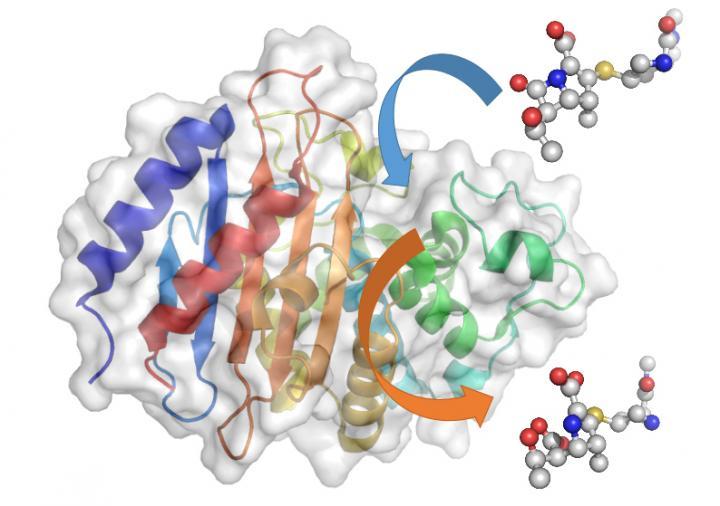
Computer simulations show how bacteria are able to destroy antibiotics, focusing on the role of enzymes in the bacteria which split the structure of the antibiotic and stop it working, making the bacteria resistant. 

The new findings show that it's possible to test how enzymes react to certain antibiotics and thus design new antibiotics with a much lower risk of resistance, and even to choose the best medicines for specific outbreaks.

Using QM/MM - quantum mechanics/molecular mechanics simulations – the research team were able to gain a molecular-level insight into how enzymes called 'beta-lactamases' react to antibiotics.


Image: the conversation

By David Glance, University of Western Australia

In 2012, the UK’s Sunday Times reported that actor Bruce Willis was going to sue Apple because he was not legally allowed to bequeath his iTunes collection of music to his children.

The story turned out to be false (and shockingly bad journalism) but it did start a conversation about what we can, and can’t, do with our digital possessions.

 A region of human chromosome 16, known as 16p11.2, is prone to genetic changes in which segments of DNA are deleted or duplicated and is considered to be one of the leading candidates for genetic causes of autism, schizophrenia, and other conditions.

A new study finds that a genetic variation that evolved in the last 250,000 years, after the divergence of humans from ancient hominids, likely plays an important role in disease. 

Muslim terrorists and the Klu Klux Klan share one thing in common; they claim to be religious even though the ideas they promote (and in the case of the former, the actions they take) are not very nice.

The fringes get all of the attention but most religious people are not clinically insane or promoting the deaths of others in order to secure their own place in Heaven, and if you remind them of their religious principles, their attitude toward negative events change, according to a paper in the Journal of Personality and Social Psychology

Obesity was once only for the wealthy, then it was only for Americans and the science engine that made food cheap for all, but now globalization has made it possible for the rich and poor worldwide to be fat - which brings greater risk of suffering a heart attack, stroke and diabetes.

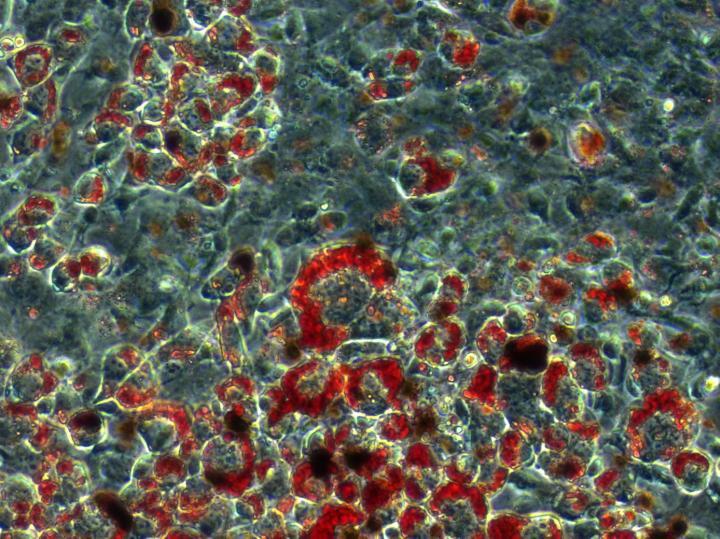
No one wants to eat less delicious food, but they would take a pill to shed fad and a team ed by Professor Alexander Pfeifer from the University Hospital Bonn believe they have come one step closer to that.  They have found that a signaling molecule can stimulate brown fat and burn energy from food: The body's own adenosine activates brown fat and "browns" white fat.

