







The extraordinary synod of bishops on family is meeting for two weeks at the Vatican. Credit: EPA/L'Osservatore Romano

By Timothy Jones, La Trobe University


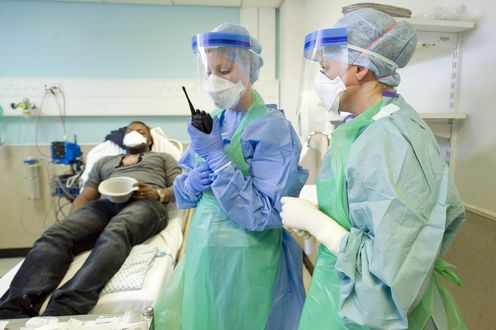
Lab scientists working with Ebola use respirators, while surgical masks are deemed adequate for nurses at the front line. Credit: EPA/Anne-Marie Sanderson/DOH 

By C Raina MacIntyre


Should academics be disciplined by their universities for things said over Twitter? Credit: Opensource.com/ Flickr, CC BY-SA

By Janna Thompson, La Trobe University

Academic freedom has been put in the spotlight with two universities recently coming down hard on academics for comments on social media.

Diversity in medical education used to be simple - more black people, more women - but it is not just a numbers game anymore. 

Instead of focus just on recruiting under-represented students, modern education needs to be about creating an optimal learning environment, where people with different ideas, cultures, opinions, and experiences feel comfortable amongst each other and part of a larger dialogue to come together to solve tomorrow's health care problems, says
Mark A. Attiah, a medical student pursuing both a Master's in translational research and bioethics
at the University of Pennsylvania.

Though the continental United States hasn't had a major hurricane in almost 10 years, the rest of the world hasn't been so lucky. Japan just had a typhoon, India a cyclone, and, with Gonzalo, Bermuda is about to have its first major Atlantic hurricane in three years.

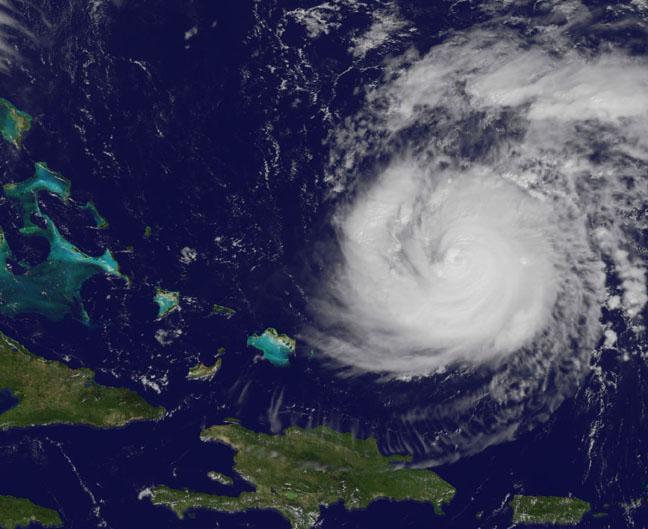
Hurricane Gonzalo has made the jump to major hurricane status and on
October
15th was a Category 4 storm on the Saffir-Simpson Hurricane Scale. NOAA's GOES-East satellite provided imagery of the storm. According to the National Hurricane Center, Gonzalo is the first category 4 hurricane in the Atlantic basin since Ophelia in 2011.

Having children young and a dysfunctional romantic relationship are the two most frequently cited reasons when low-income mothers are asked about why they find themselves in poverty, say sociology scholars Kristin Mickelson of the School of Social and Behavioral Sciences at Arizona State University, and Emily Hazlett of Kent State University in Sex Roles.

They believe that how a woman answers the question of "why me?" when thinking about her own impoverished state influences her mental health and that such answers can also provide clues to whether the woman believes she will ever rise out of poverty. 

They concluded this after analysis of a set of close-ended questions that were put to a community sample of 66 low-income mothers. 

The Miocene climatic optimum, was a period from about 15 to 17 million years ago and it had wild swings in temperature, the amount of continental ice on the planet and CO2 levels.

Historically, CO2 had inconsistent relationships to temperature. When levels were 10X higher than they are now, the temperature was 2 degrees higher. What has been lacking is a solid relationship between them outside the last few decades and a new paper in Paleoceanography finds that during the
Miocene climatic optimum  has found that these changes in temperature and ice volume were matched by equally dramatic shifts in atmospheric CO2. 

During the 1930s, North America endured what came to be called the Dust Bowl, a prolonged era of dryness - the worst drought in America of the last 1,000 years - that withered crops and dramatically altered where the population settled.

80 years ago, in 1934, is when things really got crazy; giant dust storms and drought covered more than 75 percent of the country and affected 27 states severely.

Do you believe in science?

Most people do. Some even say they 'accept' science, since that sounds less faith-oriented than 'believe', but ask most science-accepting atheists and fundamentalist Imams about adaptive radiation in evolution and there answers will be about the same in accuracy.

Nutritionists and their followers also claim to have a lot of faith in science - but they really have a kind of confirmation bias which makes them more likely to trust information that appears scientific yet really doesn't tell them much, according to a new paper in Public Understanding of Science.

Natural gas finally fulfilled its environmental promise this century. Long touted by environmentalists for being much cleaner than coal, hydraulic fracturing - fracking - made it economically viable as well.

The resulting boom also offset the lingering economic malaise in America for states, like Pennsylvania, that embraced it. Poor people could still afford energy but CO2 emissions went back to early 1990s levels, while coal, which had skyrocketed in use when nuclear energy was banned in America, was suddenly back at 1980s levels.

