






Allergic reactions to food have dramatically increased over the past 10 to 20 years. Dan Peled/AAP, CC BY

By Alexandra Miller, The Conversation and Reema Rattan, The Conversation

Changing the bacteria in the gut could treat and prevent life-threatening allergies, according to research published in the Proceedings of the National Academy of Sciences (PNAS) journal today.

A look at 634 couples found that the more often they smoked marijuana, the less likely they were to engage in domestic violence.  

The scholars attempted to clarify inconsistent findings about domestic violence among pot-smoking couples that primarily has been based on cross-sectional data (i.e., data from one point in time). Looking at couples over the first nine years of marriage, the study found:

  • More frequent marijuana use by husbands and wives (two-to-three times per month or more often) predicted less frequent intimate partner violence (IPV) perpetration by husbands.

  • Husbands' marijuana use also predicted less frequent IPV perpetration by wives.

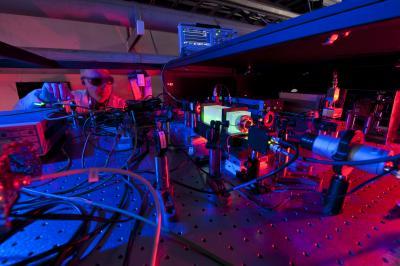
The Holometer, an experiment at Fermi National Accelerator Laboratory, has started collecting data but researchers are not going to wait to start their media blitz; they are throwing out  mind-bending speculation, like that perhaps we live in a hologram.

Much like characters on a television show would not know that their seemingly 3-D world exists only on a 2-D screen, we could be clueless that our 3-D space is just an illusion. The information about everything in our universe could actually be encoded in tiny packets in two dimensions.

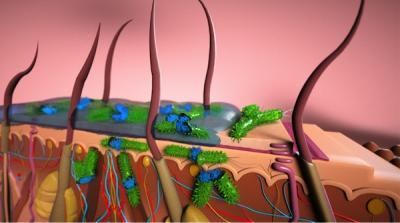
Biofilms are the first line of defense for harmful bacteria and make the treatment of skin infections especially difficult because microorganisms protected in a biofilm have antibiotic resistance and recalcitrance to treatment.

Biofilm-protected bacteria account for some 80 percent of total bacterial infections in humans and are 50 to 1,000 times more resistant to antibiotics than simpler bacterial infections.

 Biofilms often persist in the periphery of an actual wound, beneath an intact, healthy skin layer and the difficulty of their treatment is largely due to the outermost layer of the skin, the stratum corneum, being a natural barrier for drug delivery.

The makeup of the Earth's lower mantle, which makes up the largest part of the Earth by volume, is significantly different than previously thought.

Researchers have devised a new way to separate cells by exposing them to sound waves as they flow through a tiny channel.

Separating cells with sound offers a gentler alternative to existing cell-sorting technologies, which require tagging the cells with chemicals or exposing them to stronger mechanical forces that may damage them.
Their device, about the size of a dime, could be used to detect the extremely rare tumor cells that circulate in cancer patients' blood, helping doctors predict whether a tumor is going to spread.

In the 14th century, Venice was in many ways still a world power in its own right. The days when it could topple kingdoms using commerce were behind it, but it was still an important trade destination. In that period, trade meant ports and ports meant the Bubonic Plague in 1347.

When it hit, some tried prayer, some tried hunting vampires, but then officials quickly began to utilize what we would now call resilience management: rather than trying to target a poorly understood risk, state authorities focused on managing physical movement, social interactions, and data collection for the city as a system.

Dsillusioned churchgoers may find it increasingly difficult to remain associated with their church, yet many also find it difficult to leave.  They have not only a moral identity crisis but deep identity crises as their most important relationships and beliefs are put at risk. 

The authors of a paper in the Journal of Consumer Research conducted interviews with people who identify as former churchgoers and asked them to reflect on their experiences in leaving the church and the challenges of constructing a new identity as they rejected church authority and its doctrines.

Do you feel sadder watching a documentary about war or a drama about a young person dying of cancer?

If you poll most people, they will say there are stronger emotional reactions when stories are based on true events rather than fiction, but a new analysis in the Journal of Consumer Research finds that is not so.

