




Researchers are searching for a sustainable, environmentally-friendlier source of soil conditioner and crop fertilizer that could reduce costs to farmers -  all from renewable energy waste.

A collaborative project between Stopford Energy and Environment Limited, the James Hutton Institute, Aqua Enviro Limited and the University of Lancaster builds upon Stopford research looking at using a mixture of digestates, derived from anaerobic digestion, and ash, from burnt biomass, as an alternative to existing crop fertilizers.

"White flight" was the term created by sociologists for when people middle-class began moving from poor city neighborhoods to newly created sub-urban communities that were not city apartments and townhouses but not rural either - suburbs. 

Chemicals known as hormone mimics may damage our ability to reproduce and pollute the natural environment. Now there may be a new way of capturing them.

In a laboratory in Trondheim, researchers have managed to create minute particles with some very desirable properties, such as the ability to capture and break down any hormone mimics that have ended up in our waste water. These unwanted chemicals come from the kind of consumer items that make our lives easier and more comfortable. But they have consequences.
A new study has found that carbon monoxide could be used to protect against life-threatening arrhythmias after a heart attack.

Restoring blood flow to the heart following a heart attack can leave patients with ventricular fibrillation, a dangerous heart rhythm which puts people at greater risk of sudden cardiac death. Previous research has shown carbon monoxide, which is produced naturally in heart cells, can guard against ventricular fibrillation, however the mechanism behind why this happens was unknown.

Scientists at Aston University in Birmingham (UK) and Peking University in China have found carbon monoxide works by blocking the channels that carry potassium into heart cells – an essential process required to reset the cells before their next heartbeat.
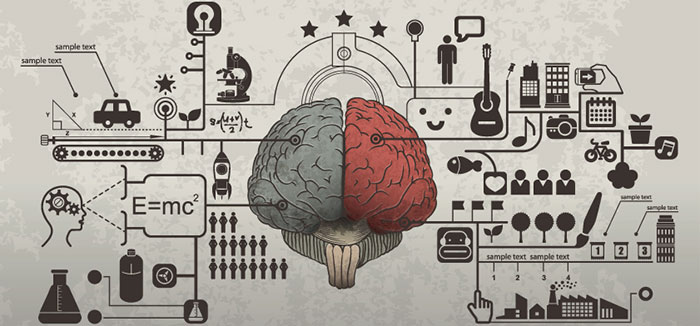
By Joel N. Shurkin, Inside Science - In an analogy many scientists hate, the human brain is often compared to a small, wet computer, functioning in almost the same way as the electronic kind. Two scientists at Cornell University report the analogy might be closer to the truth than anyone thought.

They have found an emotion code.

An investigational drug known as APT102 significantly reduced damage to heart muscle from a heart attack and minimized the risk of bleeding during follow-up treatments, according to an animal study based on a decade of work by APT Therapeutics, scientists at Washington University School of Medicine in St. Louis and colleagues at Cornell and Harvard.

Standard heart attack treatment often causes heart tissue damage. Once the blood clot that causes a heart attack is removed from an artery, molecules from dead and dying cells mix with blood rushing back through the artery. One of these molecules, adenosine triphosphate (ATP), is inflammatory; another, adenosine diphosphate (ADP), causes more clotting.
Isaac Asimov's Three Laws Of Robotics, from the story "Runaround" in 1942, are arguably the most famous example of fictional ethics becoming so fundamental they are adopted spontaneously by everyone in an industry that hadn't even been created yet.(1)

Now that robots are widely used in caring for older people, as well as in military and industrial applications, scholars want to give them a 21st century update.

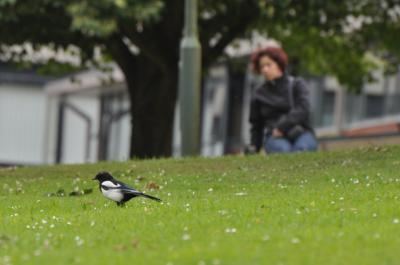
In European culture, it is widely accepted that magpies (Pica pica) are the thieves of the bird kingdom, attracted to sparkly things and prone to stealing them for their nests.

But psychologists at the Centre for Research in Animal Behaviour (CRAB) at the University of Exeter have analyzed magpies and found that the species is actually frightened of new and unfamiliar objects rather than attracted to them. 

The researchers carried out a series of experiments with both a group of magpies which had come from a rescue center, and wild magpies in the grounds of the University. The birds were exposed to both shiny and non-shiny items and their reactions recorded. 

It sounds like science fiction, but a new paper in the journal BioEssays
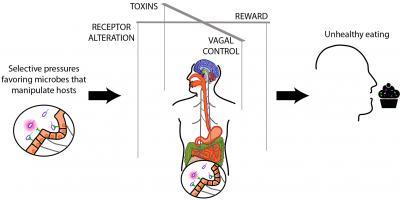
 says that bacteria within us — which outnumber our own cells about 100-fold — may very well be affecting both our cravings and moods to get us to eat what they want, and often are driving us toward obesity. 

The scholars from UC San Francisco, Arizona State University and University of New Mexico concluded that from a review of the recent scientific literature that microbes influence human eating behavior and dietary choices to favor consumption of the particular nutrients they grow best on, rather than simply passively living off whatever nutrients we choose to send their way.

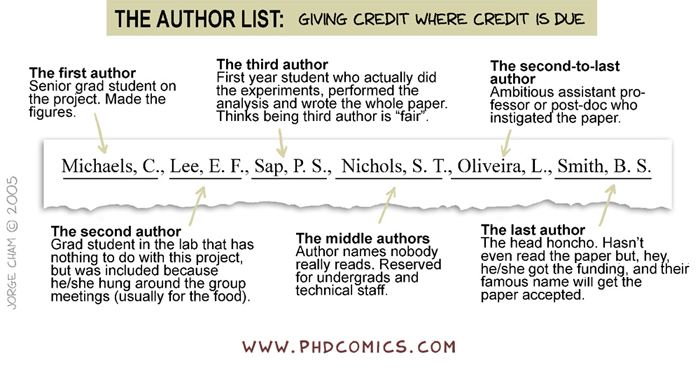
There has always been a bit of good-natured humor when it comes to who gets credit for what in a long line of citations.

Occasionally, it can be strange, like when one person who contributed to the I.P.C.C. claims to be a Nobel laureate, but most often there is a pecking order to science papers.

This does not keep science humorosts like Jorge Cham at PhDComics.com from cutting to the heart of the matter, as they did on figuring out citations way back in 2005:

