





During the last ice age, a large part of North America was covered with a massive ice sheet up to 3 kilometers thick and that is a key reason why the sea level was then about 120 meters lower than it is today. 

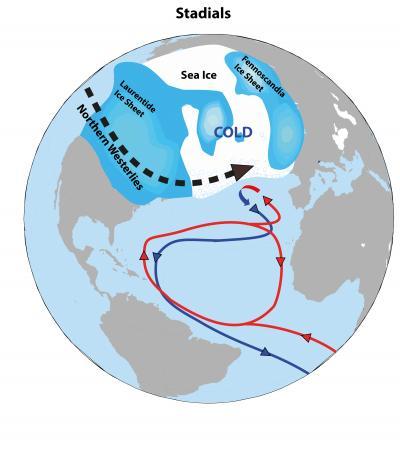
During the cold stadial periods of the last ice age, massive ice sheets covered northern parts of North America and Europe. Strong westerly winds drove the Arctic sea ice southward, even as far as the French coast. Since the extended ice cover over the North Atlantic prevented the exchange of heat between the atmosphere and the ocean, the strong driving forces for the ocean currents that prevail today were lacking.

By Jason Potts, RMIT University

Do the words we use to speak of economic matters, matter? I believe they do, but not by the propagation of textbookish jargon. Rather, the main way they matter is in shaping public ethics.

Economics has been a technical field of studies for a few centuries now and is replete with textbooks full of ideas expressed in precise and often mathematical language, passed down through a priestly class of scholars.

The invention of fiber optics revolutionized the way we share information, allowing us to transmit data at volumes and speeds we'd only previously dreamed of, and now are breaking another barrier, designing nano-optical cables small enough to replace the copper wiring on computer chips.

This could result in radical increases in computing speeds and reduced energy use by electronic devices.

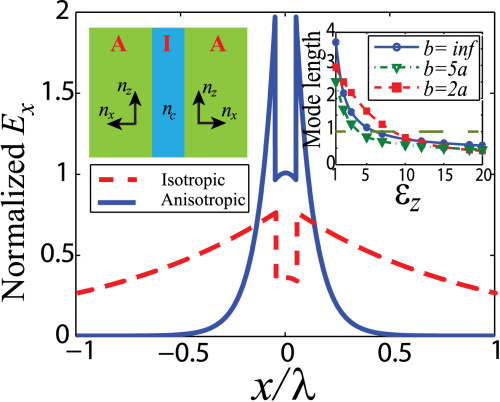
"We're already transmitting data from continent to continent using fiber optics, but the killer application is using this inside chips for interconnects—that is the Holy Grail," says Zubin Jacob, an electrical engineering professor leading the research. "What we've done is come up with a fundamentally new way of confining light to the nano scale." 

The downside to solar and wind is not just low efficiency and high cost, it is also that they are intermittent. But that impacts cost also. Relying on them has meant contracting with traditional energy companies to be 'on demand' at far higher cost than they otherwise would be, to be on call to shut off or add electricity as needed. 

Wind will never be a serious alternative but solar is the future. Yet no matter how good solar becomes, there will still be a problem of storage and riding out its fluctuations - and existing storage capacities are far from adequate for the purpose.

Global warming is currently taking a break. Global temperatures seemed to have risen drastically into the late 1990s but the global average temperature has risen only slightly since 1998 – surprising, considering scientific climate models predicted considerable warming due to rising greenhouse gas emissions. In 2006, former U.S. Vice-President Al Gore said by 2016 it would be too late if we did not stop CO2 immediately.

Climate skeptics use this contradiction to question climate change as well as the validity of climate models. Meanwhile, the majority of climate researchers continued to emphasize that a short-term 'warming hiatus' can largely be explained on the basis of current scientific understanding and did not contradict longer term warming.

A new implantable tissue scaffold coated has been created, with bone growth factors that are released slowly over a few weeks. When applied to bone injuries or defects, this coated scaffold induces the body to rapidly form new bone that looks and behaves just like the original tissue.

By Allison Jarrell, Inside Science

For centuries, cinnamon has been used to enhance the flavor of foods, but new research shows that the spice could also help make foods safer.

According to a study by Meijun Zhu and Lina Sheng, food safety scientists at Washington State University in Pullman, the ancient cooking spice could help prevent some of the most serious foodborne illnesses caused by pathogenic bacteria.

20 years ago, nuclear science died a horrible death at the hands of President Clinton and Senator John Kerry. It's science fiction fantasy to imagine now what nuclear science would be like if the last 40 years had been spent with American ingenuity and technological prowess tackling the issue, rather than it becoming a political football to placate anti-science activists before finally being killed off.

Its legacy haunts us today. With nuclear energy blockaded well before that, and modern hydraulic fracturing not yet created, America had to rely more on coal. Environmental groups never accept any blame for the U.S. rise in CO2 emissions, but it rests squarely on them as much as it does on automobiles. 

Love and commitment make sex physically more satisfying for many women, according to Penn State Abington sociologist Beth Montemurro.

In interviews of 95 heterosexual women between the ages of 20 and 68 and from a range of backgrounds, most believed love was necessary for maximum satisfaction in both sexual relationships and marriage. The benefits of being in love with a sexual partner were more than just emotional, most of the women in the study said that love made sex physically more pleasurable. From September 2008 to July 2011, Montemurro conducted in-depth interviews with 95 women who lived in Pennsylvania, New Jersey and New York, lasting about 90 minutes each. 

The United States Supreme Court recently ruled against the Obama administration requirement that all employers must provide birth control insurance for women. Administration lawyers knew they were on shaky ground going in, because there were no provisions for male sex lives, such as Viagra, and that meant the policy was discriminatory, and the Supreme Court might rule that all corporations have the same rights, regardless of size, which further weakens the long-term viability of the ACA.

