

Researchers have identified a biomarker that predicts whether glioblastoma – the most common form of primary brain cancer – will respond to chemotherapy.  

"Every patient diagnosed with glioblastoma is treated with a chemotherapy called temozolomide. About 15 percent of these patients derive long-lasting benefit," said Clark C. Chen, MD, PhD, vice-chairman of Academic Affairs, Division of Neurosurgery, UC San Diego School of Medicine and the study's principal investigator. "We need to identify which patients benefit from temozolomide and which another type of treatment. All therapies involve risk and the possibility of side-effects. Patients should not undergo therapies if there's no likelihood of benefit."

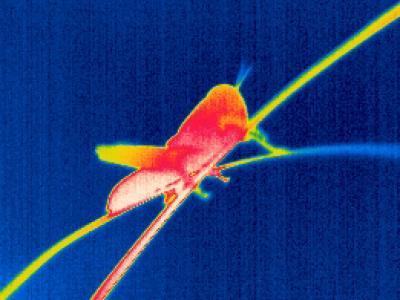
Locusts decide the most nutritious plant to eat based on ambient temperature - they choose their food and then where they digest it according to how hot it is.  

Invasion by exotic plant species affects the ability of soil to store greenhouse gases, which could have far-reaching implications for how we manage agricultural land and native ecosystems, according to a paper in New Phytologist, which found that invasive plants can accelerate the greenhouse effect by releasing carbon stored in soil into the atmosphere.

Since soil stores more carbon than both the atmosphere and terrestrial vegetation combined, the repercussions for how we manage agricultural land and ecosystems to facilitate the storage of carbon could be dramatic.

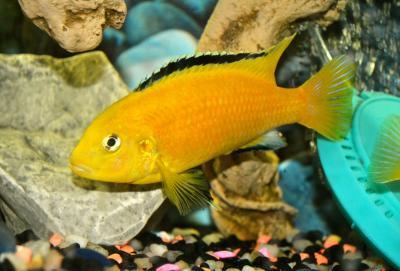
Many humans can't remember what they had for dinner last night. Nor can many other creatures. Some have exceptionally short memories. Defying popular convention, a new study finds that fish, believed to have a memory span of only 30 seconds, can actually remember context and associations up to twelve days later. 

Research into mitigating potential global warming caused by rising levels of carbon dioxide usually involves three areas: Developing alternative energy sources, capturing and storing greenhouse gases, and repurposing excess greenhouse gases.

Carbon storage will never happen, we can't even store nuclear waste in what science determined was the safest place on earth, but those other two are still possible.

Liquid Light Inc. of Monmouth Junction, N.J., got together with Andrew Bocarsly, a Princeton professor of chemistry, to devise an efficient method for harnessing sunlight to convert carbon dioxide into a potential alternative fuel known as formic acid. 

There's a reason scare journalism is so popular - people respond to it.

If you ask most people why they should use sunscreen, they will tell you it prevents skin cancer, though humanity survived forever without it. And they can't tell you what difference it's making for their particular biology. They don't know about the statistical likelihood of developing the disease, they just know they don't want to get skin cancer. You see the same behavior about organic food, people are educated by advertising rather than evidence. 40 years ago people went to the beach and put on suntan oil to get darker faster.

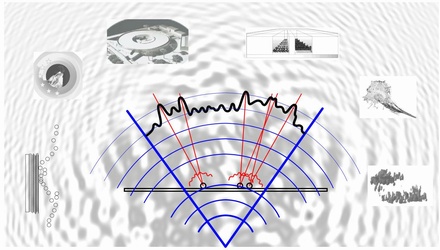
It's commonly believed that plant growth can be influenced by sound and that plants respond to wind and touch.

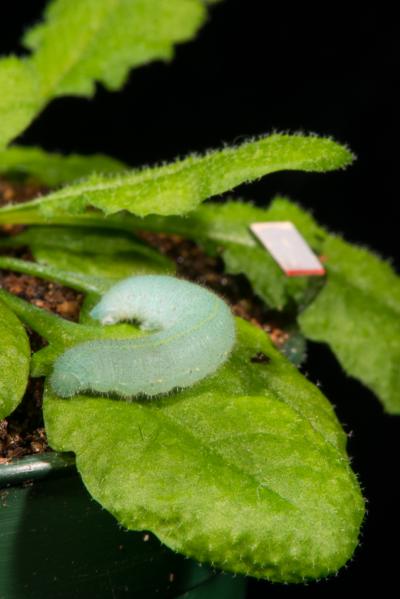
Researchers at the University of Missouri took it a step farther than playing classical music for  ivy. They conducted a chemical and audio analysis and determined that plants respond to the sounds that caterpillars make when eating plants and that the plants respond with more defenses.

Facebook is under fire again, this time not over privacy, but for finding that a news feed can affect users’ subsequent posts (and presumably, emotions).  Unfortunately, the indignant outrage threatens to harm the public more than Facebook’s original study.  Facebook, like every company ever, will continue to experiment to optimize its service.  The only thing this backlash will teach it is not to publish its findings, and that will be a huge loss to social science.

There can't be many rich fat people because poor physical health and financial health are driven by the same underlying psychological factors, according to Lamar Pierce, PhD, associate professor of strategy at Washington University in St. Louis, and PhD-candidate Timothy Gubler.

Of course, the argument is academic. Galileo once declared that, despite what sailors and the natural world knows, tides only happened once per day and the moon had no effect. He clearly needed to get out of the library. We know that the moon impacts the tides and we know that plenty of poor people are in fine physical health, so how did they come to such an odd bit of causalation?

As you read this, NASA's New Horizons is heading to Pluto. After the marathon probe zooms past Pluto in July of next year, it will travel across the Kuiper Belt, that vast rim of primitive ice bodies left over from the birth of our solar system 4.6 billion years ago.  

What next? It is anticipated that NASA will redirect the to a Kuiper Belt object (KBO) and photograph it up close.

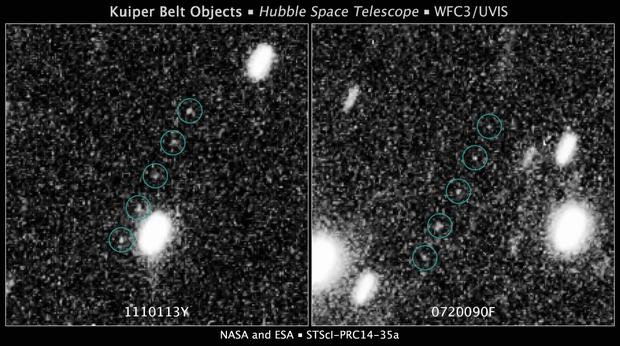
That's where Hubble comes in. Before New Horizons arrives, Hubble is looking for the perfect target to be our first up-close look at something inside the Kuiper Belt. It's already found two, proof of concept that Hubble can go forward with a deeper KBO search, covering an area of sky roughly the angular size of the full Moon.

