

"Hello, World!" came the message from the International Space Station as NASA successfully beamed high-definition video via laser from space to ground on Thursday, June 5. The 175-megabit video transmission was the first of its kind for the Optical Payload for Lasercomm Science (OPALS) with the goal of improving the way we receive data from orbit and beyond. In fact, this emerging technology of optical communications--or lasercomm--is likened to an upgrade from dial-up to DSL.

"It's incredible to see this magnificent beam of light arriving from our tiny payload on the space station," said Matt Abrahamson, OPALS mission manager at NASA's Jet Propulsion Laboratory (JPL) in Pasadena, California.

Researchers have developed biomaterials for bone regeneration from beer brewing waste.
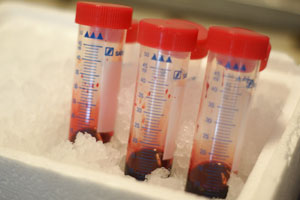
Every day thousands of people around the world have their lives saved or improved thanks to someone giving blood but it has limitations. It's shelf life can be limited, blood types need to match and the public needs to be willing to do it. That's without the safety concerns of donated blood. All of these things add to the cost.

The system works - over 85 million units of donated blood are given to people worldwide for use in hospitals - but there are worries about its use in routine operations, and the number of potential and active blood donors decreasing worldwide. 

Like with many things, a lot of variables go into evolution. Some is luck, some is necessity, some is circumstance. Over time, for example, a region of blacksmiths will grow bigger arms. It isn't an epigenetic or Lamarckian evolution event but it will happen over generations because holding a hammer becomes important in that circumstance.

Almost anything can claim an evolutionary basis, if you try hard enough. In the run up to the last American presidential election, there were even claims that people were born liberal or conservative. Yes, social psychologists and the political pundits who take them seriously believed the American left and right were evolving differently than the rest of the world.

Imagine a world where the tedious moments of life, cleaning or driving a car or whatever, could be spent visiting the Louvre or meeting new people or learning history. 

The whole universe of information is at your fingertips. The only evidence of intelligence is how well you utilize the system, multitasking and parsing information while chatting and even letting someone ride shotgun in your experiences. Genius itself would be redefined.

Then imagine it all disappeared. Could you remember what people told you without a digital archive of the conversation? How they look? Could you find your way home?
It's not surprising that in a trial, mothers participating in the Women, Infants, and Children (WIC) who received subsidized vouchers for fruits and vegetables at area farmers markets used them - and chose fruits or vegetables more often then they would at supermarkets. 

But prices at local supermarkets are lower, notes a new University of Illinois study, so the question becomes how much should taxpayers spend in hopes that families will eat more vegetables, if they don't buy them at supermarkets. Should we mandate their behavior by giving them vouchers for farmer's markets rather than grocery stores?
An analysis of the scientific production of more than 80 countries from 1996 to 2006 found that there are three major ‘clusters’ of countries, defined by the thematic areas they investigate and that their governments invest in most.

Using this data, researchers from the University of Granada and the Spanish National Research Council (CSIC), belonging to the SCImago research group have designed the most comprehensive 'world map of research' to date. Using statistical techniques and multivariate analysis, they included over 15 million documents and scientific articles.

Can rats show regret and, if so, how would we know?

Neuroscientists at the University of Minnesota say they do and it's intriguing because regret is a cognitive behavior thought to be uniquely and fundamentally human.    

"Regret is the recognition that you made a mistake, that if you had done something else, you would have been better off," said A. David Redish, Ph.D., a professor of neuroscience in the University of Minnesota. "The difficult part of this study was separating regret from disappointment, which is when things aren't as good as you would have hoped. The key to distinguishing between the two was letting the rats choose what to do."

Citrus is the world's most widely cultivated fruit crop. In the U.S. alone, the citrus crop was valued at over $3.1 billion in 2013. Originally domesticated in Southeast Asia thousands of years ago before spreading throughout Asia, Europe, and the Americas via trade, citrus is now under attack from citrus greening, an insidious emerging infectious disease that is destroying entire orchards. To help defend citrus against this disease and other threats, researchers worldwide are mobilizing to apply genomic tools and approaches to understand how citrus varieties arose and how they respond to disease and other stresses.

Antidepressant drugs are common in the developed world and are among the most prescribed medications in North America. Though antidepressants are effective for some, there is a lot of variability in how individuals respond to antidepressant treatment.  

A recent study found that levels of a small molecule found only in primates are lower in the brains of depressed individuals, a discovery that may hold a key to improving treatment options for those who suffer from depression.

