



A 14-year-old boy's turnaround and quick recovery after mysteriously being stricken by brain-inflaming encephalitis -- which led to him being hospitalized for six weeks and put into a medically induced coma after falling critically ill -- shows that the newest generation of DNA analysis tools can be harnessed to reveal the cause of a life-threatening infection even when physicians have no suspects.

Starting in July of 2012, smart people called the election of November for President Barack Obama, barring some nasty "October Surprise." Instead, the October Surprise was for the challenger, Mitt Romney. A hurricane hit the eastern coast of the US and by the time it reached the American media center of New York City, it was no longer a hurricane so they created a new category, a "superstorm" and proceeded to blame it on global warming.

Young men who use cannabis may be putting their fertility at risk by inadvertently affecting the size and shape of their sperm according to research published today (Thursday 5 June 2014).

In the world's largest study to investigate how common lifestyle factors influence the size and shape of sperm (referred to as sperm morphology), a research team from the Universities of Sheffield and Manchester also found that sperm size and shape was worse in samples ejaculated in the summer months but was better in men who had abstained from sexual activity for more than six days.

However, other common lifestyle factors reported by men, including smoking cigarettes or drinking alcohol, appeared to have little effect.

Anaheim, Calif., June 4, 2014 – For every 15 healthcare providers who receive the influenza vaccination, one fewer person in the community will contract an influenza-like illness, according to a study using California public health data from 2009 – 2012.

In an abstract that will be presented on June 7 at the 41st Annual Conference of the Association for Professionals in Infection Control and Epidemiology (APIC), a researcher analyzed archival data from the California Department of Public Health to determine the relationship between vaccinating healthcare personnel against influenza and the rate of influenza-like illness in the surrounding community.

You catch more flies with honey than vinegar, it is said, but most people want to avoid catching flies at all. A study has found that a popular non-nutritive sweetener, erythritol,  the main component of the sweetener Truvia®, is toxic to Drosophila melanogaster flies in a dose-dependent manner and so may be an effective and human-safe insecticide.

Methicillin-resistant Staphylococcus aureus (MRSA) has become the poster child for antibiotic resistance in large part because of a larger problem: patients tend to stop taking antibiotics once they feel better. In such instances, the surviving bacteria may become impervious to the drugs designed to fight them. 

A single-dose antibiotic could fix that and a new one, oritavancin, is as effective in the battle against stubborn skin infections as a twice-daily infusion given for up to 10 days, according to a recent large study.

Anti-depressants are having a bad decade. They've been increasingly implicated in acts of violence - it used to be that if a person had been treated by multiple therapists, society had done its part, and now society wonders if over-medicating and creating too many psychological labels are the problem rather than the solution.

Now antidepressants are increasingly linked to obesity. 

Since it is election season in America, we can expect a new wave of social psychology papers claiming that political liberals are smarter and more creative than political conservatives. It makes good mainstream news fodder, just like sexism in hurricane names does. Some of the articles will even bolster their case with fMRI images to seem scientific.

Outside people with confirmation bias, surveys of college students done by psychologists are easily dismissed, but what about genetic data? A paper in Neuron argues that genetic evidence for criminality may be on the horizon. 

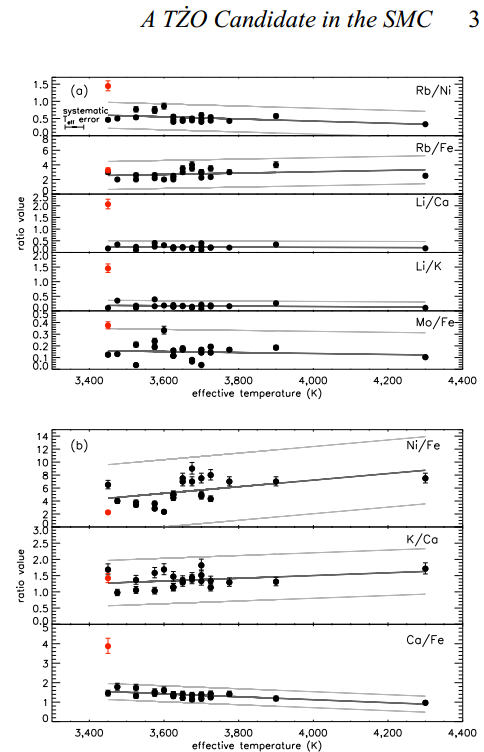
In 1975, physicist Kip Thorne and astronomer Anna Żytkow proposed that there are hybrids of red supergiant and neutron stars that superficially resemble normal red supergiants, such as Betelguese in the constellation Orion, but differ in their distinct chemical signatures that result from unique activity in their stellar interiors.

New research reveals how the algae behind red tide thoroughly disables – but doesn't kill – other species of algae. The study shows how chemical signaling between algae can trigger big changes in the marine ecosystem.

Marine algae fight other species of algae for nutrients and light, and, ultimately, survival. The algae that cause red tides, the algal blooms that color blue ocean waters red, carry an arsenal of molecules that disable some other algae. The incapacitated algae don't necessarily die, but their growth grinds to a halt. This could explain part of why blooms can be maintained despite the presence of competitors.


