

Reprinted from Scientia Salon. You can read the original here.

It seems like my friend Neil deGrasse Tyson [1] has done it again: he has dismissed philosophy as a useless enterprise, and actually advised bright students to stay away from it. It is not the first time Neil has done this sort of thing, and he is far from being the only scientist to do so. But in his case the offense is particularly egregious, for two reasons: first, because he is a highly visible science communicator; second, because I told him not to, several times.

Athens, 17 May 2014: Negative iron balance predicts survival in patients with acute heart failure, according to research presented for the first time today at the Heart Failure Congress 2014 in Athens, Greece. The Congress is the main annual meeting of the Heart Failure Association of the European Society of Cardiology.

Professor Ewa Jankowska, first author of the study, said: "Patients with acute heart failure have a major collapse in homeostasis. Iron is a key micronutrient that is required for the maintenance of homeostasis. Iron is needed for cellular metabolism and deficiency leads to severely impaired energy metabolism and mitochondrial dysfunction."

Two months after the controversial BICEP2 announcement, The Washington Post writes « Big Bang backlash: BICEP2 discovery of gravity waves questioned by cosmologists » and National Geographic emphasizes « Big Bang Discovery Comes Under Fire.
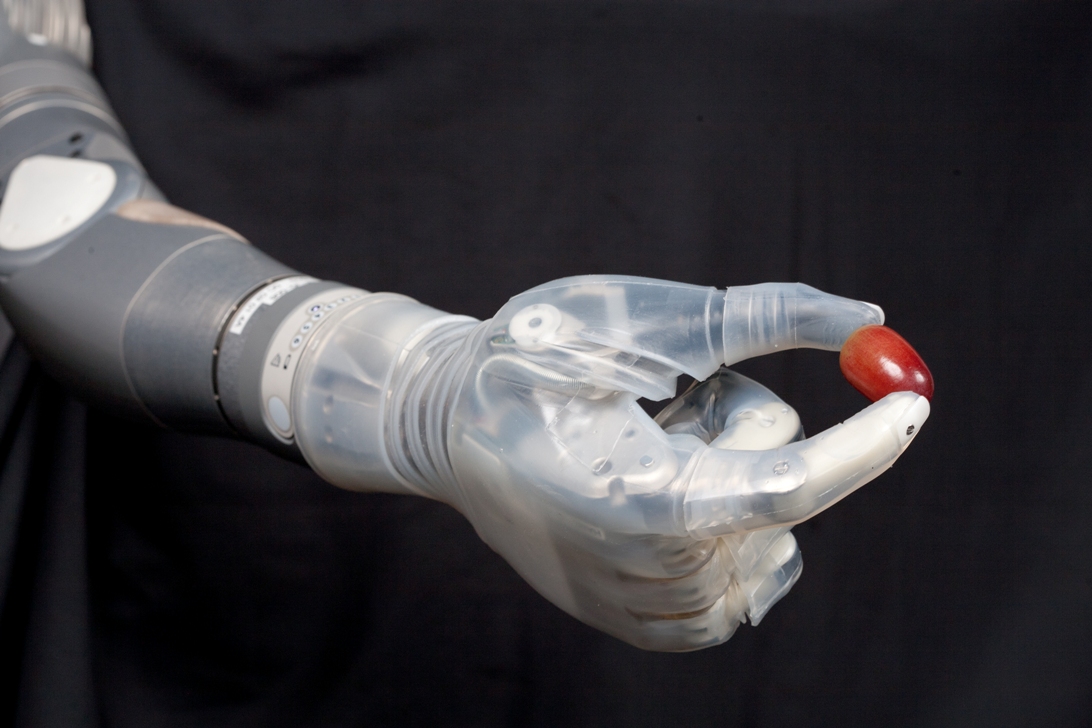
The U.S. Food and Drug Administration (FDA) today allowed marketing of the DEKA Arm System, the first prosthetic arm that can perform multiple, simultaneous powered movements controlled by electrical signals from electromyogram (EMG) electrodes.

Deka calls it "Luke", after Luke Skywalker of "Star Wars" fame, and the project was funded by DARPA.

EMG electrodes detect electrical activity caused by the contraction of muscles close to where the prosthesis is attached. The electrodes send the electrical signals to a computer processor in the prosthesis that translates them to a specific movement or movements.

PHILADELPHIA — Young adults who smoked water pipes in hookah bars had elevated levels of nicotine, cotinine, tobacco-related cancer-causing agents, and volatile organic compounds (VOC) in their urine, and this may increase their risk for cancer and other chronic diseases, according to a study published in Cancer Epidemiology, Biomarkers & Prevention, a journal of the American Association for Cancer Research.

Massachusetts General Hospital (MGH) investigators have developed a transgenic mouse that synthesizes both the omega-3 and omega-6 essential fatty acids within its tissues on a diet of carbohydrates or saturated fats. Called "essential" because they are necessary to maintain important bodily functions, omega fatty acids cannot naturally be synthesized by mammals and therefore must be acquired by diet. Significant evidence suggest that the ratio of dietary omega-6 to omega-3 has important implications for human health, further increasing interest in the development of foods rich in omega-3s, which are found in certain species of fish as well as some nuts and green vegetables.

To quote the American cartoonist Gary Larson: all things play a role in nature, even the lowly worm—but perhaps never in such a visually stunning way as that presented in two papers published today in the open access journals GigaScience and PLOS ONE. The work and data presented here provide the first-ever comparative study of earthworm morphology and anatomy using a 3D non-invasive imaging technique called micro-computed tomography (or microCT), which digitizes worm structures. This opens the possibility of scanning millions of specimens from museum collections, including extinct species, all of which is important given that the earthworm is both a benefit and a bane to ecosystems.

The metronome seems such a simple thing, just a machine that goes tick tick, and you then play in time with it. So, why is it that beginner musicians often have so much difficulty keeping in time with it? And why is it that humans find it hard to play like a metronome, why doesn't that come natural to us?

Many musicians and entire musical cultures with a wonderful sense of rhythm don't use a metronome at all. Yet many western musicians spend hours every day with the tool. Do we need it, does it help - and if so what's the best way to work with a metronome? And what about ways of working on rhythm without using a metronome at all?

Organisms inherit their mitochondria – the cell’s “power plants” – from their mothers, but what happens to all the father’s mitochondria?

Why and how are paternal mitochondria prevented from getting passed on to their offspring after fertilization? Just the randomness of evolution or is there a reason the phenomenon has been conserved?

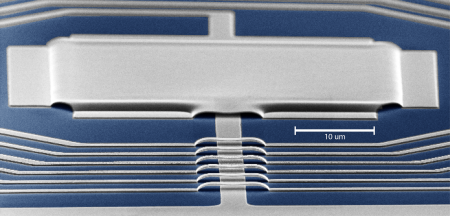
"Subatomic particles act in quantum ways—they have a wave-like nature—and so can atoms, and so can whole molecules since they're collections of atoms," Schwab says. "So the question then is: Can you make bigger and bigger objects behave in these weird wave-like ways? Why not? Right now we're just trying to figure out where the boundary of quantum physics is," says Keith Schwab, Professor of Applied Physics at Caltech. 

And that means finding a way to make measurements that go beyond the limits of quantum physics.

