Without knowing it, organisms search for the next “winning” strategy in evolution. Mutation plays a key role in the evolution of new, and sometimes successful, traits. It's a lot like rock-paper-scissors - roshambo.(1)
A study by has determined that, on average nationally, minorities are exposed to 38 percent higher levels of nitrogen dioxide (NO2) outdoor air pollution compared to white people.

Nitrogen dioxide comes from sources like vehicle exhaust and power plants. Breathing NO2 is linked to asthma symptoms and heart disease. The Environmental Protection Agency has listed it as one of the seven key air pollutants it monitors. The researchers studied NO2 levels in urban areas across the country and compared specific areas within the cities based on populations defined in the U.S. Census as “nonwhite” or “white.”
Since the Blood Moon - whatever that is, it sounds Biblical - was last night, and it spells the beginning of our doom, according to a guy trying to sell some books, it's time to start prepping for the days of ultimate holy war. That means no more Southern blots and particle colliders, it's back to basics.

In preparation, this weekend the kids and I decided to see what kind of life we could make for ourselves while the Four Horsemen duke it out with the Holy Ghost in what would arguably be the best D&D game ever.
Cardiovascular disease often causes the heart to work harder than usual, a condition that triggers the chronic buildup of cardiac pressure and the onset of heart failure.
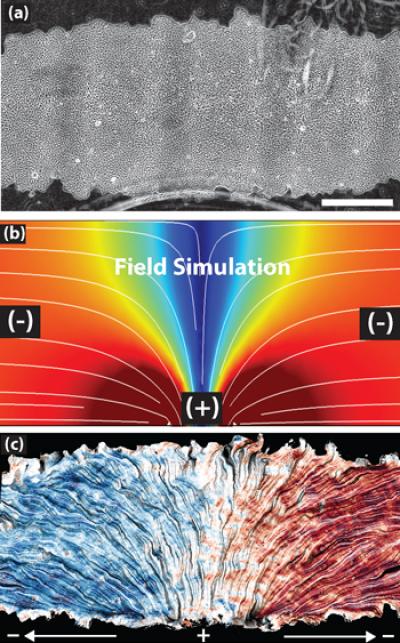
Researchers have used an electrical current to orchestrate the flow of a group of cells, an achievement that could establish the basis for more controlled forms of tissue engineering and for potential applications such as "smart bandages" that use electrical stimulation to help heal wounds.

In the experiments, the researchers used single layers of epithelial cells, the type of cells that bind together to form robust sheathes in skin, kidneys, cornea and other organs. They found that by applying an electric current of about five volts per centimeter, they could encourage cells to migrate along the direct current field. 
Kids know it is wrong to steal stuff - they also seem to know it's wrong to steal an idea. They just discover it a little later.

University of Washington psychologist Kristina Olson and colleagues discovered that preschoolers often don't view a copycat negatively but by the age of 5 or 6, they do. It holds true even across cultures that typically view intellectual property rights in different ways, like in Germany where they violate international trademarks and hold a Science 2.0 conference and, worse, charge people to attend.

Researchers at the University of California, San Diego School of Medicine have identified a mechanism that explains why people with the hepatitis C virus get liver disease and why the virus is able to persist in the body for so long.

The hard-to-kill pathogen, which infects an estimated 200 million people worldwide, attacks the liver cells' energy centers – the mitochondria – dismantling the cell's innate ability to fight infection. It does this by altering cells mitochondrial dynamics.

The study, published in today's issue of the Proceedings of the National Academy of Sciences, suggests that mitochondrial operations could be a therapeutic target against hepatitis C, the leading cause of liver transplants and a major cause of liver cancer in the U.S.

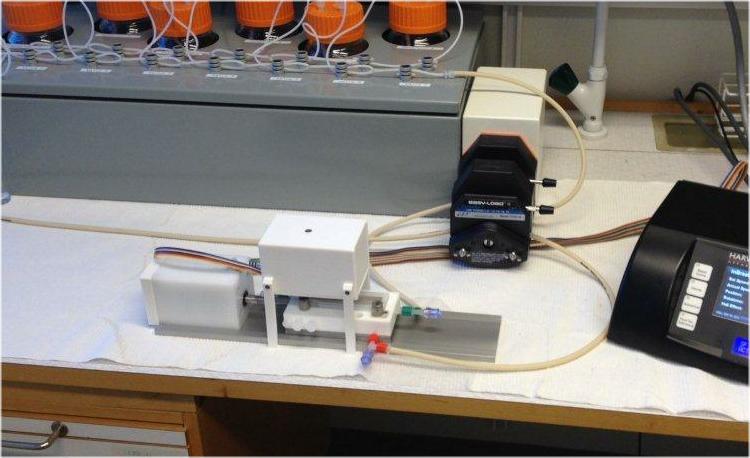
A research team led by Paolo Macchiarini, MD, PhD at Karolinska Institutet in Sweden has successfully transplanted a regenerated esophagus into a rat using a bioreactor developed by Harvard Apparatus Regenerative Technology (HART), a spin-off of Harvard Bioscience. Macchiarini has previously done several successful regenerated trachea transplants in human patients using a HART bioreactor.
Until university leaders can supply politicians with better approaches to accountability, they're just going to count. In Norway right now, we're in the midst of counting season. And because of the sharp folks at Current Research Information System in Norway, we have detailed numbers. (Disclosure: I'm the head of the board at CRIStin.)

Along with counting, comes comparison. So, here's a little teaser from the high north and, sure, I'd like to know how it stacks up against your university.

In 2013, the 18,709 academic staff members at Norwegian colleges and universities were (co)authors on a total of 17,493 research articles, for an average of just less than one (co)authorship per academic employee.

The 15% fall in dietary salt intake, which is implicated in increased blood pressure, over the past decade in England is likely to have had a key role in the 40% drop in deaths from heart disease and stroke over the same period, according to a paper in BMJ Open.

Average salt intake across the nation is still far too high, the authors warn, and much greater effort is needed to curb the salt content of the foods we eat. 

The authors base their findings on an analysis of data from more than 31,500 people taking part in the Health Survey for England for the years 2003—when initiatives to curb population salt intake began across the UK—2006, 2008, and 2011.