
Glacial cycles at 104-yr time scale have been the focus of Quaternary paleoclimatology over the last century. In recent years with the emergence of continuous high-resolution records (ice cores, deep-sea sediments etc.) from the longer geological past, increasing evidence underscores the significance of long- duration processes at the time scale of 105-yr or more. WANG Pinxian and colleagues from the State Key Laboratory of Marine Geology, Tongji University, reviewed long-term variations in the oceanic carbon reservoir and indicated their crucial role in major climate regime changes over Quaternary glacial cycles.

It’s been all over the news. 

Depending on the accuracy of the headline, you may conclude that worms live longer when exposed to glucosamine, mice live 10 percent longer when fed glucosamine or that YOU will live 8 years longer if you take the stuff.

As usual, the devil is in the headlines.

Some were pretty accurate: Glucosamine promotes longevity in worms and mice, study says (from the L.A. Times). 

Below is a clip from a chapter of my book where I describe the story of the silicon microvertex detector of the CDF experiment. CDF collected proton-antiproton collisions from the Tevatron collider in 1985, 1987-88, 1992-96, and 2001-2011. Run 1A occurred in 1992, and it featured for the first time in a hadron collider a silicon strip detector, the SVX. The SVX would prove crucial for the discovery of the top quark.
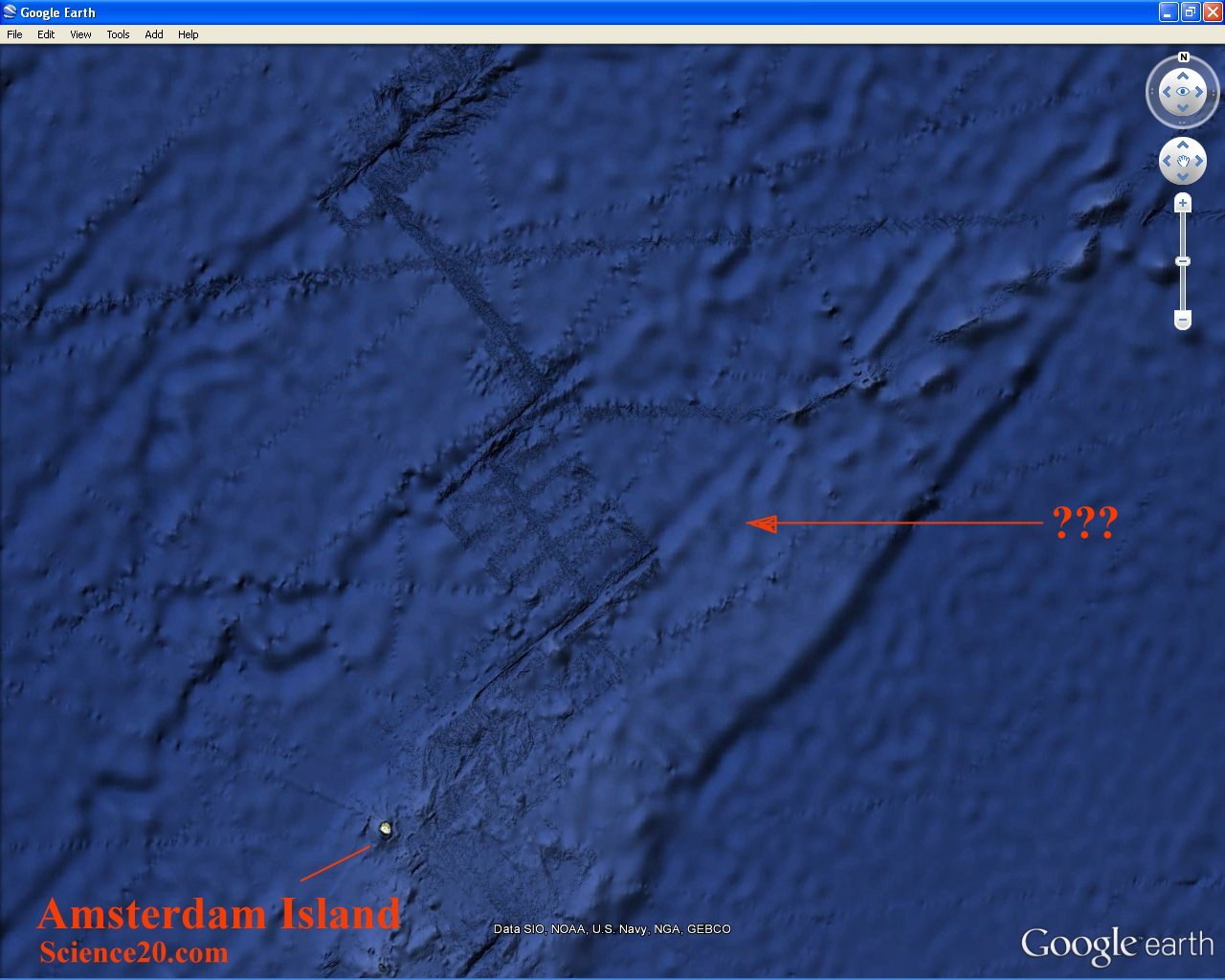
Google Earth Mystery Object? - Hardly!

What is it that you can see in this snapshot of Google Earth in the vicinity of Amsterdam Island?


If you think it's a special antenna for transmitting earthquake waves in the general direction of people that a Secret Government AgencyTM hates, or if you just know that it's a secret underwater base you are probably a conspiracy theorist.

If you think it's Atlantis you are probably some kind of new age hippie.

If you think it's an image artifact you are probably very good at image analysis.  But wrong.

The mechanism which underlies the susceptibility of liver disease patients to life-threatening infection has been uncovered by Wellcome Trust-funded medical scientists, who have also suggested a possible treatment to reverse immune suppression in these patients.

Liver disease, or cirrhosis, is currently the fifth leading cause of death in the UK. Cirrhosis patients are more than five times more likely to pick up infections in hospital than patients with other chronic conditions, due to reduced immunity which is a well-recognised feature of the disease.

"They can smell but they can't distinguish between chemical cues," Dixson said.

Carbon dioxide released into the atmosphere is absorbed into ocean waters, where it dissolves and lowers the pH of the water. Acidic waters affect fish behavior by disrupting a specific receptor in the nervous system, called GABAA, which is present in most marine organisms with a nervous system. When GABAA stops working, neurons stop firing properly.

Coral reef habitat studies have found that CO2-induced behavioral changes, similar to those observed in the new study, increase mortality from predation by more than fivefold in newly settled fish.

A phenomenon has long been believed in psychology: traumatic experiences induce behavioral disorders that are passed down from one generation to the next, a kind of psychological epigenetics.

Recently, neuroscientists have set out to understand what physiological processes might underlie this hereditary trauma. "There are diseases such as bipolar disorder, that run in families but can't be traced back to a particular gene", explains Isabelle Mansuy, professor at ETH Zurich and the University of Zurich. With her research group at the Brain Research Institute of the University of Zurich, she has been studying the molecular processes involved in non-genetic inheritance of behavioural symptoms induced by traumatic experiences in early life.

Scientists at Yale University have devised a dramatically faster way of identifying and characterizing complex alloys known as bulk metallic glasses (BMGs), a versatile type of pliable glass that's stronger than steel.

Using traditional methods, it usually takes a full day to identify a single metal alloy appropriate for making BMGs. The new method allows researchers to screen about 3,000 alloys per day and simultaneously ascertain certain properties, such as melting temperature and malleability.

"Instead of fishing with a single hook, we're throwing a big net," said Jan Schroers, senior author of the research, which was published online April 13 in the journal Nature Materials. "This should dramatically hasten the discovery of BMGs and new uses for them."

The complexity of biology can befuddle even the most sophisticated light microscopes because biological samples bend light in unpredictable ways, returning difficult-to-interpret information to the microscope and distorting the resulting image.

New imaging technology developed at the Howard Hughes Medical Institute's Janelia Farm Research Campus rapidly corrects for these distortions and sharpens high-resolution images over large volumes of tissue. 

In a new study, researchers from North Carolina State University, UNC-Chapel Hill and other institutions have taken the first steps toward creating a roadmap that may help scientists narrow down the genetic cause of numerous diseases. Their work also sheds new light on how heredity and environment can affect gene expression.

