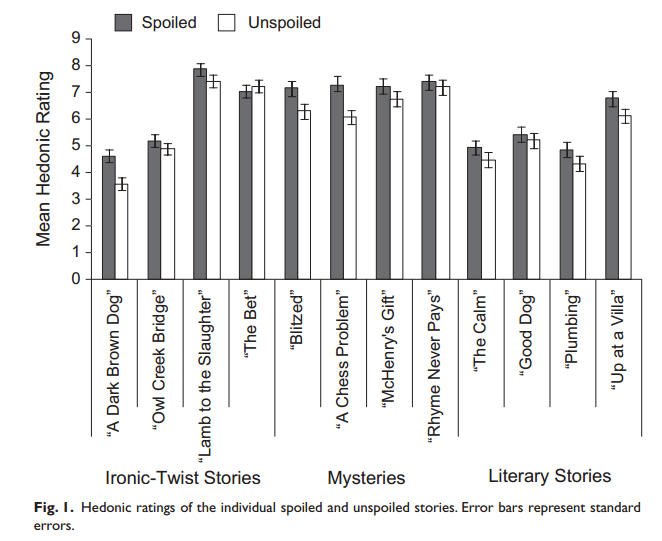




You want to know what movies are about - and that is why spoilers related to the upcoming "Star Wars" movie and "Avengers 2" and whatever else are so popular.

Hey, you knew how the RMS Titanic met its demise, and you still watched a movie about it, notes Rich Goldstein in The Daily Beast.  I didn't, but most of you did. And Shakespeare knew you wanted to know, that is why you read The Tragedy of Romeo and Juliet and not The Mystery Of Romeo and Juliet.

I know how The Grapes of Wrath is going to end, I still read it over and over again.

Health officials say that holding in your urine when you really have to go can be harmful. But every public pool has signs that prohibit peeing in the pool.

Yet a lot of Olympic swimmers admit to doing it anyway and if you are visiting a public water park and it's not 20 percent urine, count yourself lucky. 

In season 5 of Seinfeld, George and Jerry had this very discussion:

George Costanza: It's not good to hold it in. I read that in a medical journal.
Jerry: Did the medical journal mention anything about standing in a pool of somebody else's urine?

The popular TV series "CSI" may be fiction but real-life crime scene investigators and forensic scientists have been collecting and analyze evidence to determine what happened at crime scenes almost as long as there have been crime scenes.

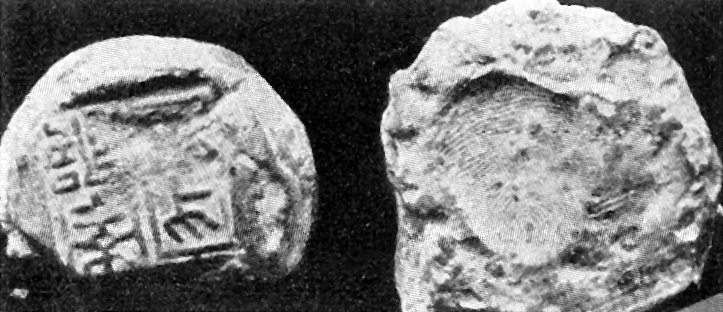
There is evidence during the Qin dynasty that the Chinese used handprints as evidence in crimes as far back as 2,200 years ago and by the 1860s the process for lifting fingerprints from evidence was developed. As guns became more common, gunpowder residue became a way to know if a weapon was fired.

Sausage experts know that the key to perfect meat is simmering in beer first - and in Science 2.0's definitive article on outdoor cooking, The Science Of Grilling, we learned that beer has multiple uses in cuisine, and an article in the Journal of Agricultural and Food Chemistry adds to this important body of work, noting that a beer marinade helps reduce the formation of potentially harmful substances in grilled meats.

Gary Larson tapped into the universal absurd. Charles Schulz helped us identify with the underdog in us all. And Bill Watterson accurately represented a father’s profound and boundless knowledge of the universe, as in Calvin’s dad’s explanation that ice floats because, “It’s cold. Ice wants to get warm, so it goes to the top of liquids in order to be nearer the sun.” Or his explanation of relativity: “It’s because you keep changing time zones. See, if you fly to California you gain three hours on a five-hour flight, right?”

Would the existence of B-modes in the cosmic microwave background (CMB) radiation be an evidence for inflation? Many influential colleagues claim that this is indeed the case. But their arguments are based on standard cosmological schemes.

Actually, pre-Big Bang patterns beyond conventional cosmology do not require inflation and can generate CMB B-modes.

Two papers by the BICEP2 Collaboration :

BICEP2 I: Detection Of B-mode Polarization at Degree Angular Scales, arXiv:1403.3985

A decades old space mystery has been solved by an international team of astronomers who investigated hot, young, white dwarfs — the super-dense remains of Sun-like stars that ran out of fuel and collapsed to about the size of the Earth. 

It has been known that many hot white dwarfs atmospheres, essentially of pure hydrogen or pure helium, are contaminated by other elements – like carbon, silicon and iron. What was not known, however, was the origins of these elements, known in astronomical terms as metals.

"The speed at which the goats completed the task at 10 months compared to how long it took them to learn indicates excellent long-term memory," said co-author Dr Elodie Briefer, now based at ETH Zurich.

Before each learning session, some of the goats had the opportunity to watch another goat to demonstrate the task.

Dr Briefer added: "We found that those without a demonstrator were just as fast at learning as those that had seen demonstrations. This shows that goats prefer to learn on their own rather than by watching others."

Doctors make people nervous. Most people don't go unless something is wrong so they are already anxious. Thus, it is no surprise doctors routinely record blood pressure levels that are significantly higher than levels recorded by nurses, according to a a systematic review led by the University of Exeter Medical School.

The results show that that recordings taken by doctors are significantly higher (by 7/4mmHg) than when the same patients are tested by nurses.

Genghis Khan is famous in evolution because a giant chunk of the world carries is DNA. A recent story of brown bears shows that males roam much greater distances than females, and mating is part of the agenda.


