
A Washington state referendum to put warning labels on genetically modified foods, I-522, failed in the last election, but a new effort is more clever - they want to warn the public about Frankenfish and are couching it in an effort to simply make the public aware if it's farm-raised or caught in the wild or, oh yeah, a TRANSGENIC ABOMINATION OF NATURE.

If we want to see worldwide trends in public health, look to the South Pacific archipelago of Samoa and American Samoa.

About 75 percent of the U.S. territory's adult population is obese, the highest rate in the world. Rates of type 2 diabetes top 20 percent and a recent study found that the elevated obesity rates are now even present in newborns.

This obesity epidemic began there a few decades ago. Brown University epidemiologist Stephen McGarvey has investigated the obvious question: How did all this happen?

Tularemia, also called "rabbit fever",  is, unlike anthrax or smallpox, the bioweapon you are least likely to know about.

But it is common in the northeastern United States and because it has been weaponized in various parts of the world could be a significant risk to biosecurity.

At the Annual Biophysical Society Meeting in San Francisco, Geoffrey K. Feld, a Postdoctoral researcher in the Physical&Life Sciences Directorate at Lawrence Livermore National Laboratory (LLNL), described the team's work to uncover the secrets of the bacterium Francisella tularensis, which causes tularemia.

Some people don't remember dreams at all while some remember them frequently. What separates them?

Images in brain scans, at least, though that may lead to a more meaningful answer also. 

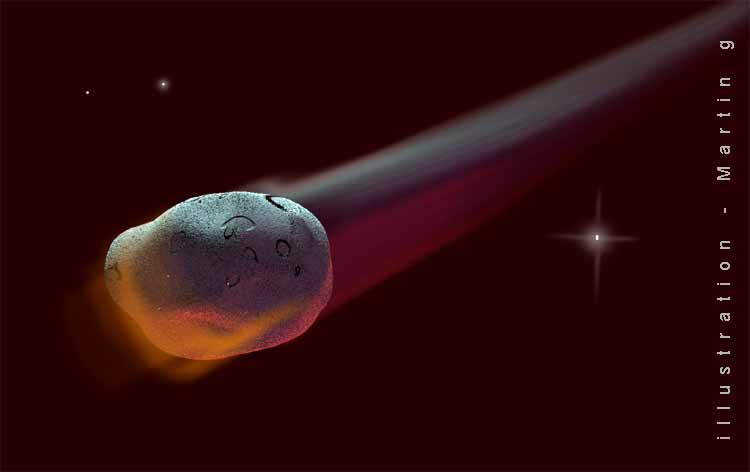
Bruce Willis  heroically managed to save the world in the film 1998  Armageddon. He was able to deflect a huge Earth-bound asteroid with the expedient use of a well placed thermonuclear explosion.

But some have questioned whether Willis’s feat would actually have been possible – without breaking the laws of physics . . .

Gay marriage is rapidly becoming less and less controversial, at least in the Western world. Yes, the battle hasn’t been won just yet, both in Europe and in the US, but we are getting there at a pace that would have been unthinkable just a few years ago.

The next frontier, it seems, is adoptions by gay parents. When I talk to even some of my somewhat progressive friends and relatives, including those in the Old Country, they seem to resist the idea of gay couples adopting children much more than they resisted (if they ever did) the idea of gay marriage. Why?

A small minority of religious and scientific communities insist the two can't get along. If you see 'scientocracy' or 'Galileo' invoked, you can be sure rationality has left the discussion.

Almost 50 percent of scientists consider themselves religious and almost 50 percent of Evangelicals, the religious demographic least likely to accept evolution, say that science and religion get along just fine.

But among the general public, only 38 percent feel that way.

Monoclonal antibodies directed against tumor antigens have proven effective for treating some forms of cancer. Despite the increasing use of monoclonal antibody therapy, it is not clear how these antibodies drive tumor removal.

In this issue of the Journal of Clinical Investigation, Marjolein van Egmond and colleagues at the VU University Medical Center found that macrophage populations mediate tumor cell removal following monoclonal antibody treatment by actively phagocytosing tumor cells.

As scientists try to forecast the effects of climate change, one of the missing pieces of the puzzle is what will happen to the carbon in the soil and the microbes too.

Scientists studying grasslands in Oklahoma have discovered that an increase of 2 degrees Celsius in the air temperature above the soil creates significant changes to the microbial ecosystem underground. Compared to a control group with no warming, plants in the warmer plots grew faster and higher, which put more carbon into the soil as the plants senesce. The microbial ecosystem responded by altering its DNA to enhance the ability to handle the excess carbon.

STANFORD, Calif. — Researchers at the Stanford University School of Medicine and Lucile Packard Children's Hospital Stanford have found a new way to boost the survival of pediatric patients whose hearts stop while they are hospitalized.

The researchers developed a broader approach to resuscitation training to include everyone who responds to a pediatric "code" event, the emergency call broadcast through the hospital when a patient's heart stops.

Before the new training was implemented, about 40 percent of the hospital's "code" patients survived their cardiac arrest, a figure comparable to the national average for children's hospitals. After training, survival jumped to 60 percent.

