


Fossilization is rare. It may seem common to find them because there have been billions of years and an entire planet on which to do it, but things really have to go right. An ancient fossil caught in the act of giving birth is bordering on spectacular.

Hospitals use disinfectants but they don't all kill the human papillomavirus (HPV), according to a new paper. Non-sexual transmission of the virus is exceedingly rare but hospitals need to be cautious so changes should be made, say researchers from Penn State College of Medicine and Brigham Young University.

How did we evolve a face?

Vertebrates, backboned animals, come in two basic models: jawless and jawed.  Jawed vertebrates, including us, number over 50,000 species but there are two jawless vertebrates in existence today; lampreys and hagfishes. It is known that jawed vertebrates evolved from jawless ones, a dramatic anatomical transformation that effectively turned the face inside out. 

A team of researchers used micron resolution X-ray imaging and show how a series of fossils, with a 410 million year old armored fish called Romundina at its center, documents the step-by-step assembly of the face during the evolutionary transition from jawless to jawed vertebrates. 

The people generally called Clovis were not the first humans in America but they were the first to accomplish expansion on the North American continent. Then they died out, leaving only speculation. 

Starting somewhere around 13,000 years ago, they hunted mammoth, mastodons and giant bison with big spears. Today there exists only one human skeleton  - a small boy between 1 and 1.5 years of age that was found in the 12,600 Anzick Site in Wilsall, Montana. It was found in association with Clovis tools, making it among the oldest human skeletons in the Americas. 

If there is a sociological fad, trend or fashion and it catches the attention of the public, you can be sure someone will start doing weak observational studies and get published in journals.

Almost anything can be termed an 'addiction' if people do it too much; checking their email, playing Risk or even watching porn. Because addiction is considered physical, the term connotes legitimacy and that means it will have to be covered under insurance. It's a huge windfall if a successful new disease can be manufactured.

The U.S. Geological Survey has gone cosmic and produced the first global geological map of Ganymede, Jupiter's largest moon and the largest in the solar system.

Conversion landscapes to cement-dominated urban centers would seem to cause great losses in biodiversity, yet nature i heartier than you might think. According to a new study involving 147 cities worldwide, surprisingly high numbers of plant and animal species persist and even flourish in urban environments, to the tune of hundreds of bird species and thousands of plant species in a single city.

A program that allows a single autonomous robot to navigate an uncertain environment with an erratic communication link is difficult and the difficulty for writing code to handle multiple robots that may have to work in tandem is even harder.

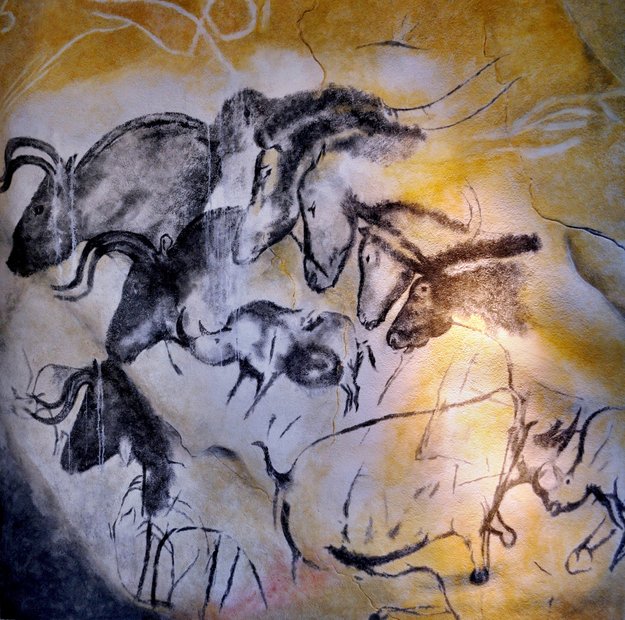
Sometimes you don't need fancy modern compounds - primitive cavemen had the answer.

Burnt bone charcoal, used in prehistoric cave paintings, will be applied to the ESA’s Solar Orbiter titanium heatshield to protect it from the Sun’s close-up glare. 

Solar Orbiter, due for launch in 2017, will carry instruments to perform high-resolution imaging of Sol from as close as 42,000,000 km – a little more than a quarter of the distance to Earth. Operating in direct view of the Sun, the mission must endure 13 times the intensity of terrestrial sunlight and temperatures rising as high as 520° C.

Innate lymphoid cells (ILCs) are among the first components of the immune system to confront certain pathogens and they have a critical function at mucosal barriers, like the bowel or the lung, where the body comes in direct contact with the environment.  

But they went undetected by researchers until just five years ago. The reason is that immune cells are found in the blood, lymph nodes, or spleen and these cells aren't there. Once they mature they directly go to tissues, such as the gut or the skin, rather than blood.And they are rare.A mouse might have 200 million lymphocytes but only a few thousand ILCs.

