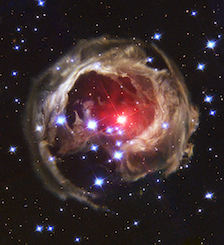
Hanny's Voorwerp, a strange, glowing green cloud of gas that has mystified astronomers since its discovery in 2007, has gotten a better look by Hubble. The cloud of gas is lit up by the bright light of a nearby quasar and shows signs of ongoing star formation.
Hanny's Voorwerp (Hanny's Object in Dutch) is a mysterious, glowing green blob of gas is floating in space near a spiral galaxy - the size of the Milky Way.
Thanks to the Tevatron Facebook account manager, R.M. (Ron, tell me if I can disclose your identity here), I can offer to you today an exceptional plot of historical significance.
Before I paste below the plot in question, let me discuss what it is about. The Tevatron collider has operated since October 1985 -about a couple of geological eras back, in particle physics terms. The W and Z bosons were newborn babies back then, the top quark was thought to have a mass in the 30-50 GeV ballpark, and, to paraphrase the Rolling Stones, "Carlo Rubbia raged and the bodies stunk".
Why haven't antioxidant therapies yielded more positive results? The answer may be that Nrf2, a protein that plays an important role in some antioxidant therapies, may not be as effective due to additional mechanisms that cause it to promote atherosclerosis - clogging of the arteries.
Nrf2 has been thought to be an important drug-therapy target for diseases such as cancer because it can induce chemopreventive activity by attaching to specific sequences of DNA, leading to the release of numerous antioxidant and anti-inflammatory genes and enzymes that can decrease or inhibit the effects of carcinogens.
Without question nanotechnology is a key component in our energy future. In recent years, developers have been investigating light-harvesting thin film solar panels made from nanotechnology and promoting efficiency metrics which they say make the technology marketable but a researcher has challenged recent "charge" measurements for increasing solar panel efficiency.
While we need to invest in the future, we need to make sure there is no hype that promises to increase efficiencies in thin film panels.
Neurons within the brain's neocortex behave much like people in social networks, with a small population of highly active members who give and receive more information than the majority of other members, says Alison Barth, associate professor of biological sciences at Carnegie Mellon in new research. By identifying these neurons, scientists could increase understanding of the neocortex, thought to be the brain's center of higher learning.
The following is a neat little experiment, the result of which may be counter-intuitive to some of those who embrace the “all bodies fall the same way inside earth’s gravity” doctrine.
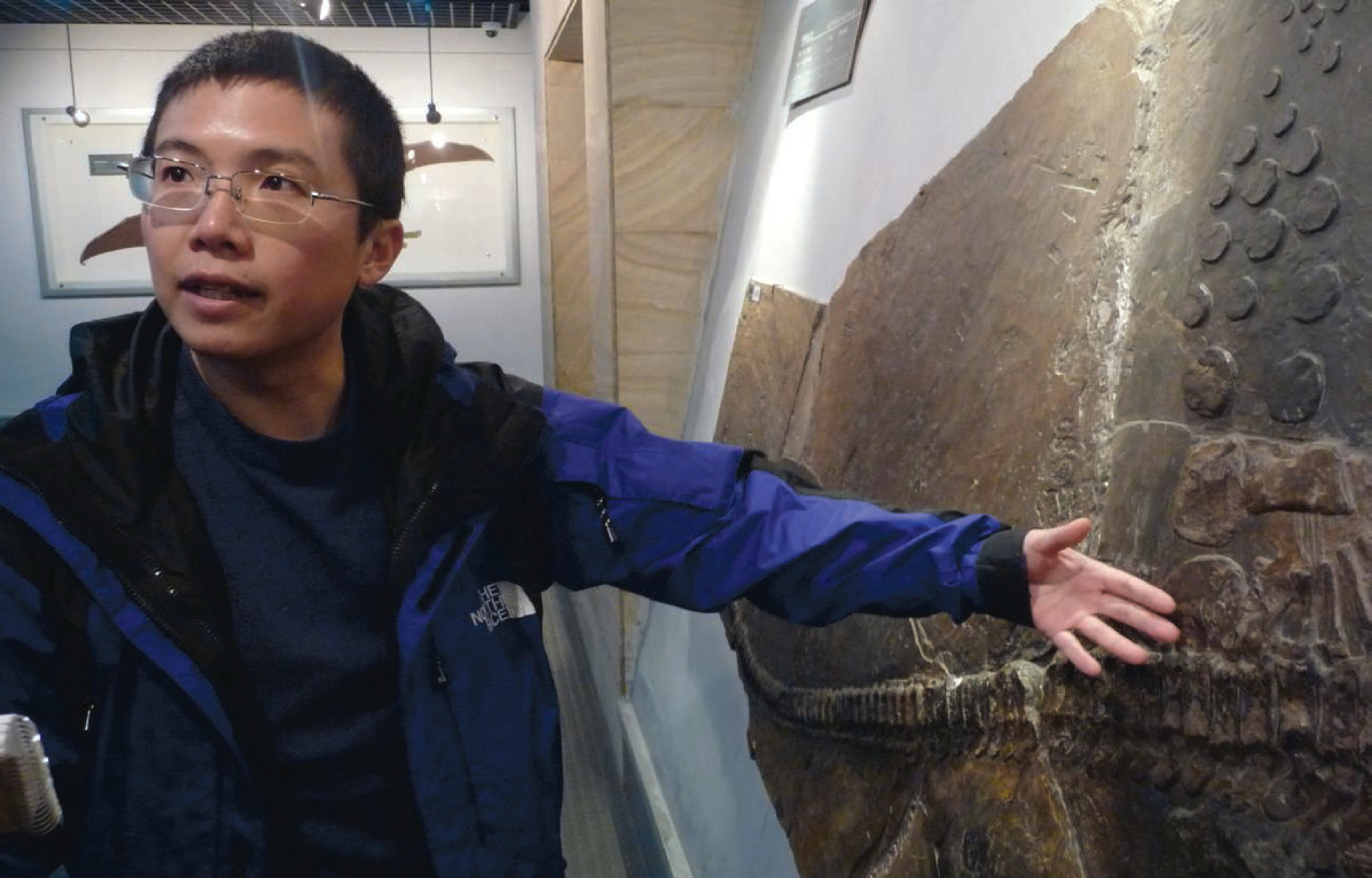
In a piece by Richard Stone in this week’s Science, it was pointed out that in Chinese Museums, it is likely that up to 80% of the marine reptiles on display have been altered or artificially combined to some degree. This seems like a shocking figure, but it is more understandable when it is considered that few of these museums have palaeontologists as staff, and that many of these fossils are unearthed by Chinese farmers that dress their finds up so that a museum is more likely to buy them. Of late there has been a boom, both in the numbers of museums, but also in the acquisition funds set aside for accessioning fossils; this, coupled with prizes for the best specimens, means that finding (or fabricating) a complete fossil can prove to be quite lucrative.
The compound resveratrol found in grapes displays not only antioxidant but other positive properties, according to a study published this week in the Journal of Biological Chemistry.
Resveratrol stimulates the expression of adiponectin, a hormone derived from cells that manufacture and store fat, the research team found. Adiponectin has a wide range of beneficial effects on obesity-related medical complications, said senior author Feng Liu, Ph.D., professor of pharmacology at the University of Texas Health Science Center at San Antonio and member of the Barshop Institute of Longevity and Aging Studies at the Health Science Center.
I
said there were two things keeping me busy and away from Science 2.0 for the last couple of months. The second thing was my transition to Editor-in-Chief of
Technological Forecasting&Social Change, as of January 1.
TFSC is the world’s premier scholarly journal on technology assessment and futures. With its long history and a current download rate of 275,000 articles per year, TFSC also is one of Elsevier’s most widely read international journals.