Researchers from the University of Illinois say they know how to exploit an unusual chemical reaction mechanism that allows malaria parasites and many disease-causing bacteria to survive. The findings, detailed in PNAS, could eventually lead to new anti-malarial and antibacterial drugs.
The new study focused on an essential chemical pathway that occurs in malaria parasites and in most bacteria but not in humans or other animals, making it an ideal drug target. Several teams of researchers have spent nearly a decade trying to understand an important player in this cascade of chemical reactions, an enzyme known as IspH. This enzyme promotes the synthesis of a class of compounds, called isoprenoids, which are essential to life.
A surprising new study in the Journal of Clinical Sleep Medicine reveals that sleepiness at the wheel and poor sleep quality significantly increase the risk of motor vehicle accidents for teenage drivers.
Results indicate that adolescent drivers were twice as likely to have had a crash if they experienced sleepiness while driving (adjusted odds ratio = 2.1) or reported having bad sleep (OR = 1.9). Eighty of the 339 students had already crashed at least once, and 15 percent of them considered sleepiness to have been the main cause of the crash. Fifty-six percent of students who had at least one previous crash reported driving while sleepy, compared with 35 percent of subjects who had not been in a crash.
Infants averaging six months of age who exhibited positional plagiocephaly (flat head syndrome) had lower scores than typical infants in observational tests used to evaluate cognitive and motor development, according to a new study in Pediatrics. Positional or deformational plagiocephaly may occur when external forces shape an infant's skull while it is still soft and malleable, such as extended time spent lying on a hard surface or in one position. Researchers say the findings suggest that babies with plagiocephaly should be screened early in life for possible motor and cognitive delays.
A new study of most of the world's tropical land area indicates that urbanization and globalized agricultural trade have become the primary drivers of tropical deforestation, in stark contrast to the assumptions of some scientists that fast-growing urbanization and the efficiencies of global trade might eventually slow or reverse tropical deforestation. The new study appeared recently in Nature Geoscience.
Deforestation has been a rising concern in recent decades, especially with the recognition that it may exacerbate climate change. Studies in the late 20th century generally matched it with growing rural populations, as new roads were built into forests and land was cleared for subsistence agriculture.
It seems that everything except the causes of childhood obesity receive blame for childhood obesity. While common sense and plenty of research indicate that parents and social setting are the primary influences on children's eating habits, the effort to pin the problem on food manufactures never ends. Recently, the authors of a study in Pediatrics continued the charade by suggesting that product placement in movies may bear some of the responsibility for the expanding waistlines of America's Children.
Previously unrelated disorders which all cause complex defects in brain development and function are linked by a common underlying mechanism. Rett syndrome (RTT), Cornelia de Lange syndrome (CdLS), Alpha-Thalassemia mental Retardation, and X-linked syndrome (ATR-X) have each been linked with distinct abnormalities in chromatin, the spools of proteins and DNA that make up chromosomes and control how genetic information is read in a cell.
The new research, appearing in Developmental Cell, helps to explain why these different chromatin abnormalities all interfere with proper gene expression patterns necessary for normal development and mature brain function.
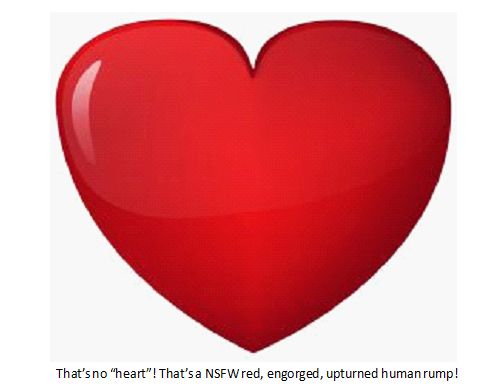
It’s Valentine Day, and children everywhere celebrated friendship and love by giving cards and candy to their friends. In what alien observers must consider one of the most bizarre human customs, these same children were asked to draw lewd pictures of human private parts. You don’t think you or your children participated in this custom? Take a look a the figure below…
One of the positive side-effects of preparing a seminar is being forced to get up-to-date with the latest experimental and theoretical developments on the topic. And this is of particular benefit to lazy bums like myself, who prefer to spend their time playing online chess than reading arxiv preprints.
It happened last week, in the course of putting together a meaningful discussion of the state of the art in global electroweak fits to standard model observables, and their implications for the unknown mass of the Higgs boson: by skimming the
hep-ph folder I found a very recent paper by a colleague in Padova, which I had shamefully failed to notice in the last couple of careless visits.
Scientific Blogging fave
Greg Critser has a new book out,
Eternity Soup: Inside The Quest To End Aging
(available at fine retailers everywhere, or at that link if you want us to make a nickel) and in celebration he has put together a short quiz to find out what you know.
The Pragma HypothesisA speculation on the possibility of the accurate prediction of future, hind-sight based, historical worldviews, and the application of such prediction to the current climate change debate.
Pragma - mass noun: the practical outcome of a decision-based action as viewed from a historical perspective.
Pragma is to science and politics as
karma is to spirituality.
"This is not just some intellectual argument between people who think they know the answer, we are talking about the future of the globe.
...