Some years ago, I was watching a wildlife TV programme, where a mother leopard was leading her three cubs, and they encountered a bank. Two of the cubs jumped it on the first go, but the third struggled until it found a piece of overhanging vegetation which enabled it to take the bank in two leaps.
When one leaves school and enters university, one can find that leaps are required which can overtax the brain. I am always pleased to find books in maths and the sciences which allow one to make these leaps. In Mathematician’s Delight (Pelican 1943), W. W. Sawyer wrote:
We already know that "suffering builds character", but a new study suggests that it may do a lot more than that. Successfully coping with stress at an early age may significantly increase your chances of being a more resilient adult, as well as strengthen your ability to regulate emotions.
The Spectral and Photometric Imaging Receiver, or SPIRE instrument, riding aboard Herschel Space Observatory, launched in May by the European Space Agency, has provided one of the most detailed views yet of space up to 12 billion years back in time.
The December images have revealed thousands of newly discovered galaxies in their early stages of formation, said CU-Boulder Associate Professor Jason Glenn, a co-investigator on the project. The new images are being analyzed as part of the Herschel Multi-tiered Extragalactic Survey, or HerMES, which involves more than 100 astronomers from six countries.
The authors of a new study published in Current Biology say they've gained new insight into the sex lives of malaria spreading mosquitoes. In finding a partner of the right species type, male and female mosquitoes depend on their ability to "sing" in perfect harmony, and those tones are produced and varied based on the frequency of their wing beats in flight.
A team of anthropologists has for the first time directly analyzed DNA from a member of our own species who lived around 30,000 years ago, allowing scientists a unique glimpse into the history of evolution. Their research is detailed in the December 31 issue of Current Biology.
DNA--the hereditary material contained in the nuclei and mitochondria of all body cells--is a hardy molecule and can persist, conditions permitting, for several tens of thousands of years. Such ancient DNA provides scientists with unique possibilities to directly glimpse into the genetic make-up of organisms that have long since vanished from the Earth, but the ancient DNA approach could not be easily applied to ancient members of our own species.
Okay, the year is not over just yet, but it is already time for a little accounting of the traffic on this site in the course of the last eight-and-a-half months -that is, since I moved my blog to Scientific Blogging.
For this year's summary I have been inspired in part by
Alex Antunes, who decided to pick his
least read articles to draw some conclusions about what really does not sell well here. But I have of course also given a close look at what appears to appease your taste, dear readers.
Biofuels were all the rage in the 1990s. Sustainable, activists said, because they refused to do math. It was only when Republicans mandated and subsidized biofuels in 2005 that environmentalists realized there must be something very wrong with them and $10 billion per year of wasted tax dollars on fuels actually worse for the environment than oil are what we have.
If biofuels can make oil companies look good, imagine what they can do for something like tobacco.
Researchers from the Biotechnology Foundation Laboratories at Thomas Jefferson University say they have identified a way to increase the oil in tobacco plant leaves, which may be the next step in using the plants for biofuel, according to a paper in Plant Biotechnology Journal.
Caffeine is the world's most popular stimulant drug and enjoys the cultural shield of being both legal and acceptable. A caffeine addiction is considered perfectly normal.
But with soft drink and coffee companies like Starbuck's aggressively marketing to teens and younger there has to be consideration of the effects of acute and chronic caffeine consumption on blood pressure, heart rate and hand tremors. Just as worrisome, does consuming caffeinated drinks during adolescence contribute to later use of legal or illicit drugs?
How often have you taken a picture with a digital camera, only for it to come out looking like this? The sky’s too bright, the shaded parts are too dark, and however much one juggles with it with software, it won’t come out right.
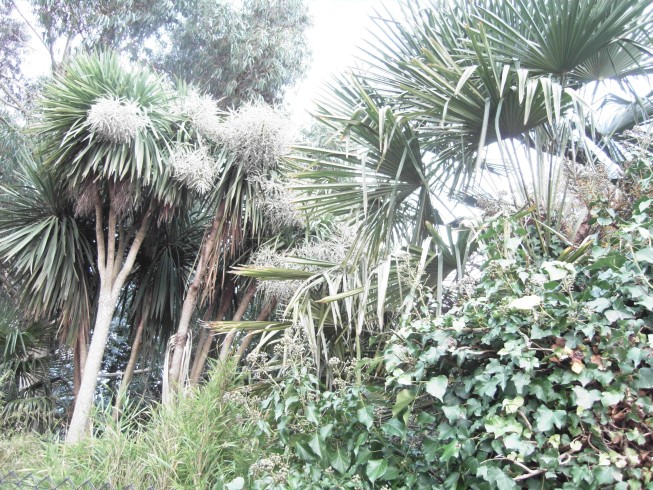
The eye managed to adapt to it all right, effortlessly moving over the scene. With film, if one were a darkroom wizard, one could play tricks with the processing. But digital – what do we get for our multi-megapixels and our 16777216 colours?