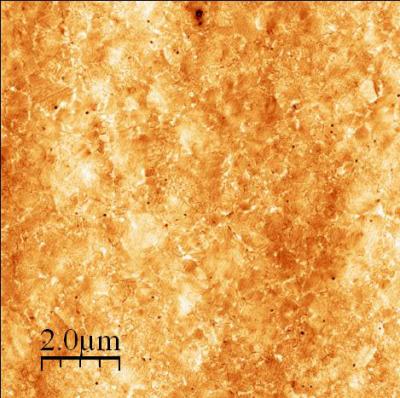
Researchers from NIST and the University of Maryland have found what they say is a simple method of sandwiching organic molecules between silicon and metal, two materials fundamental to electronic components - perhaps overcoming one of the principal obstacles in creating switches made from individual molecules, the ultimate in miniaturization for the electronics industry.
Worried that your cold revenge plans won't come to fruition before you shake off that mortal coil? A new Web site, www.DeathRiskRankings.com, developed by researchers and students at Carnegie Mellon University, says they can help you plan your schedule accordingly.
The tool allows users to query publicly available data from the United States and Europe, and compare mortality risks by gender, age, cause of death and geographic region. The Web site not only gives the risk of dying within the next year, but it also ranks the probable causes and allows for quick side-by-side comparison between groups.
Birds have a wide variety of vibrant plumages and have evolved various chemical and physical mechanisms to produce these beautiful colors over millions of years. When did feathers first get iridescence, the quality of changing color depending on the angle of observation, such as the rainbow of colors seen in an oil slick? We may be closer to an answer.
A team of paleontologists and ornithologists has pushed the date back and discovered evidence of vivid iridescent colors in feather fossils more than 40 million years old. It's the first evidence of a preserved color-producing nanostructure in a fossilized feather, according to their article in Biology Letters.
Kudzu has overgrown almost 10 million acres in the southeastern United States but imagine that instead of being a nuisance it could sprout into a dietary supplement. Scientists in Alabama and Iowa are reporting the first evidence that root extracts from kudzu show promise as a dietary supplement for a high-risk condition, metabolic syndrome, that affects almost 50 million people in the United States alone.
J. Michael Wyss and colleagues note in the new study that people with metabolic syndrome have obesity, high blood pressure, high blood cholesterol, and problems with their body's ability to use insulin. Those disorders mean a high risk for heart attacks, strokes, and other diseases. Scientists have been seeking natural substances that can treat the metabolic syndrome.
If you listened to the media, a bailout of GM was good for investors. A few months later, the stock was wiped out. But if you paid attention to Ford Motor Company while the media ignored them, who said a bailout was a terrific idea for its competitors and then refused government money, you may have made 300% on that stock in the last 5 months.
The media being bad arbiters of quality economic advice is nothing new - they have never claimed to be otherwise because they report what they are told. Yet the tone of advocacy the media often takes today, especially in its more popular personality-driven news shows, might lead you to believe they know what they are talking about.
Little LEGO pieces shaped like pegs can re-create microscopic activity taking place inside lab-on-a-chip devices, also known as microfluidic arrays, at a scale scientists can more easily observe.
Microfluidic arrays are commonly used to sort tiny samples by size, shape or composition, but the minuscule forces work at such a small magnitude, they are difficult to measure. To solve this small problem, the Johns Hopkins engineers decided to think big. Like LEGO big.
Members of the Research Group Baubotanik at the Institute of Theory of Modern Architecture and Design (University of Stuttgart) have been focusing on the idea of living plant constructions - that's right, towers made from trees.
Recently their first “baubotanical” tower made of living trees was completed - though it isn't quite mature yet. Their prototype 'building' is located in the south of Germany and is nearly 9 meters high with a base area of approximately 8 square meters.
It's basically the
Keep On The Borderlands, except green.
Australian scientists believe northern hemisphere pollution in Asia, Europe and North America is to blame for southern hemisphere rainfall changes.
The new research announced at the international Water in a Changing Climate conference in Melbourne, 24-28 August, used a climate model that includes a treatment of tiny particles, aerosols, and said that the build up of these particles in the northern hemisphere affects their simulation of recent climate change in the southern hemisphere, including rainfall in Australia.
I've
been mean to computational/network/systems biologists recently (
twice). Real soon here I'm going to get into some positive aspects of these fields, but before that, I have to slam systems biology one more time.
Guess which blurb was written within the last 5 years, and which one was written more than 30 years ago:
#1:
Want to drive the politically correct segment of academia into a tailspin? Tell them there's a group of people hurting animals and watch the outrage. Then tell them they are religious and watch it grow. But then tell them they are a South American religion and it's part of their native heritage. Hilarity ensues.
Candomblé is a religion practiced by the "povo de santo" (people of saint) primarily in South America. They say it is inspired by older African beliefs. It definitely makes much use of animal sacrifice. It believes in the 'soul' of nature so anthropologists label it a form of Animism.