A quarter-million people were killed when a tsunami inundated Indian Ocean coastlines the day after Christmas in 2004. Now scientists have found evidence that the event was not a first-time occurrence.
A team working on Phra Thong, a barrier island along the hard-hit west coast of Thailand, unearthed evidence of at least three previous major tsunamis in the preceding 2,800 years, the most recent from about 550 to 700 years ago. That team, led by Kruawun Jankaew of Chulalongkorn University in Thailand, included Brian Atwater, a University of Washington affiliate professor of Earth and space sciences and a U.S. Geological Survey geologist.


Credit: IBM
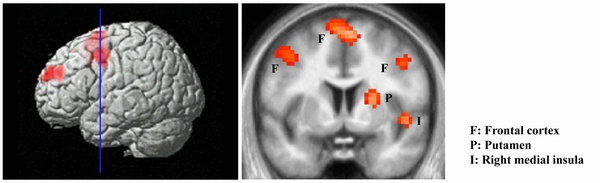
People who view pictures of someone they hate display activity in distinct areas of the brain that, together, may be thought of as a ‘hate circuit’, according to new research by scientists at University College London.
Some people have a fear of plane crashes, others of tiny little spiders. Going to the beach? You may worry about sharks.
But few people worry about diabetes, even though 24 million people have it. According to a new survey by the American Diabetes Association, more people reported fear of being in a plane crash, hit by lightning, attacked by a shark, or bitten by a snake, than a fear of developing diabetes.
Scientists believe that complex diseases such as schizophrenia, major depression and cancer are not caused by one, but a multitude of dysfunctional genes. A novel computational biology method developed by a research team led by Ali Abdi, PhD, associate professor in New Jersey Institute of Technology's department of electrical and computer engineering, has found a way to uncover the critical genes responsible for disease development.
"We see our research developing a novel technology holding high promises for finding key molecules that contribute to human diseases and for identifying critical targets in drug development," said Abdi. "The key to success was our collaboration among researchers with different backgrounds in engineering and medical sciences."
Current models of global climate change predict warmer temperatures will increase the rate that bacteria and other microbes decompose soil organic matter, a scenario that pumps even more heat-trapping carbon into the atmosphere. But a new study led by a University of Georgia researcher shows that while the rate of decomposition increases for a brief period in response to warmer temperatures, elevated levels of decomposition don't persist.
An international team of researchers at the University of California, San Diego School of Medicine and the University of Basel in Switzerland have issued a report on the mechanism of toxicity of a chemical compound called Dibutyltin (DBT).
DBT is part of a class of high toxic and widely distributed chemical compounds called organotins, DBT is most commonly used as an anti-fouling agent in paint, for example in the fishing and shipbuilding industries. It is also used in the production of polyvinyl chloride (PVC) plastic tubes and bottles.
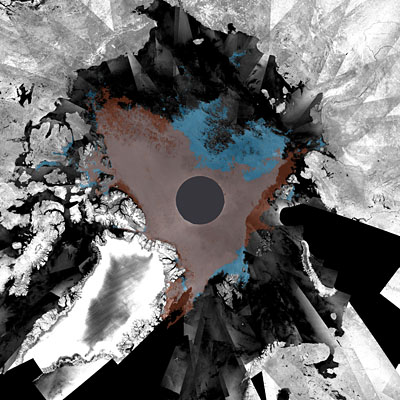
The thickness of sea ice in large parts of the Arctic declined by as much as 19% last winter compared to the previous five winters, according to data from ESA's Envisat satellite.
Using Envisat radar altimeter data, scientists from the Centre for Polar Observation and Modelling at University College London (UCL) measured sea ice thickness over the Arctic from 2002 to 2008 and found that it had been fairly constant until the record loss of ice in the summer of 2007. Unusually warm weather conditions were present over the Arctic in 2007, which some scientists have said explain that summer ice loss. However, this summer reached the second-lowest extent ever recorded with cooler weather conditions present.
Armadillo Aerospace of Rockwall, Texas, earned $350,000 in NASA prize money during the Northrop Grumman Lunar Lander Challenge in Las Cruces, N.M.
The challenge is a two-level, $2 million competition designed to accelerate commercial space technology and is sponsored by NASA's Centennial Challenges program. After Armadillo's $350,000 first place win for level one this year, $1.65 million remains as available prize money for future competitions.
College students are under quite a bit of pressure these days. Trust me, I know. Working to make enough for tuition, fighting with endless hours of homework and worrying about living expenses on top of the exam you have to study for... it can be quite overwhelming. With all the complaints of stress affecting a student's academic performance, University of Minnesota researchers decided to test the reliability behind them.