








Nestlé, the world's largest food and beverage company, has introduced Glowelle, a dietary supplement that they say protects and hydrates the inner and outer layers of the skin. Their marketing blurb says it is formulated with a proprietary(naturally) blend of high antioxidant vitamins (like vitamin A, vitamin C and vitamin E), phtyo-nutrients, botanical and fruit extracts and that drinking it will help fight the signs of aging.Glowelle's antioxidants help defend against the damage caused by free radicals, which are caused by pollution ... and the sun.

You know, the sun. Source of all life on Earth. It's apparently bad for you. Except for that vitamin C antioxidant they put in Glowelle, which you can get for free ... from the sun.

Bacteria found in compost heaps able to convert waste plant fibre into ethanol could eventually provide up 10% of the UK's transport fuel needs, scientists heard at the Society for General Microbiology's Autumn meeting.

Researchers from Guildford, UK, have successfully developed a new strain of bacteria that can break down straw and agricultural plant waste, domestic hedge clippings, garden trimmings and cardboard, wood chippings and other municipal rubbish to convert them all into useful renewable fuels for the transport industry.

Heart disease is the leading cause of death worldwide but many people with cardiovascular disease have none of the common risk factors usually blamed, such as smoking, obesity and high cholesterol.

Researchers say they have discovered a new link between gum disease and heart disease, according to a presentation at the Society for General Microbiology's Autumn meeting being held this week at Trinity College, Dublin.

In recent years chronic infections have been associated with a disease that causes "furring" of the arteries, called atherosclerosis, which is the main cause of heart attacks. Gum disease is one of the most common infections of humans and there are now over 50 studies linking gum disease with heart disease and stroke.

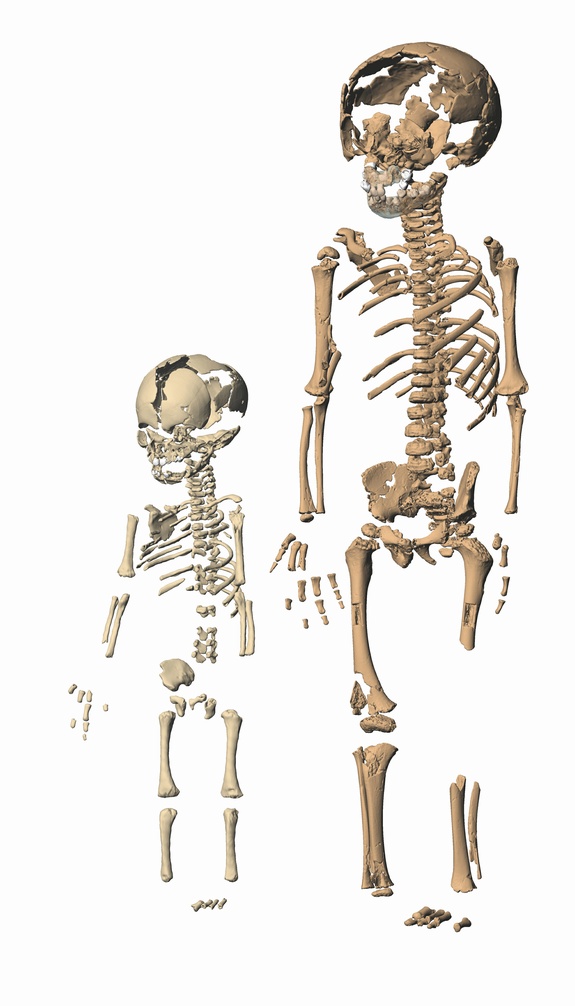
Neanderthals had a brain at birth of a similar size to that of modern-day babies. However, after birth, their brain grew more quickly than it does for Homo sapiens and became larger too. Nevertheless, the individual lifespan ran just as slowly as it does for modern human beings. These new insights into the history of human evolution are being presented this week in PNAS by researchers from the University of Zurich.

Dr. Marcia Ponce de León and Prof. Christoph Zollikofer from the Anthropological Institute of the University of Zurich examined the birth and the brain development of a newborn Neanderthal baby from the Mezmaiskaya Cave in the Crimea. That Neanderthal child, which died shortly after it was born, was evidently buried with such care that it was able to be recovered in good condition from the cave sediments of the Ice Age after resting for approximately 40,000 years.

Ol' Blue Eyes was way ahead of the curve in diabetes treatment - I nominate his 1956 hit, "I've Got You Under My Skin" for the official anthem for type 1 diabetes patients. A study published online in the New England Journal of Medicine Sept. 8 details a new continuous glucose monitor device placed - you guessed it - under the skin. The Skinny on CGM The authors, from the Juvenile Diabetes Research Foundation, randomly assigned 322 adults and children with intensively treated type 1 diabetes to CGM or normal blood glucose meter. Primary outcome was change in glycated hemoglobin at 26 weeks.

Infantile spasms are a severe and potentially devastating epilepsy condition affecting children aged typically 4-8 months. Sometimes called West syndrome because it was first described by Dr. William James West in the 1840s, they consist of a sudden jerk followed by stiffening. Each individual seizure usually lasts no more than a second but they occur close together and are most common just after waking up.

In a new study appearing in Epilepsia, researchers have found that the ketogenic diet, a high fat, low carbohydrate diet more traditionally used for intractable childhood epilepsy, is an effective treatment for this condition before using drugs.

The study is the first description of the ketogenic diet as a first-line therapy for infantile spasms.

Pollution is bad for the lungs but it's also bad for the heart, says a recent study of 48 Boston-area patients, all of whom had coronary artery disease. 24-hour Holter monitors were used to examine electrocardiograms for the conductivity change, called an ST-segment depression, which may indicate inadequate blood flow to the heart or inflamed heart muscle.

The average 24-hour levels for all pollutants included in the analysis were below accepted or proposed National Air Quality Standard thresholds, meaning patients were breathing air considered healthy.

Previous studies have documented that exposure to road traffic can trigger heart attacks, and that particulate air pollution increases the risk for cardiac death or heart attack.

If you've grown concerned that young people chuckling ironically at news clips of real events may actually not be getting a real grasp of what those fake news shows are ridiculing, you can rest assured there is no truthiness to it. A new study suggests that those entertainment news shows, such as The Daily Show or The Colbert Report, may not be as influential in teaching voters about political issues and candidates as was previously thought.

Previous studies have reported up to 48 percent of all adults and 60 percent of young voters used fake news shows as a source of campaign news in the 2004 presidential election. But researchers from Ohio State University have found reasons to discount how effective these shows are in informing the general public.

Patients visiting an ophthalmologist report that prayer is important to their well-being and that God plays a positive role in illness, according to a report in the September issue of Archives of Ophthalmology.

"Ethical medical practice includes physician behavior, beyond technical competence, that promotes healing and optimizes the patient's welfare," the authors write as background information in the article. "The physician who respects the patient as a person with dignity must acknowledge the patient's value system to establish a relationship that permits conversations that nourish trust for joint therapeutic decision making. For many patients, religion and spirituality is important to their value system and may represent a unique source of motivation and coping with life events, including the experience of personal illness (illness refers to the response of a patient to a disease)."

In an article in Nature, The Cancer Genome Atlas (TCGA) has reported results from its first comprehensive study which focused on the deadly brain cancer glioblastoma.

The TCGA team, comprised of more than 100 investigators from seven cancer centers and research institutions throughout the country, analyzed 601 genes in tumor samples from 91 glioblastoma multiforme (GBM) patients.

Investigators at the Johns Hopkins Kimmel Cancer Center and University of Southern California, members of the TCGA team, studied 2000 genes.

