








CD4+ T lymphocytes, or simply CD4 T cells, are the "brains" of the immune system, coordinating its activity when the body comes under attack. They are also the cells that are attacked by HIV, the devastating virus that causes AIDS and has infected roughly 40 million people worldwide. The virus slowly eats away at CD4 T cells, weakening the immune system.

But the immune systems of HIV/AIDS patients face another enemy as well — stress, which can accelerate CD4 T cell declines. Now, researchers at UCLA report that the practice of mindfulness meditation stopped the decline of CD4 T cells in HIV-positive patients suffering from stress, slowing the progression of the disease. The study was just published in the journal Brain, Behavior, and Immunity.

Using ESO's Very Large Telescope Interferometer, astronomers were able to witness for the first time the appearance of a shell of dusty gas around a star that had just erupted and follow its evolution for more than 100 days. This provided the astronomers with a new way to estimate the distance of this object and obtain invaluable information on the operating mode of stellar vampires, dense stars that suck material from a companion.

Although novae were first thought to be new stars appearing in the sky, hence their Latin name, they are now understood as signaling the brightening of a small, dense star. Novae occur in double star systems comprising a white dwarf - the end product of a solar-like star - and, generally, a low-mass normal star - a red dwarf. The two stars are so close together that the red dwarf cannot hold itself together and loses mass to its companion. Occasionally, the shell of matter that has fallen onto the ingesting star becomes unstable, leading to a thermonuclear explosion which makes the system brighter.

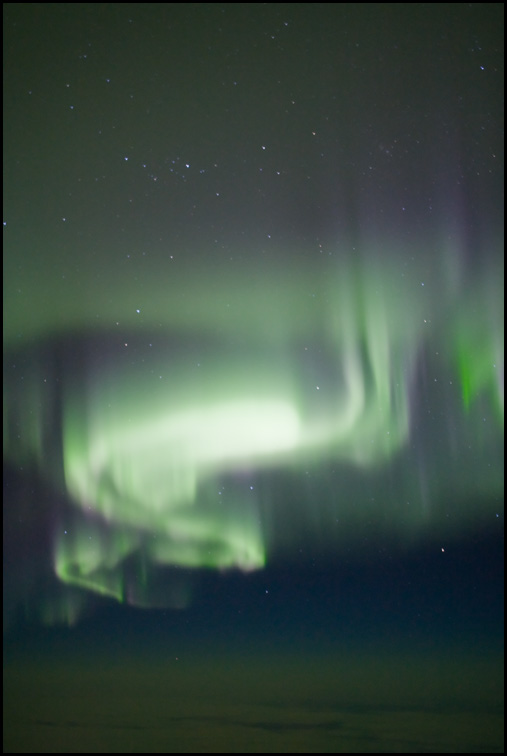
Themis was the blindfolded Greek goddess of order and justice. It's also a NASA-funded mission which stands for Time History of Events and Macroscale Interactions during Substorms - and, using it, UCLA space scientists and colleagues have identified the mechanism that triggers substorms in space; wreaks havoc on satellites, power grids and communications systems; and leads to the explosive release of energy that causes the spectacular brightening of the aurora borealis, also known as the northern lights.

For 30 years, there have been two competing theories to explain the onset of these substorms, which are energy releases in the Earth's magnetosphere, said Vassilis Angelopoulos, a UCLA professor of Earth and space sciences and principal investigator of THEMIS.

A new discovery contradicts the prevailing theory that aging is a buildup of tissue damage akin to rust in some metals, and implies science might eventually halt or even reverse the ravages of age.

Specific genetic instructions drive aging in worms, report researchers at the Stanford University School of Medicine.

The researchers examined the regulation of aging in C. elegans, a millimeter-long nematode worm whose simple body and small number of genes make it a useful tool for biologists. The worms age rapidly: their maximum life span is about two weeks.

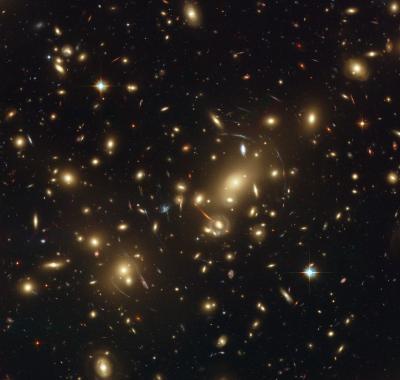
By using the gravitational magnification from six massive lensing galaxy clusters, the NASA/ESA Hubble Space Telescope has provided scientists with the largest sample of very distant galaxies seen to date. Some of the newly found magnified objects are dimmer than the faintest ones seen in the legendary Hubble Ultra Deep Field, which is usually considered the deepest image of the Universe.

Over the last decade, energy drinks like such as Red Bull, Monster and Rockstar have become nearly popular on college campuses. The global market for these types of drinks currently exceeds $3 billion a year and new products are introduced annually.

Although research on the effect of energy drink consumption remains sparse, a researcher at the University at Buffalo's Research Institute on Addictions (RIA) says there are links between energy drinks and public health concerns like substance abuse and risky behaviors.

Two new research reports by RIA Research Scientist Kathleen E. Miller, Ph.D., examine the relationships between energy drink consumption and risk-taking in college students as well as "toxic jock identity" -- characterized by hyper-masculinity and risk-taking behaviors among college-age athletes.

Bring on the bad weather. A single typhoon in Taiwan buries as much carbon in the ocean (in the form of sediment) as all the other rains in that country all year long - combined.

The study published in Geology the first to examine the chemistry of stream water and sediments that were being washed out to sea while a typhoon was happening at full force. This new knowledhe should help scientists develop better models of global climate change.

Anne Carey, associate professor of earth sciences at Ohio State, said that she and her colleagues have braved two typhoons since starting the project in 2004. The Geology paper details their findings from a study of Taiwan's Choshui River during Typhoon Mindulle in July of that year.

Along with all the other changes that come with age, healthy older people also lose some capacity for sleep, according to a new report published online on July 24th in Current Biology, a Cell Press publication. When asked to stay in bed for 16 hours in the dark each day for several days, younger people get an average of 9 hours of shuteye compared to 7.5 for older people, the researchers report.

The study also found that most healthy people, and young people in particular, don't get as much sleep as they need.

The idea that sleep changes markedly across the life span isn't new. In fact, insomnia is a common complaint among older people. But whether age-related changes in sleep were due to changes in social factors, circadian rhythms, or shifts in an internal "set point" for sleep need or the ability to sleep had remained unresolved.

UC Irvine researchers have found a molecular link between circadian rhythms, our body clock, and metabolism. The discovery reveals new possibilities for the treatment of diabetes, obesity and other related diseases.

Circadian rhythms of 24 hours govern fundamental physiological functions in almost all organisms. The circadian clocks are intrinsic time-tracking systems in our bodies that anticipate environmental changes and adapt themselves to the appropriate time of day.

Disruption of these rhythms can profoundly influence human health and has been linked to metabolic disorders, insomnia, depression, coronary heart diseases and cancer.

One of the reasons people on low-carbohydrate diets may lose weight is that they reduce their intake of fructose, a type of sugar that can be made into body fat quickly, according to a researcher at UT Southwestern Medical Center.

Dr. Elizabeth Parks, associate professor of clinical nutrition and lead author of a study appearing in a current issue of the Journal of Nutrition, said her team's findings suggest that the right type of carbohydrates a person eats may be just as important in weight control as the number of calories a person eats.

Current health guidelines suggest that limiting processed carbohydrates, many of which contain high-fructose corn syrup, may help prevent weight gain, and the new data on fructose clearly support this recommendation.

