








Nicholas Wade has an outstanding piece in today's Times Science section about the "hope" for Resverotrol and other sirtuin-activating compounds that may activate the lifespan extending pathway controlled by caloric restriction, although, like several stories on the subject lately, it left me wondering about a few things. Comment and answers appreciated, they are: 1. The reason for these stories--a Cell Metabolism article that appeared July 3 was actually quite negative about resverotrol's lifespan-extending effects. The Cell piece was about an experiment on normal, rather than high fat fed mice, raising the questions that resverotrol's previous success with high fat mice actually had more to do with energy partitioning than with the stress resistance touted by Sinclair and Guerente.
Southern Illinois University School of Medicine

Adding just the right dash of nanoparticles to standard mixes of lubricants and refrigerants could yield the equivalent of an energy-saving chill pill for factories, hospitals, ships, and others with large cooling systems, suggest the latest results from National Institute of Standards and Technology (NIST) research that is pursuing promising formulations.

NIST experiments with varying concentrations of nanoparticle additives indicate a major opportunity to improve the energy efficiency of large industrial, commercial, and institutional cooling systems known as chillers. These systems account for about 13 percent of the power consumed by the nation’s buildings, and about 9 percent of the overall demand for electric power, according to the Department of Energy.

On June 19, 2008 the American Dental Association updated its website indicating that fluoride is a concern to all kidney patients, not just those on dialysis. Along with false assurances of safety, fluoride chemicals are added to some public and bottled water in the unscientific belief it reduces cavities. Fluoride-induced bone damage could occur in kidney patients who consume even "optimally" fluoridated water because malfunctioning kidneys do not properly sift fluoride from the blood and out of the body.

A new fossil discovery, the first of its kind from the whole of the Antarctic continent, provides scientists with new evidence to support the theory that the polar region was once much warmer.

The discovery by an international team of scientists was published in Proceedings of the Royal Society B and involved researchers from the University of Leicester, North Dakota State University, the British Geological Survey, Queen Mary University of London, and Boston University.

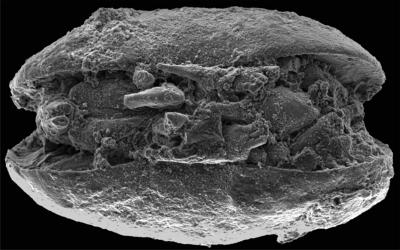
The team made a new fossil discovery in the Dry Valleys of the East Antarctic region. The fossils (ostracods) come from an ancient lake - 14 million years old - and are exceptionally well preserved, with all of their soft anatomy in 3-dimensions.

We are continuously bombarded with messages about the dangers of too much sun and the increased risk of melanoma (the less common and deadliest form of skin cancer), but are these dangers real, or is staying out of the sun causing us more harm than good?

For sun
Sam Shuster, a consultant dermatologist at Norfolk and Norwich University Hospital, says that sun exposure is the major cause of the common forms of skin cancer, which are all virtually benign, but not the rarer, truly malignant melanoma.

Shuster says that the common skin cancers develop in pale, sun exposed skin and are less frequent in people who avoid the sun and use protection.

In any country, some place has to be the deadliest. In the United Kingdom, that place is Scotland. The key reason is drug abuse, accounts for a third of the deaths behind Scotland's higher mortality rate, according to a study published on bmj.com today.

Traditionally, higher death rates compared to England and Wales have been blamed on the higher levels of deprivation in Scotland. Yet over half the difference between Scottish and English deaths cannot be accounted for by higher levels of deprivation. This puzzling "excess" of Scottish deaths has become referred to as the "Scottish effect."

Professor Bloor and colleagues from the University of Glasgow, analysed how many of these unaccounted-for deaths were the result of drug abuse.

More than 75 percent of the bank Web sites surveyed in a University of Michigan study had at least one design flaw that could make customers vulnerable to cyber thieves after their money or even their identity.

Atul Prakash, a professor in the Department of Electrical Engineering and Computer Science and doctoral students Laura Falk and Kevin Borders examined the Web sites of 214 financial institutions in 2006. They will present the findings for the first time at the Symposium on Usable Privacy and Security meeting at Carnegie Mellon University July 25.

Researchers have discovered that a frog that lives near noisy springs in central China can tune its ears to different sound frequencies, much like the tuner on a radio can shift from one frequency to another. It is the only known example of an animal that can actively select what frequencies it hears, the researchers say.

The findings, from a collaborative effort led by the University of Illinois and the University of California at Los Angeles, appear this week in Proceedings of the National Academy of Sciences. The research team also included scientists from the Chinese Academy of Sciences and the Massachusetts Eye and Ear Infirmary (at Harvard Medical School).

Volunteering for environmental protection activities can be physically and mentally sustaining for older people, according to the latest issue of Public Policy & Aging Report (PPAR). In fact, this demographic group is in a unique position to have a noticeable impact on its surroundings.

For those looking to fill meaningful roles in the community after retirement, volunteerism provides opportunities for social integration. The programs of environmental organizations routinely bring together people of different generations. Many of these involve healthy physical activity, such as the testing of rivers or clean up of natural areas, for example.

The ongoing increase in the number of older U.S. citizens, coupled with a senior population seeking meaningful participation in society, can greatly serve environmental protection efforts.

Environmental factors can transform the ratio of females to males in plant populations according to new research out of the University of Toronto.

The study conducted by Ivana Stehlik, a lecturer, Jannice Friedman, a PhD candidate, and Spencer Barrett, a professor, involved a novel approach using genetic markers (known DNA sequences) to identify the sex of seeds. The team investigated six natural populations of the wind-pollinated herb Rumex nivalis in the Swiss Alps and mapped the distance between females and neighbouring males. They then measured the amount of pollen captured by female flowers and collected seeds from the plants when they were mature.

