It has been commonly regarded as a good sign that the nation's homocide rate has remained flat but the big picture obscures a disturbing fact, say researchers at the Johns Hopkins Bloomberg School of Public Health.

Namely that between 1999 and 2005, homicide involving firearms increased 31 percent among black men ages 25 to 44 and 12 percent among white men of the same age.

For the study, Susan Baker, MPH, co-author of the study and a professor with the Bloomberg School's Center for Injury Research and Policy, and her colleagues Daniel Webster and Gouqing Hu, the study's lead author, analyzed data from WISQARS™ (Web-based Injury Statistics Query and Reporting System), which includes information on injury-related deaths and mortality rates per 100,000 population from 1981-2005. Mortality data by urbanization level was obtained through the Wonder System at the Centers for Disease Control and Prevention.

Materials scientists at the National Institute of Standards and Technology (NIST) have developed a process to build complex, three-dimensional nanoscale structures of magnetic materials such as nickel or nickel-iron alloys using techniques compatible with standard semiconductor manufacturing. The process, described in a recent paper, could enable whole new classes of sensors and microelectromechanical (MEMS) devices.

The NIST team also demonstrated that key process variables are linked to relatively quick and inexpensive electrochemical measurements, pointing the way to a fast and efficient way to optimize the process for new materials.

Typically the palm of your hand doesn’t excite much interest, unless you’re a chirologist – those who divine the future through palm-reading.

   Hand

Luckily for palmophiliacs, there’s a new show in town, and it just may change the way we think about biometric security systems.


A new biometrics system called PalmSecure, developed by Tokyo-based Fujitsu Ltd., works by matching the unique vein pattern in your palm to an infrared scan of your palm stored in a database. The system is akin to fingerprinting, but improves upon the oft-used identification system of police stations everywhere.

Creationists and intelligent design proponents have scored an important victory in Louisiana this week, at least for now. In its appalling lack of wisdom, that State’s legislature overwhelmingly approved a bill that requires teachers to introduce to their students material that “promotes critical thinking skills.” The Republican Governor of Louisiana, Bobby Jindal, predictably said that he will sign the bill into law because “the way we are going to have smart and intelligent kids is exposing them to the very best science,” according to an article in (a real) Science magazine.

What’s wrong with that?, the naive reader may reasonably ask. Surely the main point of education is in fact to instill critical thinking skills into students, just like the bill says. Precisely, and since this is what every teacher in the country is already striving to do, do we need a law for it? It would be like passing a law directing all physicians to do their best to save people’s lives, or mechanics to repair cars. Duh. No, the new bill is the handiwork of the infamous Discovery Institute, the Seattle so-called Think Tank that has been pushing intelligent design creationism for more than a decade now (and who suffered a spectacular defeat two years ago in the Dover, PA case).

Energy from the sun and carbon dioxide fuel photosynthesis in plants and algae, making life on earth possible. Carbon that is fixed by plants is converted to starch and sucrose, which are utilized by plants for energy and to build biomass.

Human evolution and society have been intimately tied to our exploitation of plant biomass for food, fuel, tools, and shelter. However, to be usable, the starch carbohydrate stored in plants must be broken down to component sugars. Some aspects of starch metabolism have been known for many years, but regulation of the process and exact physical mechanisms are still not well understood.

With new information emerging from genome sequencing and mutational analyses, we are beginning to gain a better understanding of these complex and finely tuned processes. Such knowledge is especially critical as we struggle with issues of energy and food supply.

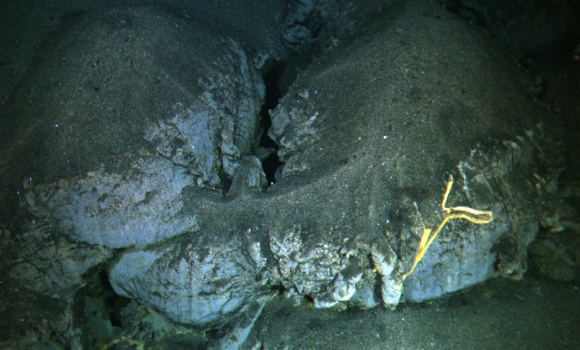
An international team of researchers says they have evidence of explosive volcanism in the deeps of the ice-covered Arctic Ocean for the first time.

Researchers from an expedition to the Gakkel Ridge report in the current issue of Nature that they discovered extensive layers of volcanic ash on the seafloor, which indicates a gigantic volcanic eruption.

A major part of Earth's volcanism happens at the so-called mid-ocean ridges and, therefore, completely undetected on the seafloor. There, the continental plates drift apart; liquid magma intrudes into the gap and constantly forms new seafloor through countless volcanic eruptions. Accompanied by smaller earthquakes, which go unregistered on land, lava flows onto the seafloor. These unspectacular eruptions usually last for only a few days or weeks.

With as many as one in eight Americans suffering from chronic migraines, Dr. Yousef Mohammad, a neurologist and principal investigator of the study at Ohio State's Medical Center, says a new study's results of an electronic device designed to "zap" away migraine pain are promising, given that only 50 to 60 percent of migraine patients respond to traditional migraine drug treatments.

Results of the study, to be presented Friday (6/27) at the annual American Headache Society meeting in Boston, found that the experimental device is safe and effective in eliminating headaches when administered during the onset of the migraine.

NeuraLieve, manufacturer of the device located in Sunnyvale, Ca., provided the funding and equipment for the study. Mohammad serves on the company's board of directors.

Large amounts of ozone, 50% more than predicted by the most recent climate models, are being destroyed in the lower atmosphere over the tropical Atlantic Ocean. This discovery by a team of scientists from the UK's National Centre for Atmospheric Science and Universities of York and Leeds has particular significance because ozone in the lower atmosphere acts as a greenhouse gas and its destruction also leads to the removal of the third most abundant greenhouse gas; methane.

The findings come after analysing the first year of measurements from the new Cape Verde Atmospheric Observatory, recently set up by British, German and Cape Verdean scientists on the island of São Vicente in the tropical Atlantic. Alerted by these Observatory data, the scientists flew a research aircraft up into the atmosphere to make ozone measurements at different heights and more widely across the tropical Atlantic. The results mirrored those made at the Observatory, indicating major ozone loss in this remote area.

There are more men involved in high-profile international business deals than women, and that may be hurting companies, according to the results of a new Tel Aviv University study on the role of gender in management, which found that women may be more skilled at business negotiations than their masculine counterparts.

Dr. Yael Itzhaki, an adjunct lecturer at Tel Aviv University's Faculty of Management, carried out simulations of business negotiations among 554 Israeli and American management students at Ohio State University, in New York City, and in Israel. She is also the founder of Netta, a non-profit organization that promotes the advancement of women in the workplace through its programs and research.

The results of her Ph.D. thesis project indicated that in certain groupings, women offered better terms than men to reach an agreement. And women were good at facilitating interaction between the parties, she says.

Dr. Sarah Hake and her colleagues, George Chuck, Hector Candela-Anton, Nathalie Bolduc, Jihyun Moon, Devin O'Connor, China Lunde, and Beth Thompson, have taken advantage of the information from sequenced grass genomes to study how the reproductive structures of maize are formed. Dr. Hake, of the Plant Gene Expression Center, USDA-ARS, who is the 2007 recipient of the Stephen Hales Prize, will be presenting this work at the opening Awards Symposium of the annual meeting of the American Society of Plant Biologists in Mérida, Mexico, June 27th.

Maize was first domesticated in the highlands of Mexico over 6,000 years ago and is now one of the most important crop plants in the world. It is a member of the grass family, which also hosts the world's other major crops including rice, wheat, barley, sorghum, and sugar cane.

Maize has a rich genetic history, which has resulted in thousands of varieties or landraces. Scientists at CIMMYT, Centro Internacional de Mejoramiento de Maíz y Trigo, the International Maize and Wheat Improvement Center, work to preserve the ancient varieties that represent adaptations to different environmental conditions such as different soils, temperature, altitude, and drought. These traits are expressions of different genes and groups of genes that scientists hope to utilize to keep up with changing climatic conditions and global food supply.