






A study recently published in Social Science Quarterly finds that religious beliefs play a more significant role than church attendance or religious traditions in political participation.

Religious beliefs affected political participation more than other measures of religious behavior. In addition, different types of religious beliefs influence political participation differently.

Generalized, macro religious beliefs affected national political participation. Macro beliefs include religious beliefs that involve broad, worldly concerns. Narrow, individually experienced micro beliefs that are personal and affect individual concerns had no effect on national politics.

Scientists at the Burnham Institute for Medical Research have, for the first time, genetically programmed embryonic stem (ES) cells to become nerve cells when transplanted into the brain, according to a study published today in The Journal of Neuroscience.

The research, an important step toward developing new treatments for stroke, Alzheimer's, Parkinson's and other neurological conditions showed that mice afflicted by stroke showed tangible therapeutic improvement following transplantation of these cells. None of the mice formed tumors, which had been a major setback in prior attempts at stem cell transplantation.

The team was led by Stuart A. Lipton, M.D., Ph.D., professor and director of the Del E. Webb Neuroscience, Aging, and Stem Cell Research Center at Burnham. Dr. Lipton is also a clinical neurologist who treats patients with these disorders. Collaborators included investigators from The Scripps Research Institute.

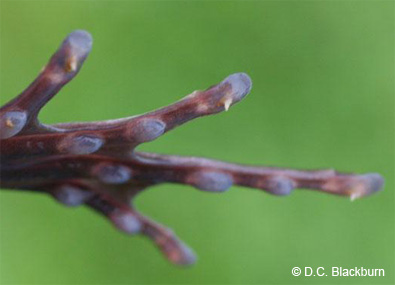
Biologists at Harvard University have determined that some African frogs puncture their own skin with sharp bones in their toes when threatened, using the bones as claws capable of wounding predators. It's not quite the X-Men's Wolverine (they can't cut through Magneto) but it's a nifty defensive mechanism.

"Most vertebrates do a much better job of keeping their skeletons inside," said David C. Blackburn, a doctoral student in Harvard's Department of Organismic and Evolutionary Biology. "It's surprising enough to find a frog with claws. The fact that those claws work by cutting through the skin of the frogs' feet is even more astonishing. These are the only vertebrate claws known to pierce their way to functionality."

Homer's Odyssey, be it history or fiction, had one potentially true part that has fascinated readers throughout the ages - namely whether Odysseus returned home to experience a total solar eclipse.

Total eclipses, when the moon briefly but completely blocks the sun, happen pretty rarely. In fact, they're so rare that if what Homer describes is truly an eclipse, it could potentially help historians date the fall of Troy, which was purported to occur around the time of the events described in the Iliad and the Odyssey.

After arguing about the point for hundreds of years, historians, astronomers and classicists finally agreed that there was no corroborating evidence and tabled the discussion. Now, Marcelo O. Magnasco, head of the Laboratory of Mathematical Physics at Rockefeller, and Constantino Baikouzis of the Proyecto Observatorio at the Observatorio Astronómico in La Plata, Argentina, believe they have found some overlooked passages that, taken together, may shed new light on the timing of an epic journey.

Want to put your computer to good use while you sleep? Muhammad Zaman, assistant professor in biomedical engineering, recently introduced Cellular Environment in Living Systems @Home or CELS@Home for short. The program already has more than 1,000 computer users worldwide contributing to the project and the numbers are growing.

The idea is based on grid computing so instead of using local computing resources, which are almost always limited, Internet users worldwide can contribute their idle computer time, creating a "virtual" supercomputer to solve a difficult problem. In this case, the grid computing program is calculating cellular interactions in different environments to help understand the principles of cell migration and cancer cell metastasis, or the spread of cancer from the original tumor to other parts of the body.

Rachel Carson wasn't all that happy with DDT. I bet she really wouldn't like a gel bait insecticide that can kill three generations of cockroaches as they feed off of each other and transfer the poison. Unless she hated cockroaches as much as the rest of us do.

It is the first time that scientists have shown that a pest control bait will remain effective when it's transferred twice after the first killing dose, said Grzegorz "Grzesiek" Buczkowski, assistant professor of entomology. Passing the insecticide from one cockroach to the next is called horizontal transfer.

"Our findings are exciting because cockroaches are difficult to control since they multiply so rapidly," Buczkowski said. "They are especially bad in urban housing, and they can cause health problems."

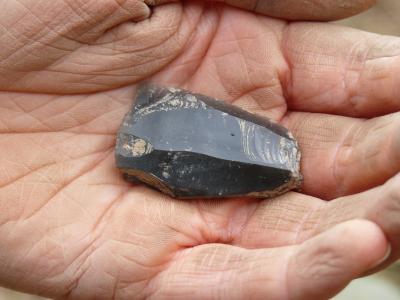
An archaeological excavation at a site near Pulborough, West Sussex, has thrown remarkable new light on the life of northern Europe's last Neanderthals. It provides a snapshot of a thriving, developing population, rather than communities on the verge of extinction.

The team, led by Dr Matthew Pope of Archaeology South East based at the UCL Institute of Archaeology, is undertaking the first modern, scientific investigation of the site since its original discovery in 1900. During the construction of a monumental house known as 'Beedings' some 2,300 perfectly preserved stone tools were removed from fissures encountered in the foundation trenches.

"The tools we've found at the site are technologically advanced and potentially older than tools in Britain belonging to our own species, Homo sapiens," says Pope. "It's exciting to think that there's a real possibility these were left by some of the last Neanderthal hunting groups to occupy northern Europe. The impression they give is of a population in complete command of both landscape and natural raw materials with a flourishing technology - not a people on the edge of extinction."

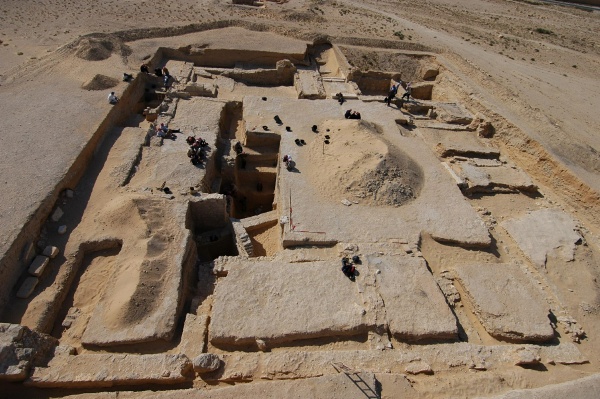
The discovery of an ancient city buried beneath the sands of modern-day Syria has provided evidence for a Hellenistic settlement that existed for more than six centuries extending into the time of the Roman Empire. The site provides a unique insight into the structures of a pre-Roman Hellenistic settlement. The project, funded by the Austrian Science Fund FWF, sheds new light on city life in the Hellenistic period.

The Syrian deserts have long kept an important secret hidden deep beneath their sands ­ the remains of the pre-Roman Hellenistic settlement of Palmyra. Until now, the only evidence for the existence of such a settlement was to be found in historical writing. As part of an FWF-funded joint project, the Institute of Classical Archaeology at the University of Vienna, the German Archaeological Institute and the Directorate General of Antiquities and Museums in Syria have been the first to track down the location of this early city.

Researchers have shown that the pre-hatching calls of baby Nile crocodiles actually mean something to their mothers - and even to their siblings.

To us, they sound like "umph! umph! umph!" but to the others in the nest it's a signal that it's time to hatch, according to the report in Current Biology. When the mother hears those cries, she also knows it's time to start digging up the nest.

The new findings, made from a series of "playback" experiments, confirm what had only been suspected on the basis of prior anecdotal observation, according to the researchers Amélie Vergne and Nicolas Mathevon of Université Jean Monnet in France. The researchers said that the calling behavior is probably critical to the early survival of the young crocodiles.

The hardiest plants and those most likely to survive the climatic shifts brought about by global warming are now easier to identify, thanks to new research findings by a team from Queen's University.

Populations of plants growing at the outer edges of their natural "geographic range" exist in a precarious balance between extinction of existing populations and founding of new populations, via seed dispersal into vacant but suitable habitat. "Policy makers concerned with preserving plant species should focus not only on conserving land where species are now, but also where they may be found in the future," says Queen's Biology professor Christopher Eckert.

