Prenatal biochemical screening tests are widely used to look for chromosomal abnormalities in the fetus which can lead to serious handicap, or even death during gestation or in the first few days after birth. But these tests are only able to detect fewer than half of the total chromosomal abnormalities in the fetus.

Dr. Francesca R. Grati, of the TOMA Laboratory, Busto Arsizio, Italy, says women should be better informed before deciding to undertake it.

The researchers studied 115,576 prenatal diagnoses carried out during the last fourteen years. 84,847 were amniocenteses, usually carried out around the 16th week of pregnancy, and 30,729 chorionic villus samplings, which can be undertaken from 12 weeks into the pregnancy. Both these tests carry an increased risk of miscarriage, so the decision on whether or not to undertake them can be difficult to weigh up.

It’s stronger than steel and nylon, and more extensible than Kevlar.

What is this super-tough material? Spider silk; and learning how to spin it is one of the materials industries’ Holy Grails.

John Gosline has been fascinated by spider silks and their remarkable toughness for most of his scientific career. He explains that if we’re to learn how to manufacture spider silk, we have to understand the relationship between the components and the spun fibre’s mechanical properties; which is why he is focusing on major ampullate silk, one of the many silks that spiders spin. According to Gosline, spiders use major ampullate silk for draglines and to build the frame and radial structures in webs, all of which have to deform and absorb enormous amounts of energy without fracturing.

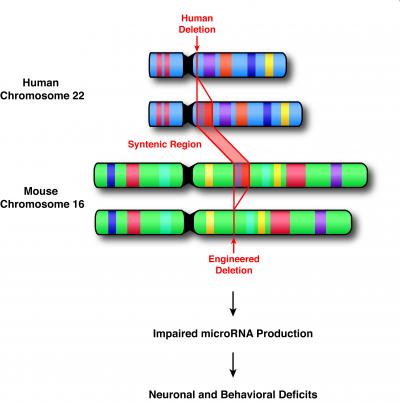
Researchers at Columbia University Medical Center have illuminated a window into how abnormalities in microRNAs, a family of molecules that regulate expression of numerous genes, may contribute to the behavioral and neuronal deficits associated with schizophrenia and possibly other brain disorders.

Maria Karayiorgou, M.D., professor of psychiatry, and Joseph A. Gogos, M.D., Ph.D., associate professor of physiology and neuroscience at Columbia University Medical Center explain how they uncovered a previously unknown alteration in the production of microRNAs of a mouse modeled to have the same chromosome 22q11.2 deletions previously identified in humans with schizophrenia.

Ecosystems are constantly exchanging materials through the movement of air in the atmosphere, the flow of water in rivers and the migration of animals across the landscape. People, however, have also established themselves as another major driver of connectivity among ecosystems.

In the June 2008 Special Issue of Frontiers in Ecology and the Environment, titled “Continental-scale ecology in an increasingly connected world,” ecologists discuss how human influences interact with natural processes to influence connectivity at the continental scale. The authors conclude that networks of large-scale experiments are needed to predict long-term ecological change.

The transport of many types of materials, including gases, minerals and even organisms, can affect natural systems. This movement results in “greenlash,” which occurs when environmental changes localized to a small geographic area have far-reaching effects in other areas. For example, a drought in the 1930’s caused small-scale farmers to abandon their farms across the U.S. Midwest. The absence of crops intensified local soil erosion, leading to powerful dust storms. Large amounts of wind-swept dust traveled across the continent, causing the infamous Dust Bowl and affecting air quality, public health and patterns of human settlement throughout the country.


A whole generation of World War II soldiers endured the same trauma as soldiers in any war but for the most part kept quiet about it with little ill effect. Somewhere after that it became normal and healthy to relive bad experiences, like war or a school shooting or terrorist attack, by discussing it publicly or in therapy.

A new study says it is okay not to express one's thoughts and feelings after experiencing a collective trauma. In fact, people who choose not to express their feelings after such an event may be better off than those who do talk about their feelings, according to University at Buffalo psychologist Mark Seery, Ph.D., lead author of a study to appear in the June issue of Journal of Consulting and Clinical Psychology.

The study investigated the mental and physical effects of collective traumas on people who are exposed to a tragedy but who do not experience a direct loss of a friend or family member. It focused on people's responses to the terrorist attacks of Sept. 11, 2001, but the results may generalize to include responses to other collective traumas.

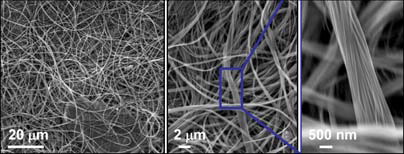
MIT scientists say they have created a membrane, a mat of nanowires with the touch and feel of paper, that can absorb up to 20 times its weight in oil, and can be recycled many times for future use. The oil itself can also be recovered. Some 200,000 tons of oil have already been spilled at sea since the start of the decade.

In addition to its environmental applications, the nanowire paper could also impact filtering and the purification of water, said Jing Kong, an assistant professor of electrical engineering in the Department of Electrical Engineering and Computer Science and one of Stellacci's colleagues on the work.

She noted that it could also be inexpensive to produce because the nanowires of which it is composed can be fabricated in larger quantities than other nanomaterials.

Nautiloids are the sole surviving family of externally-shelled cephalopods that thrived in the tropical oceans 450–150 million years ago. However, in the intervening years their modern soft bodied relatives dumped the shell and developed complex central nervous systems; which makes Nautilus ideally suited to discover the ‘evolutionary pathways that led to the development of the complex coleoid [soft bodied cephalopod] brains’ say Robyn Crook and Jennifer Basil.

Knowing that the simple Nautilus brain lacks the structures required for memory in more sophisticated cephalopods, Crook and Basil decided to test the living fossil’s memory.

It's no surprise that a woman in a bikini can increase a man's sexual appetite but research in the Journal of Consumer Research says that men who watched sexy videos or even handled lingerie had more appetite for everything - and it impacted their decisions about soda, candy and even money.

Authors Bram Van den Bergh, Siegfried DeWitte, and Luk Warlop (KULeuven, Belgium) found that the desire for immediate rewards increased in men who touched bras, looked at pictures of beautiful women, or watched video clips of young women in bikinis running through a park.

The authors believe the stimuli bring men's minds to the present as opposed to the future. "The study demonstrates that bikinis cause a shift in time preference: Men live in the here and now when they glance at pictures featuring women in lingerie. That is, men will choose the immediately available rewards and seek immediate gratification after sex cue exposure."

Researcher at the Karolinska Institute in Sweden say golf is good for your health.

People of the same sex, age and socioeconomic status who golf can expect a 5 year increase in life expectancy compared to those who do not, they say. And great golfers live even longer, so work on your handicap.

Why so? People who are good at something tend to enjoy it and do it more and also practiced more to attain their skill, so they end up with better health.

The study does not rule out that other factors than the actual playing, such as a generally healthy lifestyle, are also behind the lower death rate observed amongst golfers. However, the researchers believe it is likely that the playing of the game in itself has a significant impact on health.

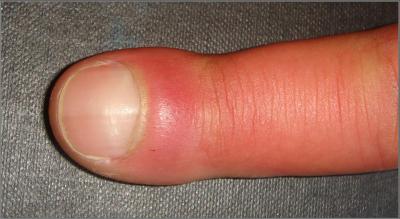
Researchers at the University of Leeds say they have solved a medical condition that puzzled Hippocrates more than 2,000 years ago. The phenomenon of "finger clubbing", a deformity of the fingers and fingernails, has been known for thousands of years, and has long been recognized to be a sign of a wide range of serious diseases.

Lung cancer, heart disease, hyperthyroidism, various gastrointestinal diseases and many other conditions all result in finger clubbing. But exactly why swollen, reddened fingers should be an indicator of serious illness has remained a mystery – until now.

"It's one of the first things they teach you at medical school," explained Professor David Bonthron of the Leeds Institute of Molecular Medicine. "You shake the patient by the hand, and take a good look at their fingers in the process."
center>