








Researchers at The University of Nottingham have taken some important first steps to creating a synthetic copycat of a living cell.

Dr Cameron Alexander and PhD student George Pasparakis in the have used polymers — long-chain molecules — to construct capsule-like structures that have properties mimicking the surfaces of a real cell.

In work published as a 'VIP paper' in the journal Angewandte Chemie International Edition, they show how in the laboratory they have been able to encourage the capsules to 'talk' to natural bacteria cells and transfer molecular information.

Charlotte Eklund-Jonsson at the Department of Food Science, Chalmers University of Technology, in Sweden says the results of her doctoral dissertation could be a new vegetarian food that boosts the uptake of iron and offers a good set of proteins.

The food, called tempe, is a whole-grain product with high folate content. It is generally accepted in medicine that whole-grains reduce the risk of cardiovascular diseases, and it is also believed that it protects against age-related diabetes and certain forms of cancer.

You went to a wedding yesterday. The service was beautiful, the food and drink flowed and there was dancing all night. But people tell you that you are in hospital, that you have been in hospital for weeks, and that you didn’t go to a wedding yesterday at all.

The experience of false memories like this following neurological damage is known as confabulation. The reasons why patients experience false memories such as these has largely remained a mystery. Now a new study conducted by Dr Martha Turner and colleagues at University College London, published in the May 2008 issue of Cortex offers some clues as to what might be going on.

The authors studied 50 patients who had damage to different parts of the brain, and found that those who confabulated all shared damage to the inferior medial prefrontal cortex, a region in the centre of the front part of the brain just behind the eyes.

The world's first optical pacemaker is described in an article published today in Optics Express. A team of scientists at Osaka University in Japan show that powerful, but very short, laser pulses can help control the beating of heart muscle cells.

"If you put a large amount of laser power through these cells over a very short time period, you get a huge response," says Nicholas Smith, who led the research. The laser pulses cause the release of calcium ions within the cells, Smith explains, and this action forces the cells to contract.

This technique provides a tool for controlling heart muscle cells in the laboratory, a breakthrough that may help scientists better understand the mechanism of heart muscle contraction.

Analysis of DNA from the remains of ancient humans provides valuable insights into such important questions as the origin of genetic diseases, migration patterns of our forefathers and tribal and family patterns.

Unfortunately, severe problems connected with the retrieval and analysis of DNA from ancient organisms (like the scarcity of intact molecules) are further aggravated in the case of ancient humans. This is because of the great risk of contamination with abundant DNA from modern humans. Humans, then, are involved at all steps, from excavation to laboratory analyses. This means that many previous results have subsequently been disputed as attributed to the presence of contaminant DNA, and some researchers even claim that it is impossible to obtain reliable results with ancient human DNA.

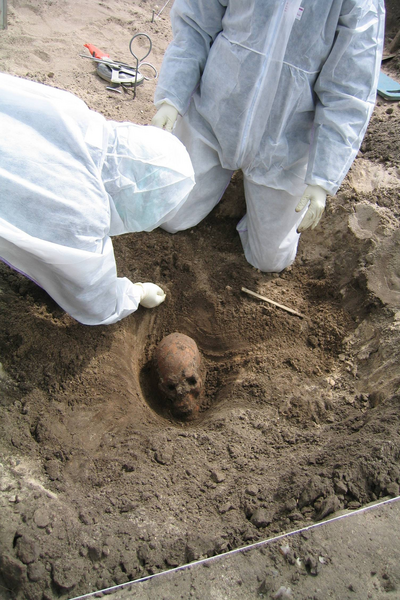
Using freshly sampled material from ten Viking skeletons from around AD 1,000, from a non-Christian burial site on the Danish island of Funen, Dissing and colleagues showed that it is indeed possible to retrieve authentic DNA from ancient humans.

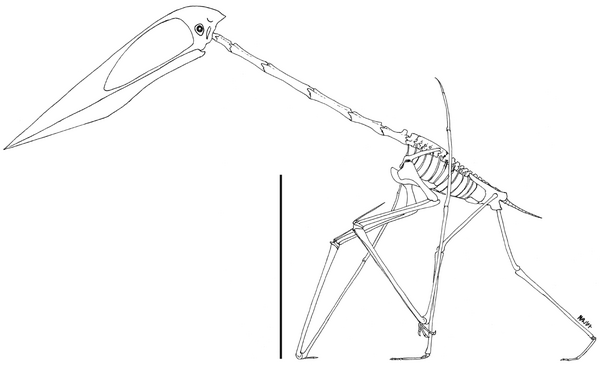
New research into gigantic flying reptiles has found that they weren’t all gull-like predators grabbing fish from the water but that some were strongly adapted for life on the ground.

Pterosaurs lived during the age of dinosaurs 230 to 65 million years ago. A new study by researchers at the University of Portsmouth on one particular type of pterosaur, the azhdarchids, claims they were more likely to stalk animals on foot than to fly.

Until now virtually all pterosaurs have been imagined by palaeontologists to have lived like modern seabirds: as gull- or pelican-like predators that flew over lakes and oceans, grabbing fish from the water. But a study of azhdarchid anatomy, footprints and the distribution of their fossils by Mark Witton and Dr Darren Naish shows that this stereotype does not apply to all flying reptiles and some were strongly adapted for terrestrial life.

As fossil fuel emissions continue to climb, reducing the amount of sunlight hitting the Earth would definitely have a cooling effect on surface temperatures.

The reduction in sunlight can be accomplished by geoengineering schemes. There are two classes: the so-called “sunshade” geoengineering scheme, which would mitigate climate change by intentionally manipulating the solar radiation on the earth's surface; the other category removes atmospheric CO2 and sequesters it into the terrestrial vegetation, oceans or deep geologic formations.

However, a new study from Lawrence Livermore National Laboratory, led by atmospheric scientist Govindasamy Bala, shows that this intentional manipulation of solar radiation also could lead to a less intense global water cycle. Decreasing surface temperatures through “geoengineering” also could mean less rainfall.

Eta Carinae has the shape of a 'little man' and surrounds a star doomed to explode within the next 100 000 years.

Being brighter than one million Suns, Eta Carinae is the most luminous star known in the Galaxy. It is the closest example of a luminous blue variable, the last phase in the life of a very massive star before it explodes in a fiery supernova.

Eta Carinae is surrounded by an expanding bipolar cloud of dust and gas known as the Homunculus ('little man' in Latin), which astronomers believe was expelled from the star during a great outburst seen in 1843 [1].

While estrogen is typically thought of as a "female" hormone, men produce it as well. Researchers say they have pinpointed estrogen as a key player in about half of all prostate cancers.

The findings are published in the May 27 online edition of the Journal of the National Cancer Institute. Dr. Mark A. Rubin, professor of pathology and laboratory medicine, and vice chair for experimental pathology at Weill Cornell Medical College, conducted the study while at the Brigham and Women's Hospital and in collaboration with Dr. Todd Golub and other members of the Broad Institute of MIT and Harvard, in Cambridge, Mass.

first discovered and described the common fusions between the TMPRSS2 and ETS family member genes subset of prostate cancer in the journal Science in 2005. "The discovery showed that these malignancies occur after an androgen (male hormone)-dependent gene fuses with an oncogene -- a type of gene that causes cancer," he explains.

Humor-

Comics are supposed to be fun, light reading. Something I read on MSNBC’s Comics & Games website has been on my mind for a few months. The column titled "News of the Weird" by Chuck Shepherd (March 30, 2008) had one paragraph that caught my attention.

"A team of researchers from the University of Calgary and the Tokyo Institute of Technology proudly announced in February that they had successfully stored "nothing" inside a puff of gas and then had managed to retrieve that same "nothing." That "nothing," is called a "squeezed vacuum," and the physicists tell us that a light wave can be manipulated so that its phases are of uncertain amplitude, then the light itself removed so that only the "uncertainty" property of the wave remains. ScienceNOW Daily News, 2-29-08"

