









Researchers at the University of Illinois report this week that a plant compound found in abundance in celery and green peppers can disrupt a key component of the inflammatory response in the brain. The findings have implications for research on aging and diseases such as Alzheimer’s and multiple sclerosis.

Inflammation can be a blessing or a blight. It is a critical part of the body’s immune response that in normal circumstances reduces injury and promotes healing. When it goes awry, however, the inflammatory response can lead to serious physical and mental problems.

Inflammation plays a key role in many neurodegenerative diseases and also is implicated in the cognitive and behavioral impairments seen in aging.

Lawrence Krauss, a theoretical physicist and cosmologist whose research is so broad that it covers science from the beginning of the universe to the end of the universe, will join Arizona State University in August to assume a leadership role in an emerging research and educational initiative on “origins.”

“Lawrence Krauss has been at the forefront of trying to unify particle physics and cosmology; of trying to use the universe itself as a laboratory to understand fundamental interactions, fundamental science and fundamental physics,” says ASU President Michael Crow. “His ability to address fundamental questions of life, of origins – Where did we come from? Why are we here? – and to seek an understanding of the long-term sustainability of life on Earth, will facilitate this new research and educational initiative at Arizona State University.”

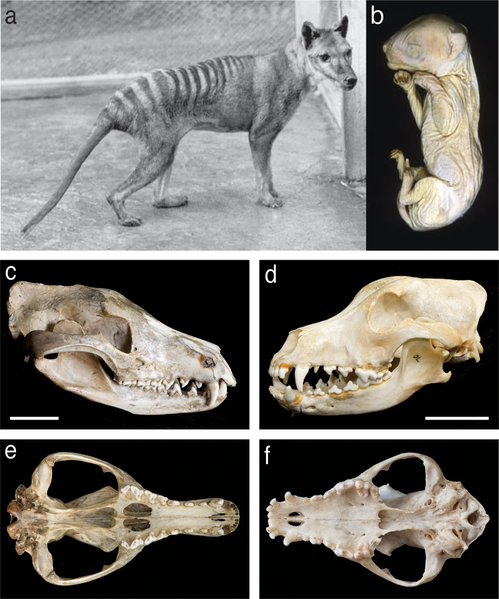
Researchers from the University of Melbourne, Australia, and the University of Texas, USA, have extracted genes from the extinct Tasmanian tiger (thylacine), inserted it into a mouse and observed a biological function – this is a world first for the use of the DNA of an extinct species to induce a functional response in another living organism.

The results, published in the international scientific journal PLoS ONE this week, showed that the thylacine Col2a1 gene has a similar function in developing cartilage and bone development as the Col2a1 gene does in the mouse.

“This is the first time that DNA from an extinct species has been used to induce a functional response in another living organism,” said Dr Andrew Pask, RD Wright Fellow at the University of Melbourne’s Department of Zoology who led the research.

Greenhouse gases are not all bad. With 90,000 out of every 100,000 years in the planet's history being ice ages, greenhouse gases are absolutely necessary for maintaining the climate we enjoy.

In the absence of greenhouse gases like water vapor, carbon dioxide, methane, etc, the average temperature on earth would be -18°C - pretty darn cold and basically unable to sustain life. However, there can be too much of a good thing.

The concentration and composition of greenhouse gases in the atmosphere has fluctuated throughout history but has been climbing more recently due to human activity - namely, there are three times as many of us as 100 years ago and that results in more methane from us, more fossil fuel combustion, more methane from livestock and various gases due to development of agriculture to feed an increased population.

Like hot peppers? Pungent garlic? Mouth-howling pain? You can thank TRPV1 and now, thanks to researchers at Baylor College of Medicine in Houston, you can also see it in full 3D.

A research team led by Dr Theodore G. Wensel, professor of biochemistry and molecular biology at BCM, generated the first three dimensional view of the protein that allows you to sense the heat of a hot pepper.

The outside stimulus used in this study was the heat of a chili pepper. It has been known for years that the burning sensation results from the action of a chemical known as capsaicin on TRPV1 found on the nerve cell membrane. TRPV1 is an ion channel, a tiny pore on the cell membrane that allows chemicals such as calcium to flux in and out.

On April 25, NASA’s Swift satellite picked up the brightest flare ever seen from a normal star other than our Sun. The flare, an explosive release of energy from a star, packed the power of thousands of solar flares. It would have been visible to the naked eye if the star had been easily observable in the night sky at the time.

The star, known as EV Lacertae, isn’t much to write home about. It’s a run-of-the-mill red dwarf, by far the most common type of star in the universe. It shines with only one percent of the Sun’s light, and contains only a third of the Sun’s mass. At a distance of only 16 light-years, EV Lacertae is one of our closest stellar neighbors. But with its feeble light output, its faint magnitude-10 glow is far below naked-eye visibility.

A self-healing aircraft could be available in the near future, thanks to an epoxy resin developed by Bristol University aerospace engineers that ‘bleeds’ from embedded vessels near the holes or cracks and quickly seals them up, restoring structural integrity.

As well as the obvious safety benefits, this breakthrough could make it possible to design lighter aeroplanes in the future. This would lead to fuel savings, cutting costs for airlines and passengers and reducing carbon emissions too.

By mixing dye into the resin, any ‘self-mends’ could be made to show as colored patches that could easily be pinpointed during subsequent ground inspections, and a full repair carried out if necessary. The dye mixed with the resin would be ultra-violet fluorescent and so would not show up in normal lighting conditions.

ESA has today opened applications for talented individuals wishing to become an astronaut in the European Astronaut Corps. There has not been a selection campaign since 1992, so this is a rare opportunity to be at the forefront of ESA’s human spaceflight programmes including future missions to the ISS, the Moon and beyond.

Applicants will be asked to enter some personal information and contact details, and to upload a private-pilot medical examination certificate, from an Aviation Medical Examiner who has been certified by their national Aviation Medical Authority; or alternatively the ESA Medical Statement, approved by a physician (see also specific requirements). Then within 24 hours the candidate will receive login details to fill in a detailed application form.

Since the 1980’s Dr. Joseph M. Prospero, professor of Marine and Atmospheric Chemistry at the University of Miami’s Rosenstiel School of Marine and Atmospheric Science, has pioneered studies in the worldwide measurement of aerosols, fine particles suspended in the atmosphere and carried by winds.

His team’s work focuses on the aerosol chemistry of the marine atmosphere. They are particularly interested in the long-range transport of pollutants from the continents to the oceans and their impact on climate and on biogeochemical processes in ocean waters.

Starting in 1980 Prospero established a network of island stations in the North and South Pacific Oceans. These stations made continuous measurements of the concentration of major aerosol species that play a role in climate: mineral dust, nitrate, sulfate, and sea salt. The network was eventually extended to the Indian Ocean and Antarctica. Throughout the 80’s and into the late 90’s the UM team maintained a total of 30 stations in constant operation in all ocean regions. The data obtained are unique and they have played a critical role in the development and testing of the global chemical transport models used in the recent climate assessment carried out by Intergovernmental Panel on Climate Change.

Molecular and statistical genetic studies in 15 Finnish families have shown that there is a substantial genetic component in musical aptitude.

Musical aptitude was determined using three tests: a test for auditory structuring ability (Karma Music test), and the Seashore pitch and time discrimination subtests. The study represents the first systematic molecular genetic study that aims in the identification of candidate genes associated with musical aptitude.

The identified regions contain genes affecting cell extension and migration during neural development. Interestingly, an overlapping region previously associated with genetic locus for dyslexia was found raising a question about common evolutionary background of music and language faculties. The results show that musical aptitude is likely to be regulated by several predisposing genes/variants.

