Using newly available data on worldwide cancer incidence, researchers at the Moores Cancer Center at University of California, San Diego (UCSD) and the Department of Family and Preventive Medicine have shown a clear association between deficiency in exposure to sunlight, specifically ultraviolet B (UVB), and breast cancer.

UVB exposure triggers photosynthesis of vitamin D3 in the body. This form of vitamin D also is available through diet and supplements.

Approximately 1,150,000 cases and 410,000 deaths from breast cancer occur annually worldwide, including 215,000 new cases and 41,000 deaths in the United States.

Do you like that title? I can't help it, I hear that song from Robin Hood every time I see the word 'oekologie' so hum along with me and enjoy episode #16.

First, I can't take credit for finding most of the terrific stuff contained in here. We're big fans of community events like this so we bothered everyone we could to help find good stuff rather than stay passive and just use submissions that got sent in. As a result, we got some terrific work that was done over the last month. Let's get right to it.

Justin at Sustainablog advocates a velvet glove approach rather than the iron fist approach sometimes taken by enviromentalists in Myths of Environmentalism. He says it's a better idea to remind people that the beautiful nature experiences they enjoyed as kids should be around when they have grandkids too. No argument about that, though we're generally inclined to make fun of Proust here, but that's only because we have fewer Ph.D.'s in English than those guys.

Parental concerns in maintaining germ-free homes for their children have led to an ever-increasing demand and the rapid adoption of anti-bacterial soaps and cleaning agents. But the active ingredients of those antiseptic soaps now have come under scrutiny by the EPA and FDA, due to both environmental and human health concerns.

Two closely related antimicrobials, triclosan and triclocarban, are at the center of the debacle. Whereas triclosan (TCS) has long captured the attention of toxicologists due to its structural resemblance to dioxin (the Times Beach and Love Canal poison), triclocarban (TCC) has ski-rocketed in 2004 from an unknown and presumably harmless consumer product additive to one of today’s top ten pharmaceuticals and personal care products most frequently found in the environment and in U.S. drinking water resources.

This is the first in a series of posts in which I plan to examine one of the fundamental concepts in ecology - the species-area relationship

Species conservation has always been intimately linked with the idea of habitat conservation. While habitat quality determines the amount of habitat required to protect a viable population of a given species, it’s only a modifier - the determining factor is area. Habitat quality can determine whether you need more or less area, but area is still the critical factor. While protected areas can be set aside for specific species, more commonly protected areas seek to protect as many species as possible. More land is likely to protect more species, but there are other factors that influence conservation decisions like the cost of land acquisition and the competing interests such as agriculture, mining or housing development.

One way to maximise the number of species in a protected area is to include as many habitat types as possible. If you include a forest, a meadow, a marsh and a lake in your protected area, you are likely to get a lot more species than you would if you only had forest habitat. The heterogeneity of the area increases the number of species. (After all, you don’t find a lot of fish in a pine forest, or field mice in a lake.) But again, this overlays a simple factor of area. A larger tract of forest will probably have more species than a smaller tract of forest. A larger section of a marsh will probably have more species than a smaller section of marsh. This fact, known as the species-area relationship is fundamental in both ecology and conservation biology. The existence of a relationship between species richness and area is obvious to anyone who has taken the time to think about it, but it is still interesting enough that it has attracted the attention of generations of ecologists.

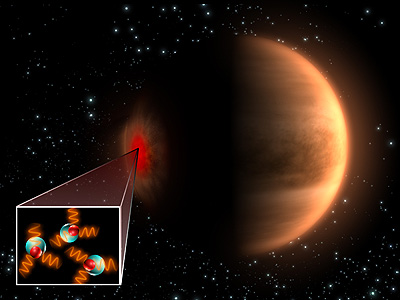
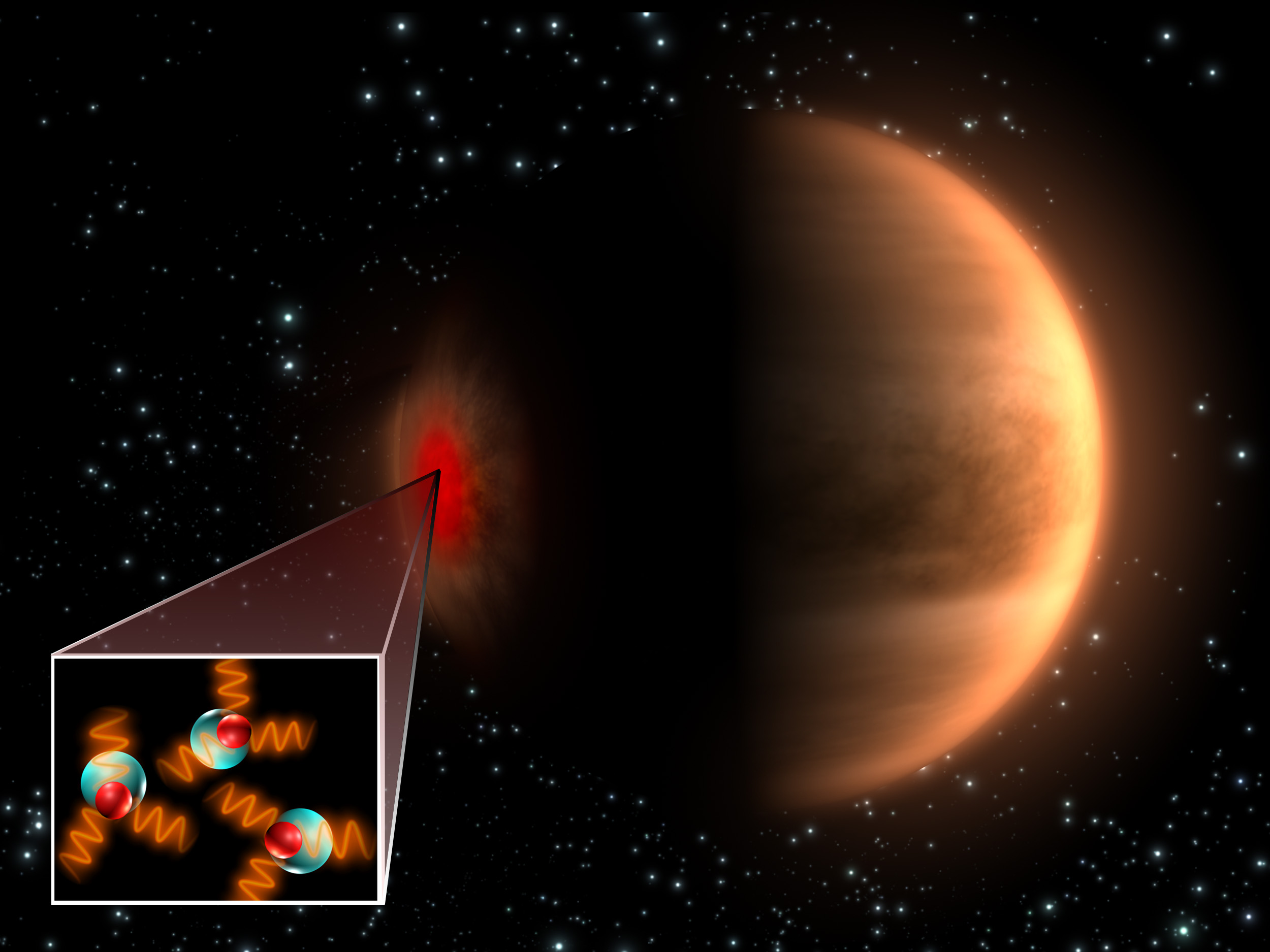
Hydroxyl is made up of a hydrogen and oxygen atom each. It has been found on another planet for the first time - in the upper reaches of the atmosphere of Venus, some 100 km above the surface - by Venus Express’s Visible and Infrared Thermal Imaging Spectrometer, VIRTIS. It is thought to be important for any planet’s atmosphere because it is highly reactive. On Earth it has a key role in purging pollutants from the atmosphere.

The OH “radical” is a very special and reactive molecule, which is unusual in conventional chemistry because of its reactivity. This detection gives scientists an important new tool to unlock the workings of Venus’s dense atmosphere.

The elusive molecule was detected by turning the spacecraft away from the planet and looking along the faintly visible layer of atmosphere surrounding the planet’s disc. The instrument detected the hydroxyl molecules by measuring the amount of infrared light that they give off.

Physicists at Penn State say they have provided a mechanism by which information can be recovered from black holes; objects from which, according to Einstein's theory of general relativity, not even light can escape. The team's findings pave the way toward ending a decades-long debate sparked by renowned physicist Steven Hawking.

In the 1970s, Hawking stated that black holes evaporate by quantum processes; however, he asserted that information, such as the identity of matter that is gobbled up by black holes, is permanently lost. At the time, Hawking's assertion threatened to turn quantum mechanics--the most successful physical theory posited by humankind--on its head, since a fundamental tenet of the theory is that information cannot be lost.

Hawking's idea was generally accepted by physicists until the late 1990s, when many began to doubt the assertion. Even Hawking himself renounced the idea in 2004. Yet no one, until now, has been able to provide a plausible mechanism for how information might escape from a black hole. A team of physicists led by Abhay Ashtekar, Holder of the Eberly Family Chair in Physics and director of the Penn State Institute for Gravitation and the Cosmos, say they have discovered such a mechanism. Broadly, their findings expand space-time beyond its assumed size, thus providing room for information to reappear.

Six Sigma is a business strategy designed to use smarter data and methodology to reduce defects - six standard deviations between the mean and the nearest specification limit. Statistically it is 3.4 defects per million.

Could this business practice be used to help turn companies green by reducing their energy use?

According to mechanical engineer Prabhakar Kaushik of NC College of Engineering in Haryana, India, and colleagues, energy conservation should be at the forefront of company efforts. In a global economy with environmental pressures high on the agenda, organizations are under increasing pressure to control costs, maintain high levels of safety and quality, and save energy. Energy conservation, of course, offers the parallel advantages of helping to reduce costs, improving efficiency, as well as reducing the carbon footprint.

New research appearing in the May issue of Psychological Science suggests that being put in a low-power role may impair a person’s basic cognitive functioning and thus, their ability to get ahead.

Pamela Smith of Radboud University Nijmegen and colleagues Nils B. Jostmann of VU University Amsterdam, Adam Galinsky of the Kellogg School of Management at Northwestern University, and Wilco W. van Dijk of VU University Amsterdam, focus on a set of cognitive processes called executive functions. Executive functions help people maintain and pursue their goals in difficult, distracting situations. The researchers found that lacking power impaired people’s ability to keep track of ever-changing information, to parse out irrelevant information, and to successfully plan ahead to achieve their goals.

On the 25th anniversary of the first scientific article linking a retrovirus to AIDS, Anthony S. Fauci, M.D., director of the National Institute of Allergy and Infectious Diseases, reflects on his experience treating and studying HIV/AIDS for the past quarter century.

Outlining the peaks and valleys of the scientific community’s journey so far, Dr. Fauci writes, “…we must learn from our mis-steps, build on our successes in treatment and prevention, and renew our commitment to developing the truly transforming tools that will one day put this scourge behind us.”

From the outset, AIDS was clearly more menacing than any other novel disease Dr. Fauci and his colleagues had previously encountered, he writes. The period when clinicians lacked the ability to diagnose and treat AIDS was the bleakest of his career. The discovery that HIV causes AIDS stimulated a burst of progress in both the clinic and the laboratory. But the 1987 debut of the first effective drug against HIV, zidovudine (AZT), generated excessive optimism, Dr. Fauci reflects, as the virus quickly and predictably developed drug resistance.

For the first time, a study combines measurements of abnormalities in the eye with models for assessing how well an individual can see, meaning it may be possible to program a machine to automatically produce prescriptions for corrective lenses.

The model for predicting visual clarity — based on measurements taken by today’s highly accurate aberrometers — could also enable surgeons to more accurately assess and correct the vision of patients undergoing lasik or refractive surgery.

New technology in aberrometers means ophthalmologists and others can accurately measure refractive error and other abnormalities in the eye’s optics. But these instruments cannot use these measurements to predict visual acuity, or how well a person can actually see. Usually, ophthalmologists and optometrists rely on a patient’s ability to identify characters on an eye chart to determine visual clarity.