





As marine pollution continues to rise, various interesting solutions have been proposed to remove toxic contaminants.

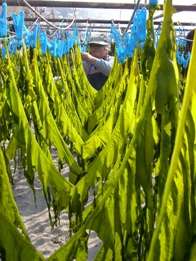
Various species of seaweed are able to extract toxic compounds from seawater, says Shinichi Nagata of the Environmental Biochemistry Group, at Kobe University, Japan, and colleagues at Shimane University and Nankai University, China.

They point to the brown seaweed, Undaria pinnatifida, known as wakame in Japan, and note that it has been the focus of research in this area for almost a decade.

Biomedical research in developing countries is the kind of ethical condundrum we all think about.

On one hand, infectious diseases may cause up to half of all deaths in undeveloped nations(1), so no one needs advanced treatments more. On the other hand, these are human clinical trials of experimental drugs and socio-economic status does not make you a lab monkey in any sort of culture we want to call civilized.

So what is the solution? Americans are primarily distrustful of government, the bigger the worse, so a global body dictating clinical trials would be treated with a lot of skepticism but the perfect solution can't be moving ethical targets determined by various nations, funding sources or institutions as is done now.

Scientists probing volcanic rocks from deep under the frozen surface of the Arctic Ocean have discovered a special geochemical signature until now found only in the southern hemisphere. The rocks were dredged from the remote Gakkel Ridge, which lies under 3,000 to 5,000 meters of water; it is Earth’s most northerly undersea spreading ridge.

The Gakkel extends some 1,800 kilometers beneath the Arctic ice between Greenland and Siberia. Heavy ice cover prevented scientists from getting at it until the 2001 Arctic Mid-Ocean Ridge Expedition, in which U.S and German ice breakers cooperated.

This produced data showing that the ridge is divided into robust eastern and western volcanic zones, separated by an anomalously deep segment. That abrupt boundary contains exposed unmelted rock from earth’s mantle, the layer that underlies the planet’s hardened outer shell, or lithosphere.

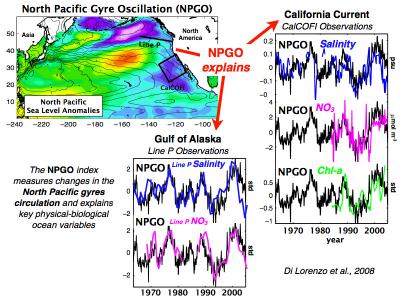
Scientists at the Georgia Institute of Technology have discovered a new climate pattern called the North Pacific Gyre Oscillation.

This new pattern explains changes in the water that are important in helping commercial fishermen understand fluctuations in the fish stock. They also believe that as the temperature of the Earth warms, large fluctuations in these factors could help climatologists predict how the oceans will respond in a warmer world.

“We’ve been able to explain, for the first time, the changes in salinity, nutrients and chlorophyll that we see in the Northeast Pacific,” said Emanuele Di Lorenzo, assistant professor in Georgia Tech’s School of Earth and Atmospheric Sciences.

The electromagnetic fields produced by incubators alter newborns’ heart rates, says a small study published in the Fetal and Neonatal Edition of Archives of Disease in Childhood.

The research team assessed the variability in the heart rate of 43 newborn babies, none of whom was critically ill or premature.

The risks of developing Alzheimer’s disease differ between the sexes, with stroke in men, and depression in women, critical factors, according to research published in the Journal of Neurology Neurosurgery and Psychiatry.

French researchers based their findings on almost 7000 people over the age of 65, drawn from the general population in three French cities. None had dementia, but around four out of 10 were deemed to have mildly impaired mental agility (mild cognitive impairment) at the start of the study.

Their progress was assessed two and four years later. In all, just over 6.5% of those deemed to be cognitively impaired developed dementia over the next four years. In just over half, no change was seen. Just over one in three reverted to normal levels of cognitive agility.


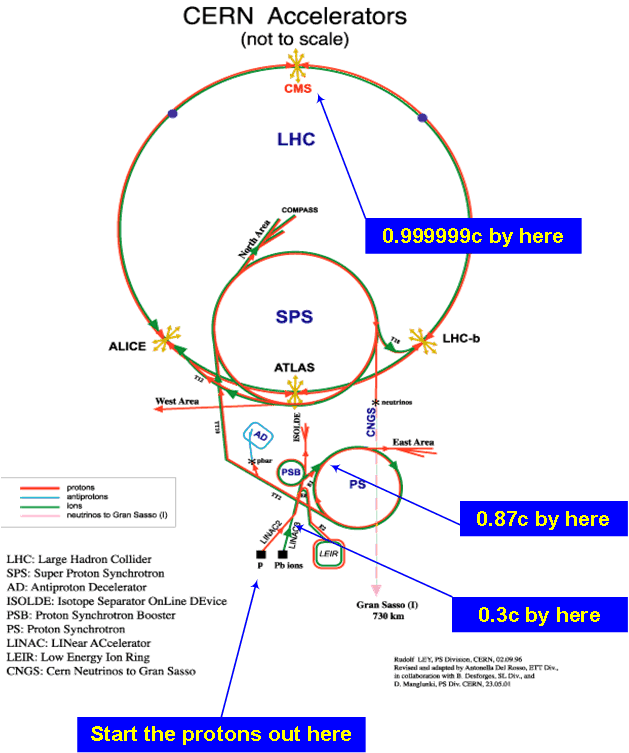
The biggest ever science experiment, the Large Hadron Collider, should be operational this summer.  Three years behind schedule and 30% over budget, the $8.7 billion LHC will collide protons together and lead ions next year, at colossal energies never before attempted.  Don't hold your breath.  Rudiger Schmidt at CERN, near Geneva, says,"The LHC is a frightening complex accelerator."  A lot could still go wrong even before startup. 

On the engineering side, most of the equipment custom designed and built, problems also are complex.  One particular sore spot was a big triplet superconducting magnet from Fermilab, that exploded 13 months ago during a pressure test, releasing helium coolant.  A design flaw had to be fixed in all 8 magnets, and finally, yesterday, one was successfully tested, applauded by a team of 50 physicists, engineers and technicians. There are another 1232 dipoles of  15 meter length, 400 5-7 meter focusing quadrupoles, and 5,000 corrector magnets to keep the hadrons, protons or ions, in the 27 kilometer main ring.

CERN LHC Accelerators, courtesy CERN.  The main ring is 27 km in circumference, the ATLAS, a few km from the Geneva Airport.

A nationwide consortium has completed the first sequence-based map of structural variations in the human genome, giving scientists an overall picture of the large-scale differences in DNA between individuals. The project gives researchers a guide for further research into these structural differences, which are believed to play an important role in human health and disease.

The project involved sequencing the genomes of eight people from a diverse set of ethnic backgrounds: four individuals of African descent, two of Asian descent, and two of European background.

The researchers created what's called a clone map, taking multiple copies of each of the eight genomes and breaking them into numerous segments of about 40,000 base pairs, which they then fit back together based on the human reference genome. They searched for structural differences that ranged in size from a few thousand to a few million base pairs. Base pairs are one of the basic units of information on the human genome.

Whose Genome?

Whose Genome?

Apr 30 2008 | comment(s)

The term "genome" is oft-heard but seldom defined, and indeed has more than one meaning. Little wonder, then, that discussions about genome sequences and comparisons thereof can leave otherwise interested audiences more frustrated than enlightened. "What is a genome?" and "whose genome was sequenced?" are legitimate questions, and what follows is an attempt at clarification that is, by necessity, as much philosophical as scientific.

Definition #1: In a broad sense, a genome can be considered as the collective set of genes, non-coding DNA sequences, and all their variants that are located within the chromosomes of members of a given species.

Here we go again, just this morning the Florida House of Representatives passed a bill that directs teachers to engage in “critical analysis” of evolution in public schools. The bill’s chief sponsor, Republican Alan Hays of Umatilla, says that evolution “has holes in it,” and that “no one has any record -- no fossils have been found.” That will come as a big shock to the thousands of natural history museums around the world, displaying hundreds of thousands of fossils.

