









Degas, van Gogh and Picasso swore it enhanced their creativity but thujone, the compound widely believed responsible for absinthe’s mind-altering effects, is not really a factor, according to a new study.

In the most comprehensive analysis of old bottles of original absinthe, a team of scientists from Europe and the United States have concluded the culprit was plain and simple: Alcohol.

Although consumed diluted with water, absinthe contained about 70 percent alcohol, giving it a 140-proof wallop. Most gin, vodka, and whiskey are 80 – 100-proof and contain 40-50 percent alcohol or ethanol.

Believe it or not, scientists do not always take themselves too seriously. We can laugh at ourselves and the sometimes rigid conventions of our profession. Take, for example, this guide to translating the formal language of scientific articles into plain English. (Note: This has circulated on email among scientists a number of times over at least a 10 year period; I remember taping it on the door when I was a grad student.  An astute reader pointed out that it is originally from Graham, CD. 1957. A glossary for research reports.  Metal Progress 71: 75, though it has mutated somewhat in the interim).

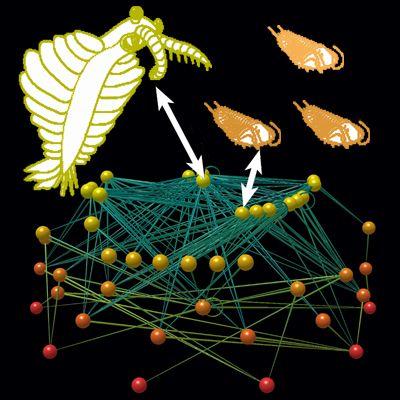
Because dogs didn't exist back then, more relevant analogies had to be used in that title. Why? Because analyses of Chengjiang and Burgess Shale food-web data suggest that most, but not all, aspects of the trophic structure of modern ecosystems were in place over a half-billion years ago.

The ecology of Cambrian communities was remarkably modern, say researchers behind the first study to reconstruct detailed food webs for ancient ecosystems. Their paper suggests that networks of feeding relationships among marine species that lived hundreds of millions of years ago are remarkably similar to those of today.

Food webs depict the feeding interactions among species within habitats--like food chains, only more complex and realistic. The discovery of strong and enduring regularities in how such webs are organized will help us understand the history and evolution of life, and could provide insights for modern ecology--such as how ecosystems will respond to biological extinctions and invasions.

In the rapid and fast-growing world of nanotechnology, researchers are continually on the lookout for new building blocks to push innovation and discovery to scales much smaller than the tiniest speck of dust.

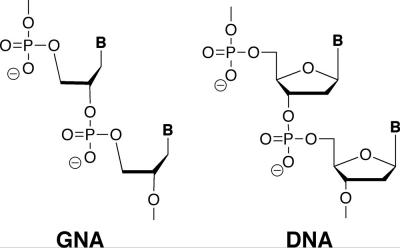
In the Biodesign Institute at Arizona State University, researchers are using DNA to make intricate nano-sized objects. Working at this scale holds great potential for advancing medical and electronic applications. DNA, often thought of as the molecule of life, is an ideal building block for nanotechnology because they self-assemble, snapping together into shapes based on natural chemical rules of attraction. This is a major advantage for Biodesign researchers like Hao Yan, who rely on the unique chemical and physical properties of DNA to make their complex nanostructures.

A breakthrough barrier technology from Singapore A*STAR’s Institute of Materials Research and Engineering (IMRE) protects sensitive devices like organic light emitting diodes (OLEDs) and solar cells from moisture 1000 times more effectively than any other technology available in the market, opening up new opportunities for the up-and-coming plastic electronics sector.

A team of scientists from Singapore’s Institute of Materials Research and Engineering (IMRE) has developed a new patented film that has the highest reported water vapour barrier performance to date, as tested by the UK Centre for Process Innovation.

The tests have shown that the new film is 1,000 times more impervious to moisture than existing technologies. This means a longer lifetime for plastic electronic devices such as solar cells and flexible displays that use these high-end films but whose sensitive organic materials are easily degraded by water vapour and oxygen.

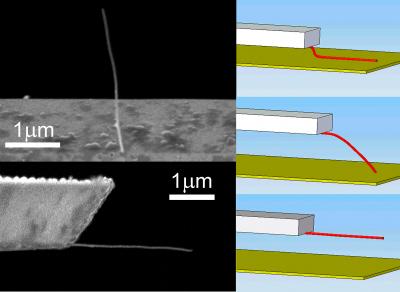
Nanotubes are the big hope for the first decade of the 21st century. They offer promise to produce a new class of composite materials that are stronger than conventional composites for use in aircraft and vehicles. Now researchers at Purdue University say they can precisely measure the forces required to peel tiny nanotubes off of other materials, opening up the possibility of creating standards for nano-manufacturing and harnessing a gecko's ability to walk up walls.

So-called "peel tests" are used extensively in manufacturing. Knowing how much force is needed to pull a material off of another material is essential for manufacturing, but no tests exist for nanoscale structures, said Arvind Raman, an associate professor of mechanical engineering at Purdue.

Patients in therapy to overcome addictions have a new arena to test their coping skills — the virtual world. A new study by University of Houston Associate Professor Patrick Bordnick says that a virtual reality (VR) environment can provide the climate necessary to spark an alcohol craving so that patients can practice how to say “no” in a realistic and safe setting.

Bordnick, of the UH Graduate College of Social Work, investigates VR as a tool for assessing and treating addictions. He studied 40 alcohol-dependent people who were not receiving treatment (32 men and eight women). Wearing a VR helmet, each was guided through 18 minutes of virtual social environments that included drinking. The participant’s drink of choice was included in each scene.

Gestational age has long been the factor most commonly used to predict whether an extremely low-birth-weight infant survives and thrives, but four additional factors that can help predict a preemie’s outcome have been identified by the National Institutes of Health Neonatal Research Network.

Birth weight, gender, whether the baby is a twin and whether the mother was given antenatal steroid mediation to aid the baby’s lung development are all factors that affect survivability and risk of disability, according to an article in the New England Journal of Medicine by a consortium of researchers in the Eunice Kennedy Shriver National Institute of Child Health and Human Development (NICHD) Neonatal Research Network. The 19-center network includes Yale School of Medicine and Yale-New Haven Hospital.

Maturity, in some respects, brings diminished possibilities. As a fertilized egg cell repeatedly divides to grow into a mature animal, most of the resulting cells become ever more specialized.

But a small number of cells, known as stem cells, remain uncommitted even as they spawn more specialized progeny. The most versatile stem cells, taken from days-old embryos, are able to form any cell type — but studying them in people is controversial.

Even in adults, however, other types of stem cells persist that have a more limited repertoire. Some replace specific cells as they wear out; others help to rebuild damaged tissues. Still other stem cells are suspected by some scientists of starting or maintaining cancers.

Now team of researchers led by scientists at Cold Spring Harbor Laboratory have for the first time identified stem cells that allow the pituitary glands of mice to grow even after birth.

Most people know that restaurants are inspected regularly, but many assume that regularity means 5-12 times per year rather than the once that is actually the case. That's one finding in an article published in the June 2008 American Journal of Preventive Medicine. It found that the public is generally unaware of the frequency of restaurant inspections and the consequences of poor inspection results.

Foodborne diseases cause an estimated 76 million illnesses in the U.S. each year with about half associated with restaurant meals. More than 70 billion meals per year are purchased in restaurants in the U.S., accounting for 47% of total food expenditure. Therefore, preventing restaurant-associated foodborne disease is an important task of public health departments.

