




Advance directives, or living wills, may not effectively honor end-of-life wishes because life-sustaining treatment preferences often change without people being aware of the changes, according to a new study co-authored by UC Irvine researchers Peter Ditto and Elizabeth Loftus.

False memories can play a significant role in the discrepancy between an individual's true preferences for end-of-life treatment and what is instructed in their living will. Life-sustaining treatment preferences often change as people age or experience new health problems, and advance directive forms typically remind people of their right to update their directives if their wishes change.

Researchers have mapped out a region on human chromosome 1 that contributes to genetically elevated blood triglyceride levels, a major risk factor for heart disease.

Triglycerides (TG), the main form of dietary fat, continuously circulate in the blood, but if their concentration elevates the risk of atherosclerosis and subsequently heart disease increases. Circulating TG levels depend on many factors including diet, exercise, and smoking, but around 40% of the variation in the population is due to genetics.

To locate the genes contributing to increased TG levels, Qing Wang and colleagues scanned 714 Caucasians from 388 families with premature heart disease. They identified a novel region on chromosome 1, 1p31-32.

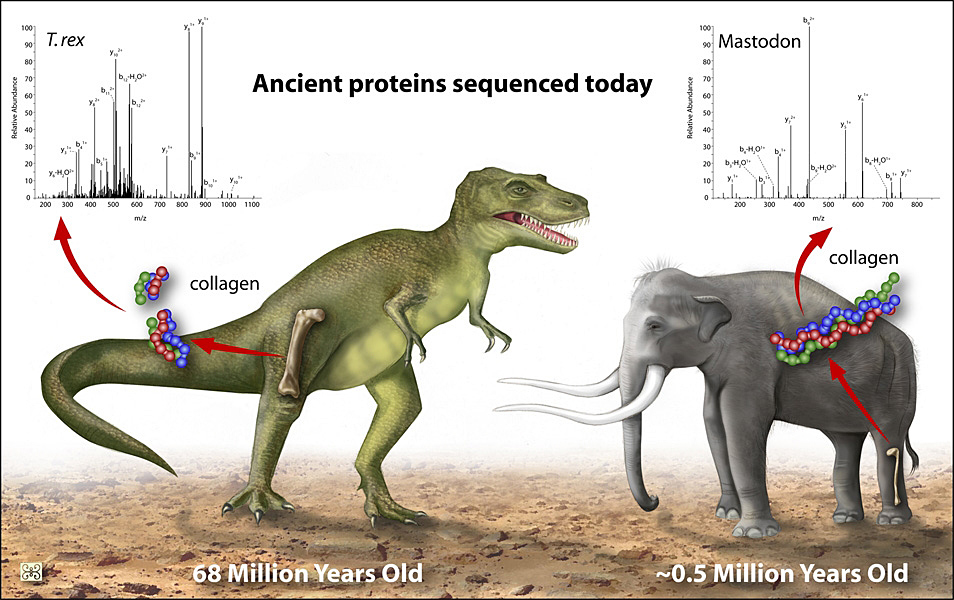
Tests of the peptide sequences in T. rex bone fossils have put more meat on the theory that dinosaurs' closest living relatives are modern-day birds.

Molecular analysis, or genetic sequencing, of a 68-million-year-old Tyrannosaurus rex protein from the dinosaur's femur discovered in 2003 by paleontologist John Horner of the Museum of the Rockies confirms that T. rex shares a common ancestry with chickens, ostriches, and to a lesser extent, alligators.

The new research results represent the first use of molecular data to place a non-avian dinosaur in a phylogenetic tree, a "tree of life," that traces the evolution of species.

The earthquake on April 18, 2008, about 120 miles east of St. Louis, registered 5.2 on the Richter scale and hit at 4:40 a.m. with a strong aftershock occurring at approximately 10:15 a.m. that morning, followed by lesser ones in subsequent days. The initial earthquake was felt in parts of 16 states.

To the surprise of many, originated in the Wabash Valley Fault, not the better-known and more-dreaded New Madrid Fault in Missouri’s boot heel.

The concern of Douglas Wiens, Ph.D., and Michael Wysession, Ph.D., seismologists at Washington University in St. Louis, is that the New Madrid Fault may have seen its day and the Wabash Fault is the new kid on the block.

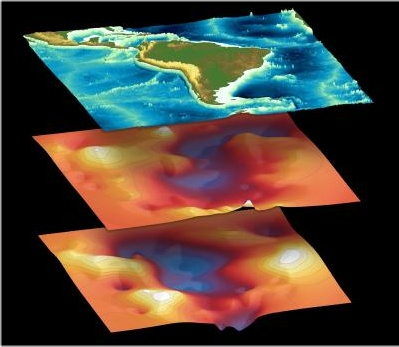
Monitoring Earth's rising greenhouse gas levels will require a global data collection network 10 times larger than the one currently in place in order to quantify regional progress in emission reductions, according to a new research commentary by University of Colorado and NOAA researchers appearing in the April 25 issue of Science.

The authors, CU-Boulder Research Associate Melinda Marquis and National Oceanic and Atmospheric Administration scientist Pieter Tans, said with atmospheric carbon dioxide concentrations now at 385 parts per million and rising, the need for improved regional greenhouse gas measurements is critical. While the current observation network can measure CO2 fluxes on a continental scale, charting regional emissions where significant mitigation efforts are underway -- like California, New England and European countries -- requires a more densely populated network, they said.

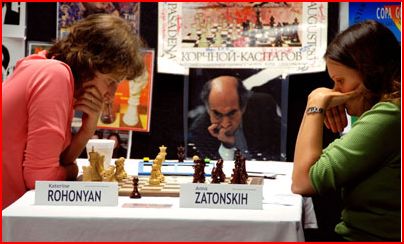
There is a good reason most Americans stink at chess - our unfailing optimism. No matter how bad things get with the economy or the environment or (insert your pet cause here) Americans will always believe that, because we have Christina Aguilera, we beat the pants off of everyone else. Russians, for example, don't think that way. Half of Moscow is populated by women hotter than Christina Aguilera and they're all on a Russian dating site hoping to meet an American mechanic who will get them a green card and raise their kid.

Birds, unlike mammals, lack a tissue that is specialized to generate heat. A team of researchers at New York Medical College writes that the same lack of heat-generating tissue may have contributed to the extinction of ... dinosaurs.

Humans, like all mammals, have two kinds of adipose tissue, white fat and brown fat. White fat is used for storing energy-rich fuels, while brown fat generates heat. Hibernating bears have a lot of brown fat, as do human infants, who have much more than adults, relative to their body size. Infants’ brown fat protects them from hypothermia. Clinicians would like to find ways of making adult white fat behave more like brown fat so that we could burn, rather than store, energy.

While most mammals have a key gene called UCP1, which is responsible for the heat-generation function of brown fat, birds do not. The researchers found they could induce a specific type of stem cell in chicken embryos to produce differentiated cells that are structured and behave like brown fat. These chicken cells can even activate a UCP1 gene if presented with one from a mouse.

At the cores of many galaxies, supermassive black holes expel powerful jets of particles at nearly the speed of light. Just how they perform this feat has long been one of the mysteries of astrophysics. The leading theory says the particles are accelerated by tightly-twisted magnetic fields close to the black hole, but confirming that idea required an elusive close-up view of the jet's inner throat. Now, using the unrivaled resolution of the National Radio Astronomy Observatory's Very Long Baseline Array (VLBA), astronomers have watched material winding a corkscrew outward path and behaving exactly as predicted by the theory.

In 1600 eruption of Huaynaputina in Peru put a large amount of sulfur into the atmosphere. Sulfur reacts with water in the air to form droplets of sulfuric acid, which cool the planet by reducing the amount of sunlight reaching the Earth's surface.

The droplets soon fall back to Earth, so the cooling effects lasted only a year or so, but the global impact on human society was much greater, according to a new study of contemporary records by geologists at UC Davis.
N
o one had looked at the agricultural and social impacts, said Ken Verosub, professor of geology at UC Davis. "We knew it was a big eruption, we knew it was a cold year, and that's all we knew."

It's been thought that very preterm babies were not developed enough to benefit from 'comfort strategies but research published today in BMC Pediatrics suggests that even babies born between 28 and 31 weeks could benefit from skin-to-skin cuddling with their mother before and during painful procedures, such as a heel lance.

Celeste Johnston of McGill University, Montreal, Canada and colleagues have already shown that skin-to-skin contact, known as kangaroo mother care (KMC) helps babies born at 32 to 36 weeks to recover from pain.

