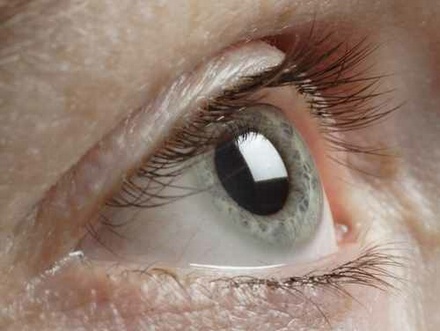










Remarkable new research into the way environmental factors affect the development of the brain has opened up the possibility that an infant’s future mental abilities and susceptibility to mental illness can be permanently altered by dietary changes in early life.

Evidence that changes in early diet can have long term effects on brain structure, verbal IQ, eyesight, appetite regulation and possibly on neurodevelopmental outcome will be presented at the international symposium on Early Nutrition Programming in Granada, Spain (23 April).

This is an area of research in which the EC is investing heavily as it offers huge potential in terms of improving the health and reducing health care costs of future generations. Neuropsychiatric disorders, such as depression, are the second most important cause of ill health in the EU after cardiovascular disease(1). The EC has already invested over €13 million in the Early Nutrition Programming Project (EARNEST) and has now committed another €6 million into the NUTRIMENTHE project (launched 22April 2008).

Not that these women sweat anyway. "Horses Sweat, Men Perspire And Ladies Glow," my mother always told me.

But you get the idea. A group of fashion conscious women is making a difference this Earth Day - by looking fabulous!

Okay, as a man in his 40s with more children than I can count, I had a hard time even writing the word 'fabulous' without laughing.

But there is something serious happening. Chantecaille, a cosmetics company, has said it will donate five percent of the proceeds of its new “Protected Paradise” face and eyes compacts to the Pew Institute’s Pew Fellowship in Marine Conservation program, which provides a $150,000 award to each of five ocean experts around the world annually to develop solutions to critical ocean challenges.

In 2001, religious fundamentalists destroyed two colossal, ancient Buddha statues in the Afghan region of Bamiyan. Behind those statues, there are caves decorated with artwork dating from the 5th to 9th centuries A.D and those also suffered from the destruction of the Taliban along with their natural environment, but recently they became the source of a major discovery.

Scientists at the European Synchrotron Radiation Facility (ESRF) have shown that the paintings were made of oil, hundreds of years before the technique was “invented” in Europe. The results were presented at a scientific conference in Japan last January and are just now published in the Journal of Analytical Atomic Spectrometry.

Red colobus monkeys in a park in western Uganda have been exposed to an unknown orthopoxvirus, a pathogen related to the viruses that cause smallpox, monkeypox and cowpox. Most of the monkeys screened harbor antibodies to a virus that is similar – but not identical – to known orthopoxviruses.

The study was begun in 2006 when Colin Chapman, a researcher at McGill University, invited Goldberg to collaborate on a health assessment of two groups of red colobus monkeys in Kibale National Park, in western Uganda.

Chapman, also an associate scientist with the Wildlife Conservation Society, had spent two decades studying the behavior and ecology of the monkeys. He wanted to broaden the study to include an analysis of the pathogens they carried. Wildlife veterinarians from the Wildlife Conservation Society helped collect the samples, and a team from Oregon Health and Science University, led by Mark Slifka, conducted immunological analyses to characterize the virus.

A new study has found that between 1983 and 1999, the death rate in women increased in a large number of the worst-off counties in the US, primarily because of chronic diseases related to smoking, high blood pressure, and obesity. As a result of this stagnation or decline in the health of the worst-off segment of the population, inequality in life expectancy across different counties of the US worsened.

Majid Ezzati of Harvard University and colleagues analyzed death rates in all counties of the US states plus the District of Columbia over four decades, from 1961 to 1999. They obtained data on number of deaths from the National Center for Health Statistics (NCHS) and data on the number of people living in each county from the US Census. NCHS did not provide data for subsequent years. They broke the death rates down by sex and by disease to assess trends over time for women and men, and for different causes of death.

As you might expect, much of the evolution of how lizards move is related to getting food.

A research team led by Ohio University doctoral student Eric McElroy tracked 18 different species of lizards as they walked or ran in order to understand how their foraging styles impact their biomechanics. The study, funded by the National Science Foundation, was featured in the April 1 edition of the Journal of Experimental Biology.

Lizards use two basic foraging techniques. In the first approach, aptly dubbed sit-and-wait, lizards spend most of their time perched in one location waiting for their prey to pass. Then, with a quick burst of speed, they run after their prey, snatching it up with their tongues.

A recent study by NOAA scientists and colleagues on captive juvenile sandbar sharks showed the presence of an electropositive alloy, in this case palladium neodymium, clearly altered the swimming patterns of individual animals and temporarily deterred feeding in groups of sharks.

Rare earth metals have previously been reported to deter spiny dogfish from attacking bait due to interactions with the shark’s electroreceptive system, which detects weak electric fields including those generated by their prey.

Electric fields generated by electropositive alloys are believed to deter or repel sharks by overloading their sensory systems, a behavior that may help fishery biologists develop a strategy to reduce the bycatch of sharks in longline gear. Shark bycatch is an increasing priority worldwide given diminished populations of many shark species, and because sharks compete with target species for baited lines, reducing fishing efficiency and increasing operating costs.

The residual herbicides commonly used in the production of corn and soybean are frequently detected in rivers, streams, and reservoirs at concentrations that exceed drinking water standards in areas where these crops are extensively grown.

When these bodies of water are used as sources of drinking water this contamination can lead to increased treatment costs or a need to seek alternative sources of supply. Additionally, these herbicides can have negative effects on aquatic ecosystems at concentrations well below their drinking water standards.

When genetically modified, herbicide-tolerant, corn and soybean became commercially available in the 1990s it became possible to replace some of the problematic residual herbicides with strongly sorbed, short half-life, contact herbicides that may be more environmentally benign. By 2004 almost 90% of the soybean grown in the US was genetically modified for tolerance to the contact herbicide glyphosate (Roundup), which is currently the most widely used herbicide in the world.

From the war room to the board room, negotiations are a part of everyday life. Successful negotiations demand a clear understanding of one’s opponent. But what approach should one take to achieve such an understanding of one’s opponent in everyday negotiations?

Psychologist Adam Galinsky from the Kellogg School of Management at Northwestern University, and colleagues William Maddux (INSEAD), Debra Gilin (St. Mary’s U.), and Judith White (Dartmouth) asked a similar question and found that success in negotiations depends on focusing on the head and not the heart. In other words, it is better to take the perspective of negotiation opponents rather than empathize with them.

Researchers at Deventer Hospital recently tried Luminol, a chemical used by crime scene investigators, to detect traces of blood in their haemodialysis unit. Luminol reacts with microscopic amounts of blood to produce bright blue luminescence, which allows investigators to track invisible blood splashes in the environment.

The researchers tested their apparently clean unit with Luminol and found traces of blood on many surfaces, including cupboard handles, telephones, computer keyboards, side tables and the floor, even though some of these surfaces had been cleaned. They expect that these results can be reproduced in other hospitals that plan to use Luminol in the future as described in their paper.

