





There is no question that Al Gore’s 2006 documentary "An Inconvenient Truth" is a powerful example of how scientific knowledge can be communicated to a lay audience.

What continues to be debated is whether it accurately presents the scientific argument that global warming is caused by human activities. Climate change experts express their opinions on the scientific validity of the film’s claims in the newest GeoJournal.

"An Inconvenient Truth" is about Al Gore’s campaign to educate citizens about global warming and inspire them to take action. The papers in GeoJournal agree that it does an excellent job of raising public awareness of man-made global warming and explains why increased atmospheric concentrations of greenhouse gases lead to warming. They also agree that its main weakness is that it tries to use individual extreme events, such as Hurricane Katrina, to prove the existence of global warming.

A new study by researchers at the University of Cambridge says that traders with high morning testosterone levels make more than average profits for the rest of that day. This influence of steroids naturally produced in the body (specifically testosterone and cortisol) may also provide insight into why people caught up in bubbles and crashes often find it difficult to make rational choices, unintentionally exacerbating financial crises.

Testosterone is a steroid hormone which controls competitive encounters as well as sexual behavior. Testosterone in male athletes, for example, will rise prior to a competition and rise even further in a winning athlete (but decrease in a losing one). This increase of testosterone in the winner can increase confidence and risk taking and improve chances of winning yet again, leading to a positive-feedback loop termed the ‘winner effect’. However, too much testosterone can have a detrimental affect on the ability to assess risk rationally.

Researchers at Duke, Caltech, Stanford and the Howard Hughes Medical Institute have developed a living system using genetically altered bacteria that they believe can provide new insights into how the population levels of prey influence the levels of predators, and vice-versa.

The Duke experiment is an example of a synthetic gene circuit, where researchers load new "programming" into bacteria to make them perform new functions. Such re-programmed bacteria could see a wide variety of applications in medicine, environmental cleanup and biocomputing. In this particular Duke study, researchers rewrote the software of the common bacteria Escherichia coli (E. coli.) to form a mutually dependent living circuit of predator and prey.

The bacterial predators don't actually eat the prey, however. The two populations control each others' suicide rates.

You already knew that eastern and western cultures regard many aspects of every day life differently but researchers from Canada, Japan and Amsterdam say that eastern and western cultures even assess situations differently based on the perception of emotions they see.

Across two studies, participants viewed images consisting of one center model and four background models. The researchers manipulated the facial emotion (happy, angry, sad) in the center or the background models and asked the participants to determine the dominant emotion of the center figure.

The majority of Japanese participants (72%) reported that their judgments of the center person’s emotions were influenced by the emotions of the background figures, while most North Americans (also 72%) reported no influence by the background figures at all.

In January, Skyhook Wireless Inc. announced that Apple would use Skyhook’s WiFi Positioning System (WPS) for its popular Map applications. The WPS database contains information on access points throughout the world. Skyhook itself provides most of the data in the database, with users contributing via direct entries to the database, and requests for localization.

ETH Zurich Professor Srdjan Capkun of the Department of Computer Science and his team of researchers analysed the security of Skyhook’s positioning system. The team’s results demonstrate the vulnerability of Skyhook’s and similar public WLAN positioning systems to location spoofing attacks.

Varanus komodoensis, the fearsome Komodo dragon, is the world's largest living lizard and, with 60 razor-sharp serrated teeth, can take on very large animal prey.

A new international study has revealed how it can be such an efficient killing machine despite having a wimpy bite and a featherweight skull - clever engineering.

The Komodo dragon grows to an average length of two to three meters and weighing around 70 kilograms. The reptile's unusual size is attributed to island gigantism, since there are no other carnivorous mammals to fill the niche on the islands where they live. As a result of their size, these lizards are apex predators, dominating the ecosystems in which they live.

Researchers at The University of Texas M. D. Anderson Cancer Center report that a restricted-calorie diet inhibited the development of precancerous growths in a two-step model of skin cancer, reducing the activation of two signaling pathways known to contribute to cancer growth and development, while an obesity-inducing diet activated those pathways.

Epithelial cancers arise in the epithelium - the tissue that lines the surfaces and cavities of the body's organs. They comprise 80 percent of all cancers.

"Calorie restriction and obesity directly affect activation of the cell surface receptors epidermal growth factor (EGFR) and insulin-like growth factor (IGF-1R)," said first author Tricia Moore, a graduate student in M. D. Anderson's Department of Carcinogenesis. "These receptors then affect signaling in downstream molecular pathways such as Akt and mTOR.

A study by scientists from the Max Planck Institute for Human Cognitive and Brain Sciences in Leipzig, in collaboration with the Charite University Hospital and the Bernstein Center for Computational Neuroscience in Berlin says that several seconds before we consciously make a decision its outcome can be predicted by unconscious activity in the brain.

The researchers from the group of Professor John-Dylan Haynes used a brain scanner to investigate what happens in the human brain just before a decision is made. "Many processes in the brain occur automatically and without involvement of our consciousness. This prevents our mind from being overloaded by simple routine tasks. But when it comes to decisions we tend to assume they are made by our conscious mind. This is questioned by our current findings."

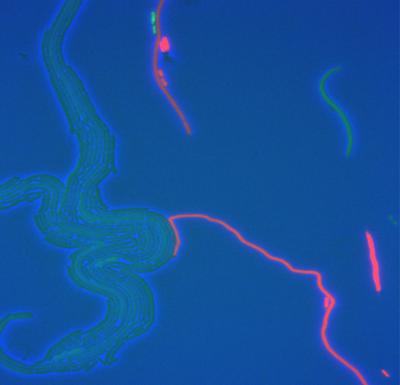
Even in new designs, it's not a bad idea to see how old Mother Nature does it. Using that principle, a group of researchers at the U.S. Department of Energy’s Ames Laboratory is mimicking bacteria to synthesize magnetic nanoparticles that could be used for drug targeting and delivery, in applications such as magnetic inks, high-density memory devices and magnetic seals in motors.

Commercial room-temperature synthesis of ferromagnetic nanoparticles is difficult because the particles form rapidly, resulting in agglomerated clusters of particles with less than ideal crystalline and magnetic properties. Size also matters. As particles get smaller, their magnetic properties, particularly with regard to temperature, also diminish.

A team of European scientists has triggered electrical activity in thunderclouds for the first time - deliberately.

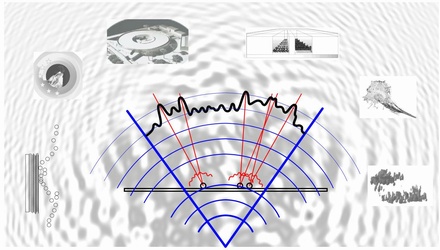
They did it by aiming high-power pulses of laser light into a thunderstorm. Next, they say, could be man-made lightning.

At the top of South Baldy Peak in New Mexico during two passing thunderstorms, the researchers used laser pulses to create plasma filaments that could conduct electricity akin to Benjamin Franklin's silk kite string. No air-to-ground lightning was triggered because the filaments were too short-lived, but the laser pulses generated discharges in the thunderclouds themselves.

