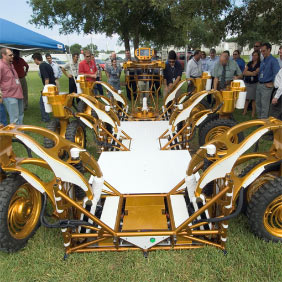






It may not be for all people, but I am betting 90% of the readers of this site and 100% of the writers would buy this car; active suspension, six-wheel drive with independent steering for each wheel, no doors, no windows, no seats and the only color available is gold.

And no passenger seat. Pure off-roading heaven.

But NASA's latest concept vehicle is meant to go way off-road, as in 240,000 miles from the nearest pavement, and drive on the moon.

Children who under-achieve at school may just have poor working memory rather than low intelligence according to researchers who have produced the world's first tool to assess memory capacity in the classroom.

The researchers from Durham University, who surveyed over three thousand children, found that ten per cent of school children across all age ranges suffer from poor working memory seriously affecting their learning. Nationally, this equates to almost half a million children in primary education alone being affected.

However, the researchers identified that poor working memory is rarely identified by teachers, who often describe children with this problem as inattentive or as having lower levels of intelligence.

Boulders the size of footballs could help scientists predict the West Antarctic Ice Sheet’s (WAIS) contribution to sea-level rise according to new research published this week in Geology.

Scientists from British Antarctic Survey (BAS), Durham University and Germany’s Alfred Wegener Institute for Polar and Marine Research (AWI) collected boulders deposited by three glaciers in the Amundsen Sea Embayment – a region currently the focus of intense international scientific attention because it is changing faster than anywhere else on the WAIS and it has the potential to raise sea-level by around 1.5 meters.

Analysis of the boulders has enabled the scientists to start constructing a long-term picture of glacier behavior in the region.

Taking the supplement ginkgo biloba had no clear-cut benefit on the risk of developing memory problems, according to a study published in Neurology®.

The three-year study involved 118 people age 85 and older with no memory problems. Half of the participants took ginkgo biloba extract three times a day and half took a placebo. During the study, 21 people developed mild memory problems, or questionable dementia: 14 of those took the placebo and seven took the ginkgo extract. Although there was a trend favoring ginkgo, the difference between those who took gingko versus the placebo was not statistically significant.

The number of scientists is increasing along with the number of scientific journals and published papers, the latter two thanks in large part to the rise of electronic publishing. Scientists and other researchers are finding it more difficult than ever to zero in on the published literature that is most valuable to them.

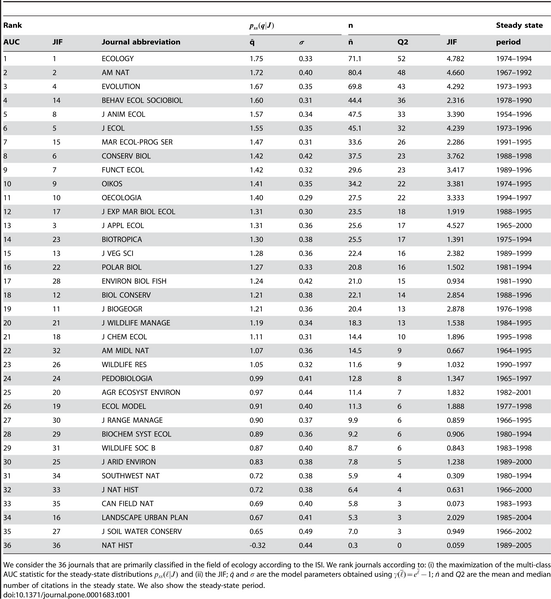
A team of researchers from Northwestern University say they have developed a mathematical method to rank scientific journals according to quality.

The team analyzed the citation data of nearly 23 million papers that appeared in 2,267 journals representing 200 academic fields and that spanned the years from 1955 to 2006; their analysis produced 200 separate tables of journal rankings by field.

Biologists have elucidated the mechanism of a plant gene that controls the amount of atmospheric ozone entering a plant’s leaves and their finding helps explain why rising concentrations of carbon dioxide in the atmosphere may not necessarily lead to greater photosynthetic activity and carbon sequestration by plants as atmospheric ozone pollutants increase.

It also provides a new tool for geneticists to design plants with an ability to resist droughts by regulating the opening and closing of their stomata—the tiny breathing pores in leaves through which gases and water vapor flow during photosynthesis and respiration.

Some of the oldest tales and wisest mythology allude to the snake as a mischievous seducer, dangerous foe or powerful iconoclast; however, the legend surrounding this proverbial predator may not be based solely on fantasy. As scientists from the University of Virginia recently discovered, the common fear of snakes is most likely intrinsic.

Evolutionarily speaking, early humans who were capable of surviving the dangers of an uncivilized society adapted accordingly. And the same can be said of the common fear of certain animals, such as spiders and snakes: The ancestors of modern humans were either abnormally lucky or extraordinarily capable of detecting and deterring the threat of, for example, a poisonous snake.

Hydrogen gas fueled vehicles could dramatically reduce greenhouse gas emissions and lessen the country’s dependence on sources of fossil fuel - but production and storage are obstacles. With current technologies, hydrogen gas storage tanks have to be as large as or larger than the trunk of a car to carry enough gas to travel even 100-200 miles.

Liquid hydrogen is denser and takes up less space but it is very expensive and difficult to produce. Its production It also reduces the environmental benefits of hydrogen vehicles. Widespread commercial acceptance of hydrogen vehicles will require finding the right material that can store hydrogen gas at high volumetric and gravimetric densities in reasonably sized light-weight fuel tanks.

Do bats have animal magnetism? Yes, say researchers from the Universities of Leeds and Princeton who say they have discovered that bats use a magnetic substance in their body called magnetite as an ‘internal compass’ to help them navigate.

Dr Richard Holland from Leeds' Faculty of Biological Sciences and Professor Martin Wikelski from Princeton University studied the directions in which different groups of Big Brown bats flew after they had been given different magnetic pulses and released 20km north of their home roost.

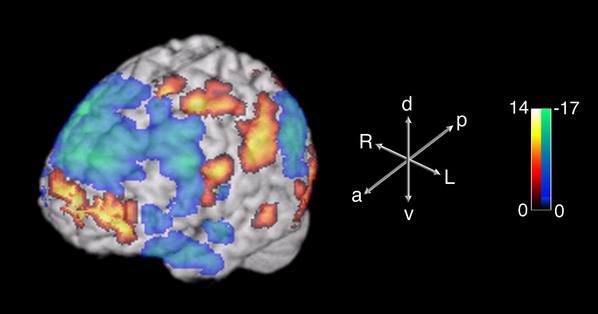
Scientists funded by the National Institute on Deafness and Other Communication Disorders (NIDCD) have found that, when jazz musicians are engaged in the highly creative and spontaneous activity known as improvisation, a large region of the brain involved in monitoring one’s performance is shut down, while a small region involved in organizing self-initiated thoughts and behaviors is highly activated.

The researchers propose that this and several related patterns are likely to be key indicators of a brain that is engaged in highly creative thought.

During the study, six highly trained jazz musicians played the keyboard under two scenarios while in the functional MRI scanner.

