





Turning just one Sumatran province's forests and peat swamps into pulpwood and palm oil plantations is generating more annual greenhouse gas emissions than the Netherlands and rapidly driving the province's elephants into extinction, a new study by WWF and partners has found.

The study found that in central Sumatra's Riau Province nearly 10.5 million acres of tropical forests and peat swamp have been cleared in the last 25 years. Forest loss and degradation and peat decomposition and fires are behind average annual carbon emissions equivalent to 122 percent of the Netherlands total annual emissions, 58 percent of Australia's annual emissions, 39 percent of annual UK emissions and 26 percent of annual German emissions.

Considerable attention has been paid to the effects of endocrine disrupting chemicals in aquatic environments, but rather less attention has been given to routes of contamination on land. A new study by researchers at Cardiff University, reveals that wild birds foraging on invertebrates contaminated with environmental pollutants, show marked changes in both brain and behavior: male birds exposed to this pollution develop more complex songs, which are actually preferred by the females, even though these same males usually show reduced immune function compared to controls.

Katherine Buchanan and her colleagues studied male European starlings (Sturnus vulgaris) foraging at a sewage treatment works in the south-west UK and analysed the earthworms that constitute their prey. The researchers found that those birds exposed to environmentally-relevant levels of synthetic and natural estrogen mimics developed longer and more complex songs compared to males in a control group.

Anthropologists from Wheaton College (Illinois) and The Field Museum have discovered how the ancient Maya produced an unusual and widely studied blue pigment that was used in offerings, pottery, murals and other contexts across Mesoamerica from about A.D. 300 to 1500.

First identified in 1931, this blue pigment (known as Maya Blue) has puzzled archaeologists, chemists and material scientists for years because of its unusual chemical stability, composition and persistent color in one of the world’s harshest climates.

The anthropologists solved another old mystery, namely the presence of a 14-foot layer of blue precipitate found at the bottom of the Sacred Cenote (a natural well) at Chichén Itzá. This remarkably thick blue layer was discovered at the beginning of the 20th century when the well was dredged.

MIT biologists have provoked soil-dwelling bacteria into producing a new type of antibiotic by pitting them against another strain of bacteria in a battle for survival.

The antibiotic holds promise for treatment of Helicobacter pylori, which causes stomach ulcers in humans. Also, figuring out the still murky explanation for how the new antibiotic was produced could help scientists develop strategies for finding other new antibiotics.

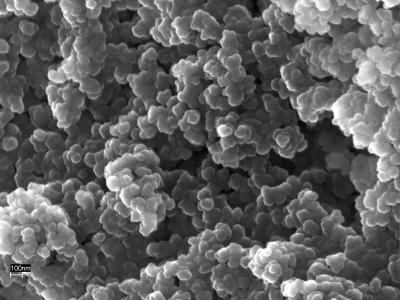
A research team from the University of Granada has managed to produce the most useful material to-date that will eliminate pollutants like benzene, toluene and xylene, organic solvents widely used in the hydrocarbon industry and generated by road traffic in cities.

The world-wide problem of the exposure to aromatic hydrocarbons has mainly focused its attention on benzene, which is considered to be harmful to health, even in low concentrations.

This material is a monolithic carbon aerogel with the advantage of not only being able to retain these pollutants: it can also be easily regenerated and can therefore be used in several cycles.

Using artificial cell-like particles, Yale biomedical engineers have devised a way to produce a 45-fold enhancement of T cell activation and expansion, an immune response important for a patient’s ability to fight cancer and infectious diseases.

The artificial cells, developed by Tarek Fahmy, assistant professor of biomedical engineering at Yale and his graduate student Erin Steenblock, are made of a material commonly used for biodegradable sutures. The authors say that the new method is the first “off-the-shelf” antigen-presenting artificial cell that can be tuned to target a specific disease or infection.

“This procedure is likely to make it to the clinic rapidly,” said senior author Fahmy. “All of the materials we use are natural, biodegradable already have FDA approval.”

The type of robot chosen as a personal companion by participants at the University of Hertfordshire Science and Technology Research Institute’s (STRI) Showcase next week will very much depend on their personality type.

This is a recent finding from Professor Kerstin Dautenhahn’s team at the university’s School of Computer Science, who took the robot out of the laboratory last year and had it living in a house nearby so that they could observe how it interacted with humans.

People with extroverted personalities will choose more human-looking robots with facial features and a human-like voice, results say, while introverted people tend to prefer mechanical-looking robots, more like a box on wheels with a metal head.

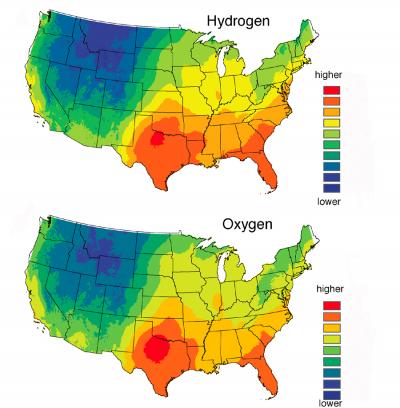
University of Utah scientists developed a new crime-fighting tool by showing that human hair reveals the general location where a person drank water, helping police track past movements of criminal suspects or unidentified murder victims.

“You are what you eat and drink – and that is recorded in your hair,” says geochemist Thure Cerling, who led the research effort with ecologist Jim Ehleringer. The new hair analysis method also may prove useful to anthropologists, archaeologists and medical doctors in addition to police.

“We have found significant variations in hydrogen and oxygen isotopes in hair and water that relate to where a person lives in the United States,” Ehleringer says.

There are currently no objective clinical laboratory blood tests for mood disorders. The current reliance on patient self-report of symptom severity and on the clinicians’ impression is a rate limiting step in effective treatment and new drug development.

Investigators from Indiana propose, and provide proof of principle for, an approach to help identify blood biomarkers for mood state. They measured whole-genome gene expression differences in blood samples from subjects with bipolar disorder that had low mood vs. those that had high mood at the time of the blood draw, and separately, changes in gene expression in brain and blood of a mouse pharmacogenomic model.

The rise of oxygen and the oxidation of deep oceans between 635 and 551 million years ago had an impact on the increase and spread of the earliest complex life, including animals, according to a study in PNAS.

The atmosphere had almost no oxygen until 2.5 billion years ago and it was not until about 600 million years ago that the atmospheric oxygen level rose to a fraction of modern levels. Geologists and evolutionary biologists have speculated that the rise of the breathing gas and subsequent oxygenation of the deep oceans are intimately tied to the evolution of modern biological systems.

