






Manic depression, also known as bipolar disorder, is a psychiatric condition characterized by alternating mania and depression, affecting about one in every hundred people worldwide. Although it is known that the condition can be treated relatively effectively using the mood-stabilising drugs lithium and valproic acid, the reasons why these treatments work are poorly understood.

People with manic depression have a distinct chemical signature in their brains, according to a new study. The research may also indicate how the mood stabilisers used to treat the disorder counteract the changes in the brain that it appears to cause.

Ethylene, the world's most commonly produced organic compound, is used many types of industries. Farmers and horticulturalists use it as a plant hormone to promote flowering and ripening, especially in bananas while doctors and surgeons have long used ethylene as an anesthetic and ethylene-based polymers are found in everything from freezer bags to fiberglass.

Its current production methods result in a number of greenhouse gases. A new environmentally friendly technology created by scientists at Argonne National Laboratory may revolutionize creation of this compound by use of a high-temperature membrane that can produce ethylene from an ethane stream by removing pure hydrogen. Says senior ceramist Balu Balachandran, “This is a clean, energy-efficient way of producing a chemical that before required methods that were expensive and wasteful and also emitted a great deal of pollution.”

The elliptical galaxy NGC 1132 (Hubble picture and video below) belongs to a category of galaxies called giant ellipticals. NGC 1132, together with the small dwarf galaxies surrounding it, are dubbed a “fossil group” as they are most likely the remains of a group of galaxies that merged together in the recent past.

In visible light NGC 1132 appears as a single, isolated, giant elliptical galaxy, but this is only the tip of the iceberg.

Scientists have found that NGC 1132 resides in an enormous halo of dark matter, comparable to the amount of dark matter usually found in an entire group of tens or hundreds of galaxies.

A 'barcode' gene that can be used to distinguish between the majority of plant species on Earth has been identified.

This gene, which can be used to identify plants using a small sample, could lead to new ways of easily cataloguing different types of plants in species-rich areas like rainforests. It could also lead to accurate methods for identifying plant ingredients in powdered substances, such as in traditional Chinese medicines, and could help to monitor and prevent the illegal transportation of endangered plant species.

The team behind the discovery found that DNA sequences of the gene 'matK' differ among plant species, but are nearly identical in plants of the same species. This means that the matK gene can provide scientists with an easy way of distinguishing between different plants, even closely related species that may look the same to the human eye.

Africa and Europe get about 4 mm closer every year in a northeast convergence direction. The exact position and geometry of the boundary between the African and Eurasian plates is unknown, but it is located near the Gibraltar Arc — an area of intense seismic activity.

A group of researchers from the Andalusian Institute for Earth Sciences (CSIC) and the Department of Geodynamics of the University of Granada described for the first time the physical and mechanical properties of the uppermost part of the Earth’s crust — to a depth of 30 km which is where the highest magnitude earthquakes occur.

This study has made it possible to establish the exact position of the active faults of the Gibraltar Arc area which cause earthquakes, thus obtaining valuable geological information which could help determine the areas in which earthquakes are most likely to occur.

A burger and fries may be the quintessential North American meal but it can also be viewed as the perfect example of humanity’s increasingly varied diet, according to researchers who have conducted a unique study of the plants used around the world for food.

“Generally speaking, we eat very broadly from the tree of life,” University of Calgary plant evolutionary ecologist Jana Vamosi said. “Others have looked at the sheer number of plant species we consume but nobody has ever examined whether the plants we eat are clustered in certain branches. It turns out that they are not.”

In the first-ever study of the “phylogenetic distribution” of the human diet, Vamosi, working with a team led by Serban Proches from Stellenbosch University in South Africa, found that humans likely stand alone when it comes to the spectrum of species we consume.

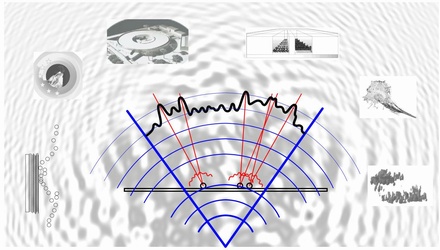
Optical clocks might become the atomic clocks of the future. Their "pendulum", i.e. the regular oscillation process which each clock needs, is an oscillation in the range of the visible light.

As its frequency is higher than that of the microwave oscillations of the cesium atomic clocks, physicists expect another increase in the accuracy, stability and reliability. In the case of one of the candidates for an optical clock which is developed at Physikalisch-Technische Bundesanstalt (PTB), strontium atoms are retained in the interference pattern of two laser beams.

A compound that naturally occurs in grapefruit and other citrus fruits may be able to block the secretion of hepatitis C virus (HCV) from infected cells, a process required to maintain chronic infection.

A team of researchers from the Massachusetts General Hospital Center for Engineering in Medicine (MGH-CEM) report that HCV is bound to very low-density lipoprotein (vLDL, a so-called “bad” cholesterol) when it is secreted from liver cells and that the viral secretion required to pass infection to other cells may be blocked by the common flavonoid naringenin.

If the results of this study extend to human patients, a combination of naringenin and antiviral medication might allow patient to clear the virus from their livers.

Researchers at Washington University in St. Louis and Arizona State University have sequenced the genome of a rare bacterium that harvests light energy by making an even rarer form of chlorophyll, chlorophyll d. Chlorophyll d absorbs “red edge,” near infrared, long wave length light, invisible to the naked eye.

In so doing, the cyanobacterium Acaryochloris marina, competes with virtually no other plant or bacterium in the world for sunlight. As a result, its genome is massive for a cyanobacterium, comprising 8.3 million base pairs, and sophisticated. The genome is among the very largest of 55 cyanobacterial strains in the world sequenced thus far, and it is the first chlorophyll d –containing organism to be sequenced .

For the first time, scientists have described the transition of the flat, disc-shaped heart field into the primary linear heart tube. The investigations on zebrafish embryos were made by Stefan Rohr and Cécile Otten, members of the research group of Dr. Salim Abdelilah-Seyfried of the Max Delbrück Center for Molecular Medicine (MDC) Berlin-Buch, Germany.

Currently, one of the most important areas to explore in developmental biology is how cellular transformation processes lead to the three-dimensional formation (morphogenesis) of organs. A better understanding of these processes is a basic requirement for elucidating congenital malformation of organs.

The heart, for instance, develops in the embryo from a flat disc, the so-called heart field. The tissue of this two-dimensional structure consists of a thin layer of epithelial cells. Similar cells line all inner organs, but also the skin and blood vessels.

