




The February issue of Geotimes takes a look at the complicated issues surrounding Iraq’s oil exploration and production.

Though oil prices have doubled and Iraq boasts the largest untapped oil reserves in the world, the instability that comes with war, attacks on infrastructure and outdated technology in Iraq have led to the lowest reserve-to-production ratio of all oil-producing countries.

Currently Iraq produces 2.0 million barrels per day (bpd), down from an average of 2.6 million prior to the invasion in 2003. Exploration and development in Northern Iraq could easily increase production by 100,000 bpd.

A report published in BMC Public Health states that socio-economics and neighborhood have a more powerful influence on sexual activity among 15- and 16-year-olds than the classroom.

A team of researchers analyzed data on nearly 5,000 pupils from 24 different Scottish Schools. They found that overall 42% of girls and 33% of boys reported experience of sexual intercourse, but the rates between schools ranged widely, from 23% to 61%.

Commenting on the value of sex education in schools, lead author Dr. Marion Henderson said, "It would be over-simplifying to interpret these results as suggesting that sex education isn't valuable. The study was looking at effects of school beyond the sex education curricula."

National Science Foundation (NSF) Director Arden L. Bement Jr. has presented the agency's proposed $6.85 billion budget for fiscal year (FY) 2009, a 13 percent increase over its actual FY 2008 budget. The additional $822.10 million would increase funding for agency programs that advance the frontiers of research and education in science and engineering.

Bement said the increase reflected a growing consensus that the United States needs to invest more resources in basic scientific research if it is to remain a global leader in science and technology. "More than a dozen major studies have now concluded that a substantial increase in federal funding for basic scientific research is critical to ensure the preeminence of America's scientific and technological enterprise," Bement said.

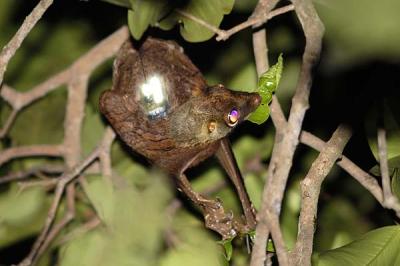
The colugo doesn't fly and is not a lemur but it's still called a "flying lemur" - and it's the champion of all gliding mammals, able to drop from the forest canopy in Malaysia, glide more than the length of two football fields, execute 90-degree turns and then alight gently on a tree trunk.

The colugo looks like a very large squirrel with membranous skin stretching from each limb and even between its toes to catch the wind and work as a parachute. When fully spread, the skin flaps reach the size of a large doormat.

Researchers are discovering how these animals move with the help of a miniature backpack outfitted with accelerometers.

Collaboration is a requirement for the advancement of modern science. Researchers cannot be expert at everything and must specialize to make a unique contribution. But if coordinating research within a group is challenging, effective collaboration between groups is even more so. There is often a strong temptation for research units to treat each other like black boxes. There is some logic to this - the point of having a collaborator is to distribute the responsibility of tasks in a project. If I get involved with every detail of my collaborator's work I may as well do the work within my own group. But problems can arise because of unstated assumptions between groups.
Michael Barton has posted a brief essay on Open Notebook Science on his research web site:
As you might expect from the name, Open Notebook Science (ONS) has similarities with Open Source Software. The clearest likeness between the two, is the belief that by sharing and collaborating, more can be achieved than through secrecy and competition.

The Joint Genome Institute (DOE JGI) has released an upgraded version of the IMG/M metagenome data management and analysis system, providing tools for analyzing the functional capability of microbial communities based on their metagenome DNA sequence in the context of reference isolate genomes.

The new version includes five additional metagenome datasets generated from microbial community samples that were the subject of recently published studies, including the metagenomic and functional analysis of termite hindgut microbiota (Nature 450, 560-565, 22 November 2007) and the single cell genetic analysis of TM7, a rare and uncultivated microbe from the human mouth (PNAS, July 17, 2007, vol. 104, no. 29, 11889-11894).

Anyone who has conducted field research knows that the very process of collecting data alters the system that you are studying. As you walk across a field, forest or stream to collect data, your footfalls trample vegetation, they compact the soil, they scrape algae off the rocks. Survey work usually involves a single visit to a site - as long as you avoid sampling from the areas you have trampled, it’s usually pretty safe to assume that your presence is unlikely to have affected the data that you have collected. Permanent plots are a different matter - because these plots are repeatedly sampled, there is cumulative damage. In larger plots, permanent trails may be established within plots.

Since we can’t avoid these effects, the real question is whether the effects are significant. Ecological systems are inherently heterogeneous. Does the effect of disturbance fall within the range of natural variability within the sample? That’s what really matters when it comes to data collection. In a forthcoming paper in the journal Biotropica, Liza Comita and Gregory Goldsmith “sought to quantify the significance and spatial extent of research trail impacts on the structure and dynamics of the seedling layer in the 50-ha permanent forest dynamics plot on Barro Colorado Island (BCI), Panama”.

There was a time when you had to be rich to be fat. Now you have to be rich to stay thin, says a new study.

Researchers led by Jennifer L. Black at New York University critically reviewed ninety studies published between 1997 through 2007 on neighborhood determinants of obesity through the PubMed and PsychInfo databases.

They found that neighborhoods with decreased economic and social resources have higher rates of obesity. They also found that residents in low-income urban areas are more likely to report greater neighborhood barriers to physical activity, such as limited opportunities for daily walking or physical activity and reduced access to stores that sell healthy foods, especially large supermarkets.

Turning native ecosystems into “farms” for biofuel crops causes major carbon emissions that worsen the global warming that biofuels are meant to mitigate, according to a new study by the University of Minnesota and the Nature Conservancy.

The carbon lost by converting rainforests, peatlands, savannas, or grasslands outweighs the carbon savings from biofuels. Such conversions for corn or sugarcane (ethanol), or palms or soybeans (biodiesel) release 17 to 420 times more carbon than the annual savings from replacing fossil fuels, the researchers said. The carbon, which is stored in the original plants and soil, is released as carbon dioxide, a process that may take decades.

This “carbon debt” must be paid before the biofuels produced on the land can begin to lower greenhouse gas levels and ameliorate global warming.


