





The use of a drug to activate stem cells that differentiate into bone appears to cause regeneration of bone tissue and be may be a potential treatment strategy for osteoporosis, according to a report in the February 2008 Journal of Clinical Investigation.

The study – led by researchers from Massachusetts General Hospital (MGH) and the Harvard Stem Cell Institute (HSCI) – found that treatment with a medication used to treat bone marrow cancer improved bone density in a mouse model of osteoporosis, apparently through its effect on the mesenchymal stem cells (MSCs) that differentiate into several types of tissues.

Dr. Shaohua Xu, Florida Tech associate professor of biological sciences, has an original theory of the origin of Alzheimer’s Disease and has earned a $150,000 grant from Space Florida to test it. The grant was matched with $30,000 from NASA’s Aerospace Medicine and Occupational Health Branch.

He is also the sole medical researcher at the State of Florida’s Space Life Sciences Laboratory at Kennedy Space Center (KSC) and the research is being conducted both at the university and KSC.

Xu’s theory, both controversial and praised, involves the start of the disease when molecules of a normal brain cell protein called “tau” do something very abnormal: they join together to form tangled fibers that the cell cannot remove.

The rushing floodwaters in Evan Almighty, the heaving seas of the latter two Pirates of the Caribbean movies and the dragon's flaming breath in Harry Potter and the Goblet of Fire all featured computer-generated fluids in spectacular action.

The science behind those splashy thrills will be recognized Feb. 9 with an Academy Award for Ron Fedkiw, associate professor of computer science at Stanford, and two collaborators at the special effects firm Industrial Light and Magic (ILM).

"The primary work started a few years ago when we developed a system designed for the female liquid terminator in Terminator 3," Fedkiw said. "Almost immediately after that it was used in the first Pirates of the Caribbean movie to simulate the wine that the pirate skeleton was drinking out of the bottle in the moonlight. Things like the sinking ship in Poseidon and the large water whirlpool in Pirates of the Caribbean 3 are good examples of the system in action."

COX-2 inhibitors are having a tough year. Vioxx was withdrawn voluntarily a few months ago and now Celebrex, the arthritis drug that blocks pain by inhibiting the COX-2 enzyme, has been shown in laboratory studies to induce arrhythmia, or irregular beating of the heart, via a pathway unrelated to its COX-2 inhibition.

University at Buffalo researchers discovered this unexpected finding while conducting basic research on potassium channels.

Celebrex (Celecoxib) has been taken by over 27 million patients since its approval by the FDA in 1998. The new research found that low concentrations of the drug, corresponding to a standard prescription, reduced the heart rate and induced pronounced arrhythmia in fruit flies and the heart cells of rats.

Rapid evolution of a protein produced by an immunity gene is associated with increased antiviral activity in humans, a finding that suggests evolutionary biology and virology together can accelerate the discovery of viral-defense mechanisms, according to researchers at Fred Hutchinson Cancer Research Center.

These findings by Julie Kerns, Ph.D., a postdoctoral researcher in the Hutchinson Center’s Basic Sciences Division, present a striking example by which evolutionary studies can directly lead to biomedically important discoveries in the field of infectious diseases.

An endoscope is a flexible camera that travels into the body's cavities to directly investigate the digestive tract, colon or throat. Most of today's endoscopes capture the image using a traditional approach where each part of the camera captures a different section of the image. These tools are long, flexible cords about 9 mm wide, about the width of a human fingernail. Because the cord is so wide patients must be sedated during the scan.

A fundamentally new design has created a smaller endoscope that is more comfortable for the patient and cheaper to use than current technology.

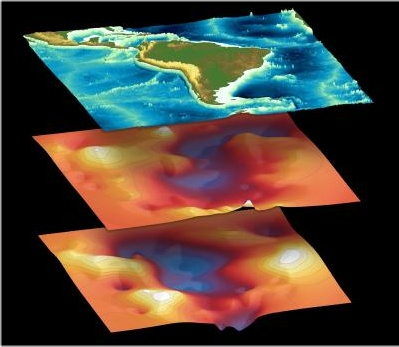
Since we can’t sample the deepest regions of the Earth, scientists watch the velocity of seismic waves as they travel through the planet to determine the composition and density of that material.

A new study suggests that material in part of the lower mantle has unusual electronic characteristics that make sound propagate more slowly, suggesting that the material there is softer than previously thought.

The results in the January 25, 2008, issue of Science call into question the traditional techniques for understanding this region of the planet.

Old people generally mellow with age. They are less likely to be confrontational and more likely to reflect on the world. They are also more likely to have families they care about and thus something to lose.

That goes for terrorists also, according to a new theory by Mark Haas of Duquesne University in the latest Public Policy & Aging Report (PP&AR). It says several hotbed areas in the world that offer the motive and opportunity for political violence are due to stabilize by the year 2030 because current young people will be old.

ESA’s orbiting gamma-ray observatory, Integral, has made the first unambiguous discovery of highly energetic X-rays coming from a galaxy cluster. The find has shown the cluster to be a giant particle accelerator.

The Ophiuchus galaxy cluster is one of brightest in the sky at X-ray wavelengths. The X-rays detected are too energetic to originate from quiescent hot gas inside the cluster and suggest instead that giant shockwaves must be rippling through the gas. This has turned the galaxy cluster into a giant particle accelerator.

Most of the X-rays come from hot gas in the cluster, which in the case of Ophiuchus is extremely hot, at 100 million degrees Kelvin. Four years ago, data from the Italian/ Dutch BeppoSAX satellite showed a possible extra component of high-energy X-rays in a different cluster, the Coma cluster.

Ice loss in Antarctica increased by 75 percent in the last 10 years due to a speed-up in the flow of its glaciers and is now nearly as great as that observed in Greenland, according to a new, comprehensive study by UC Irvine and NASA scientists.

In a first-of-its-kind study, an international team led by Eric Rignot, professor of Earth system science at UCI and a scientist with NASA’s Jet Propulsion Laboratory, Pasadena, Calif., estimated changes in Antarctica’s ice mass between 1996 and 2006 and mapped patterns of ice loss on a glacier-by-glacier basis. They detected a sharp jump in Antarctica’s ice loss, from enough ice to raise global sea level by 0.3 millimeters (.01 inches) a year in 1996, to 0.5 millimeters (.02 inches) a year in 2006.

