





Malaria is a leading killer in Africa and other developing countries, claiming more than 1 million lives each year, most of them children.

A small clinical trial conducted by an international team of researchers in Mali has found that a candidate malaria vaccine was safe and elicited strong immune responses in the 40 Malian adults who received it.

The trial was the first to test this vaccine candidate, which is designed to block the malaria parasite from entering human blood cells, in a malaria-endemic country. Based on these promising results, the research team is now conducting trials of this vaccine in 400 Malian children aged 1 to 6 years.

I was puttering around the attic of the Cashominium, trying to sort through some old boxes, and I came across something you all might find interesting. Before any of this makes sense, I need to give you a little family background.

Like many, the Cash family has been here a long time (a long time for America, anyway - here a hundred years is a long time and in Europe a hundred miles is a long distance, so it's all perspective) but we are not blueblooded fancy-pants Mayflower descendants or anything like that. We arrived just over 160 years ago.

The price of oil topped $100 on January 2 and again on January 3. During the days since I have received emails and phone calls from regular readers, complimenting me on my correct prediction.
http://www.sciencedaily.com/releases/2008/01/080109173722.htm

The above address is a post on Science Daily about an antimatter cloud. This should be of interest to the hard core science types and SiFi fans like myself.

The post describes an antimatter cloud that surrounds the galactic center. This cloud is about 10,000 light-years across. The European Space Agency’s "Integral" satellite has provided clues to the possible origin of this antimatter cloud. This post is well worth reading.

Researchers at the University of Sheffield writing in Proceedings of the Royal Society B have shown that mothers are choosing to have fewer children in order to give their children the best start in life, but by doing so are going against millenia of human evolution. The research sheds new light on the decline of modern day fertility.

Researchers Duncan Gillespie, Dr Virpi Lummaa and Dr Andrew Russell, all from the University’s Department of Animal and Plant Sciences, studied Finnish church records from the 18th and 19th centuries and traced the reproductive histories of 437 women, their 2888 children and 6470 grandchildren.

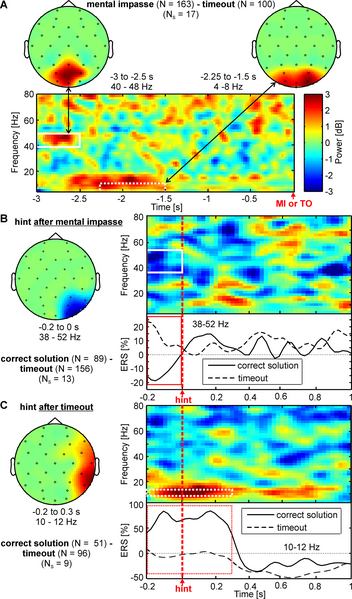
Cognitive insight, those flashes of brilliance when a mental breakthrough happens, are widely recognized but very little is known about their constituent cognitive components and underlying neural mechanisms. It is also unclear why trying too hard does more harm than good.

In a study published in PLoS ONE, researchers at Goldsmiths College, London, investigated brain rhythms and their dynamics while human volunteers solved verbal problems.

Often, the participants reached a state of mental block and could not progress further.

Electrochemical DNA biosensors are a growing field and a new study published in PLoS Biology shows that the next generation in odor detection technology could involve artifical noses based on DNA.

The study demonstrates a previously unreported property of deoxyribonucleic acid; single-stranded DNA molecules tagged with a fluorescent reporter and dried onto solid surfaces can respond to vapor phase odor pulses in a sequence-selective manner.

In the context of detecting chemicals in either the aqueous or vapor phase, two general biological approaches have emerged. The first relies on individual, highly specific single receptors (sensors), each tuned to detect a single molecular species.

Evolution is shouting a message at us. Yes, evolution herself. That imperative? Get your ass and the asses, burros, donkeys and cells of your fellow species—from bacteria and plants to fish, reptiles, and mammals—off this dangerous scrap of a planet and find new niches for life.

Take The Grand Experiment Of Cells And DNA, the 3.85-billion-year Project Of Biomass, to other planets, moons, orbiting habitats, and galaxies. Give life an opportunity to thrive, to reinvent itself, to turn every old disaster, every pinwheeling galaxy, into new opportunity.

Do this as the only species Nature has generated that’s capable of deliberate travel beyond the atmosphere of Earth. Do it as the only species able to take on the mission of making life multi-planetary. Accept that mission or you may well eliminate yourself and all the species that depend on you—from the microorganisms making folic acid and vitamin K in your gut to wheat, corn, cucumbers, chickens, cows, the yeast you cultivate to make beer, and even the bacteria you use to make cheese. What’s worse, if you fail to take life beyond the skies, the whole experiment of life—including rainforests, whales, and endangered species —may die in some perfectly normal cosmic catastrophe.

Metabolic syndrome, also known as metabolic syndrome X, is commonly used to describe the associations of various risk factors in diabetes and cardiovascular disease.

Based on a study of 8,028 individuals representative of the general population aged over 30 who attended a nationwide health examination survey, researchers writing in PLoS ONE have concluded that seasonal changes in weight increase the risk for metabolic syndrome.

In people having 'winter blues', the risk of metabolic syndrome is heightened by 56 per cent.

More giving information and less giving direction is the advice of a group at the Albert Einstein College of Medicine of Yeshiva University mid-way to the drafting of the 2010 nutrition guidelines.

For nearly three decades, Americans have become accustomed to hearing about the latest dietary guidelines, which are required by federal regulation to be revised and reissued at five-year intervals.


