





The running joke in science has always been that the metric system was invented by the French to combat English predominance culturally - and they got the measurement wrong.

Still, it caught on ( though the French calendar didn't ) and that International System of Units (SI) is used on everything from beer cans to Olympic races. But some of it still isn't entirely accurate, as discussed in Making A More Accurate Kilogram ( along with that same poke at the French ) because man-made objects can change.

The English could have the last laugh. U.K.

There are multiple reasons why the world is still plagued by diseases we cannot treat or vaccinate against and the overall complexity of the human immune system is one of them - in fact, say Danish researchers, each of our immune systems has a unique code-like mechanism that prevents it from being deceived.

They have developed a method to expose this crucial part of the immune system's defense mechanisms which could lead to entirely new vaccines and treatments.

The researchers from BioCentrum DTU and the Faculty of Health Sciences at the University of Copenhagen have created models of neural networks which can simulate how the immune system defends itself from disease.

A report that appears in the scientific journal Genome Research details the first assembly, annotation, and comparative analysis of the domestic cat genome (Felis catus).

The DNA of a 4-year-old Abyssinian cat named Cinnamon, whose well-documented lineage can be traced back several generations to Sweden, has been sequenced. Cinnamon is one of several mammals that are currently being analyzed using “light” (two-fold) genome sequence coverage. To make sense of Cinnamon’s raw sequence data, a multi-center collaboration of scientists leveraged information from previously sequenced mammalian genomes as well as previous gene-mapping studies in the cat.

Large-scale fires may have pumped as much carbon dioxide into the atmosphere in a few weeks as motor vehicle traffic does in a year, according to research by scientists at the National Center for Atmospheric Research (NCAR) and the University of Colorado at Boulder.

However, they caution that their estimates have a margin of error of about 50 percent, both because of inexact data about the extent of fires and varying estimates of the amount of carbon dioxide emitted by different types of blazes.

Researchers Christine Wiedinmyer of NCAR and Jason Neff of the University of Colorado, used satellite observations of fires and a new computer model, developed by Wiedinmyer, that estimates carbon dioxide emissions based on the mass of vegetation burned.

The U.S. spends more than double what other countries spend for medical care, $6,697 per capita in 2005, but a new Commonwealth Fund seven-nation survey finds that U.S. patients are more likely to skip care because of costs.

The study surveyed 12,000 adults in Australia, Canada, Germany, the Netherlands, New Zealand, the United Kingdom, and the United States. One third of U.S. adults called for rebuilding the system, the highest rate in any country surveyed. The U.S. also ranked last in saying only minor changes are needed in the health system.

Canadian patients are least likely to be able to get a same-day appointment with their physicians when sick and the most likely to seek care in emergency rooms as an alternative.

U.S.

We are moving toward the end of 2007 and there are still people that question whether the planet is warming up and more specifically whether humans have anything to do with it. I have listened to and read some of the thinking of these people and it falls into several categories. First, and this is true, there are people, Republicans mostly, that cannot stand Al Gore – they still remember his self righteous sighing in 2000 - and are therefore tying the message with the messenger. Second, there are those that are natural contrarians, so they will naturally react negatively when every Hol

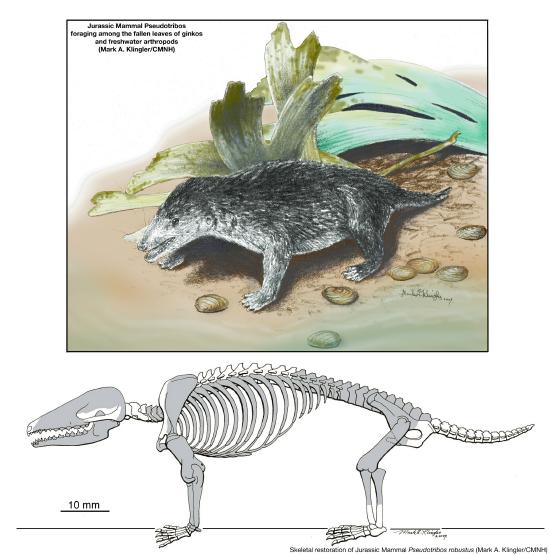
A team of Chinese and American scientists has discovered a new mammal from the 165 million-year-old lakebeds of the Jurassic Period in Northern China.

The find is reported in the November 1st issue of the journal Nature.

Supermassive black holes can produce powerful winds that shape a galaxy and determine their own growth, confirms a group of scientists from Rochester Institute of Technology.

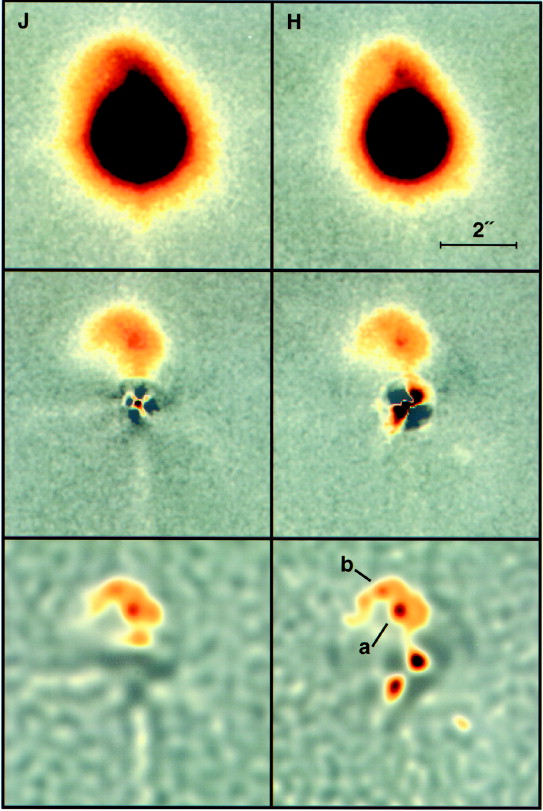
The RIT team has, for the first time, observed the vertical launch of rotating winds from glowing disks of gas, known as accretion disks, surrounding supermassive black holes in the centers of galaxies. The findings are reported in the Nov. 1 issue of Nature.

Gas flowing into a supermassive black hole first accumulates in a rapidly spinning accretion disk, which forms the engine of a quasar, a type of active galactic nucleus found in some galaxies and an extremely powerful source of radiation.

Charting the circuitry of the brain and nervous system just got a lot more fun.

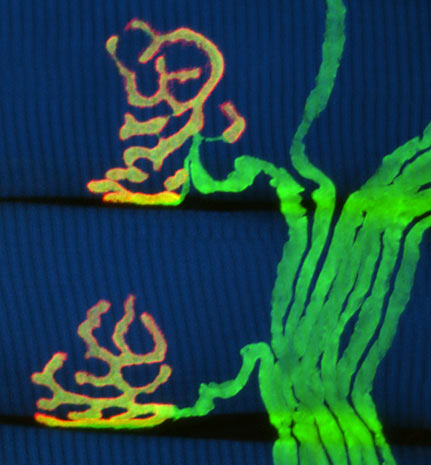
By activating multiple fluorescent proteins in neurons, neuroscientists at Harvard University are imaging the brain and nervous system as never before, rendering cells with 90 distinct colors which they dubbed a "Brainbow."

Brainbow is a huge leap over the handful of shades possible with current fluorescent labeling. By permitting visual resolution of individual brightly colored neurons, this increase should greatly help neuroscientists in understanding how our brains function.


Confocal reconstructions of the neuromuscular unctions on two adjacent muscle fibers from an adult YFP transgenic mouse.

The most emails I ever received about an article was Social Science And Social News Sites because of a very small part of the article where we mentioned that we swapped out the Digg submission button with Slashdot.

My take was that our kind of serious science content is just not right for Digg, since the last hundred or so articles were buried by readers and thus not a good fit for their audience. Not so, said the people who wrote. They contended Digg has an internal bury list and that it was probably marketing related rather than being done by users.

