



“Survival of the fittest” has popularly described evolution for more than a century, but a new study published in the Royal Society journal Biology Letters provides further evidence that random genetic mutations over millions of years may also play a powerful role.

Florida and California scientists are the first to link the evolution of proteins — the organic compounds that determine the structure and function of living things — to a species’ metabolic rate.

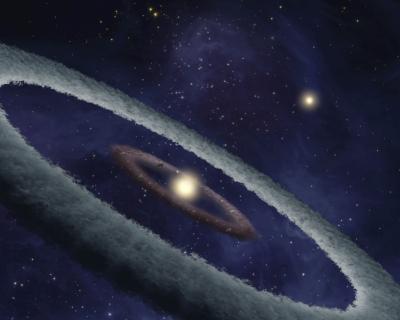
An Earth-like planet is likely forming 424 light-years away in a star system called HD 113766, say astronomers using NASA's Spitzer Space Telescope.

Scientists have discovered a huge belt of warm dust – enough to build a Mars-size planet or larger – swirling around a distant star that is just slightly more massive than our sun. The dust belt, which they suspect is clumping together into planets, is located in the middle of the system's terrestrial habitable zone. This is the region around a star where liquid water could exist on any rocky planets that might form. Earth is located in the middle of our sun's terrestrial habitable zone.

At approximately 10 million years old, the star is also at just the right age for forming rocky planets.

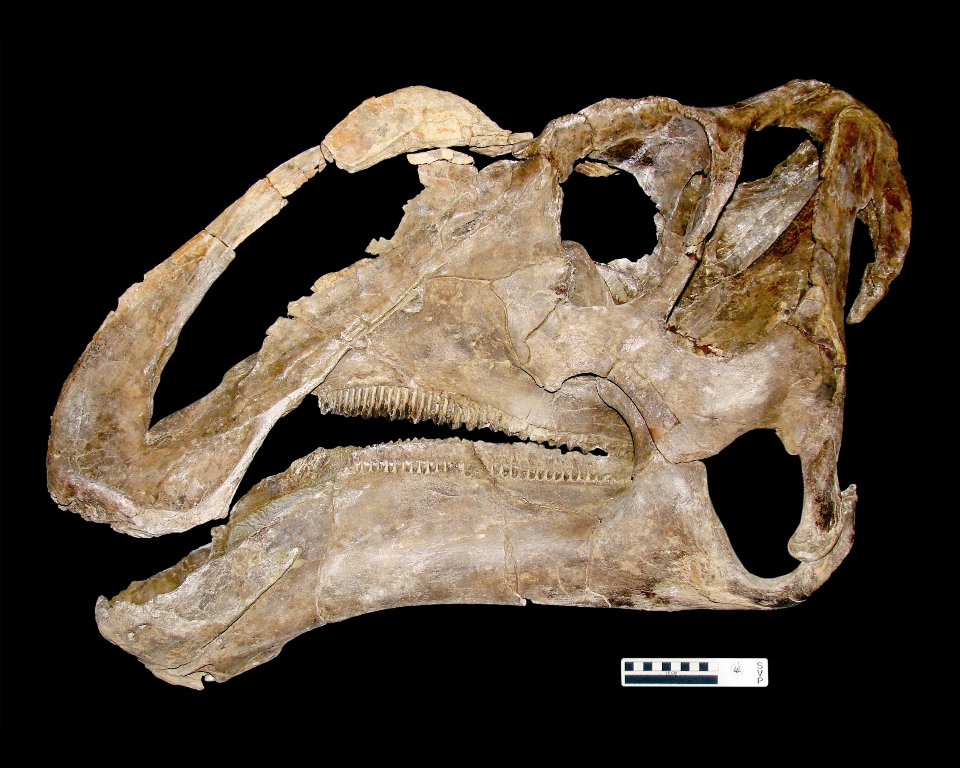
The newest dinosaur species to emerge from Grand Staircase-Escalante National Monument had some serious bite, according to researchers from the Utah Museum of Natural History (UNMH) at the University of Utah. “It was one of the most robust duck-billed dinosaurs ever,” said lead author Terry Gates. “It was a monster.”

Researchers from the Utah museum, the national monument and California’s Raymond M. Alf Museum of Palaeontology unearthed fossils of this ancient plant-eater from the rocks of the Kaiparowits Formation. Researchers announced the name of the creature – Gryposaurus monumentensis.

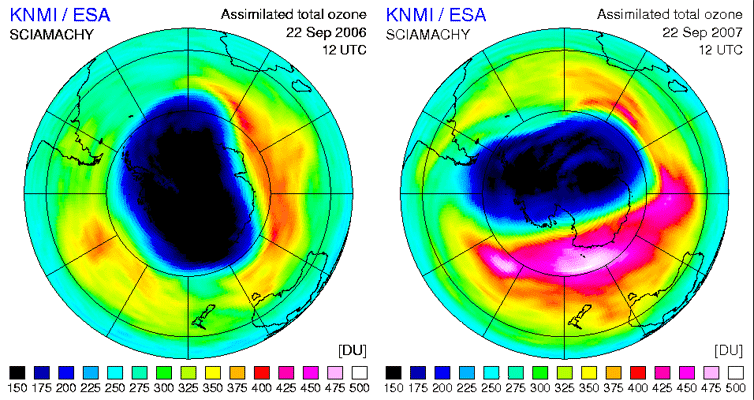
The ozone hole over Antarctica has shrunk 30 percent as compared to last year's record size. According to measurements, this year’s ozone loss peaked at 27.7 million tons, compared to the 2006 record ozone loss of 40 million tons.

Ozone is a protective layer found about 15 miles above us, mostly in the stratospheric stratum of the atmosphere that acts as a sunlight filter shielding life on Earth from harmful ultraviolet rays. Over the last decade the ozone layer has thinned by about 0.3% per year on a global scale, increasing the risk of skin cancer, cataracts and harm to marine life.

Researchers at UCLA have developed a model that could help engineers and scientists speed up the development of hydrogen-fueled vehicles by identifying promising hydrogen-storage materials and predicting favored thermodynamic chemical reactions through which hydrogen can be reversibly stored and extracted.

The new method, published in Advanced Materials, was developed by Alireza Akbarzadeh, a UCLA postdoctoral researcher in the department of materials science and engineering; Vidvuds Ozolins, UCLA associate professor of materials science and engineering; and Christopher Wolverton, professor of materials science and engineering at Northwestern University in Illinois.

Einstein's Theory Of General Relativity has been under assault for the better part of a century. No one can really prove it wrong but it's commonly assumed to be wrong.

Neural prosthetic devices represent an engineer's approach to treating paralysis and amputation. Electronics are used to monitor the neural signals that reflect an individual's intentions for the prosthesis or computer they are trying to use.

With atoms and molecules in a gas moving at thousands of kilometres per hour, physicists have long sought a way to slow them down to a few kilometres per hour to trap them.

A group of physicists from The University of Texas at Austin have found a way to slow down, stop and explore a much wider range of atoms than ever before.

Inspired by the coilgun that was developed by the University’s Center for Electromechanics, the group has developed an "atomic coilgun" that slows and gradually stops atoms with a sequence of pulsed magnetic fields.

Scientists at the University of Missouri-St. Louis used DNA sequences from feather lice to study how island populations of their host, the Galápagos Hawk might have colonized the Galápagos islands, home to the endangered and declining raptor.

The study, focuses on genes from three parasite species restricted to the Galápagos Hawk. The scientists also sequenced the same genes in the hawk to compare levels of genetic variation across these distantly related species.

New York City’s infant mortality rate – widely regarded as a barometer of a population’s general health – fell slightly in 2006, the Health Department reported today. The rate in 2006 was 5.9 infant deaths for every 1,000 births, down from 6.0 the previous year. The City has made major progress in reducing infant deaths since the early 1990s, when the rate was double what it is today, but the decline has leveled off in recent years. The Health Department also reported that in poorer sectors of the city, infant mortality rates are still double the citywide rate.

In 2006, there were 740 infant deaths (defined as deaths of infants less than a year old) out of 125,506 New York City births.

