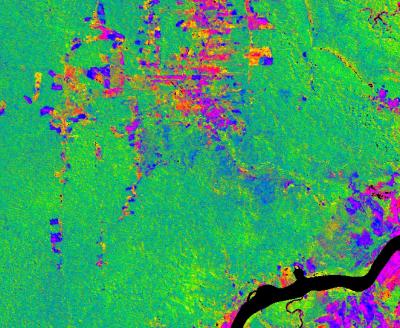
A new regional study shows that land-use policies in Peru have been key to tempering rain forest degradation and destruction in that country. Scientists at the Carnegie Institution’s Department of Global Ecology led an international effort to analyze seven years of high-resolution satellite data covering most (79%) of the Peruvian Amazon for their findings. The work is published in the August 9, 2007, on-line edition of Science Express.

The scientists found that the government’s program of designating specific regions for legal logging, combined with protection of other forests, and the establishment of territories for indigenous peoples helped keep large-scale rain forest damage in check between the years 1999 and 2005.

MeteorIf you can get away from the city lights this weekend, conditions are perfect to view the annual Perseid Meteor shower that is expected to peak Sunday night and into Monday morning, August 12th and 13th. Because we will be experiencing a new moon this weekend, there will be no moonlight to interfere with the spectacular show as meteors streak across the sky.



Modern communication technologies offer many new opportunities for reaching out to people. Can it also help patients with mental disorders?

Maybe. A group of investigators of the University of Heidelberg has published a controlled study on a new method of group therapy treatment based on internet chat in the July issue of Psychotherapy and Psychosomatics.

Following traditional impatient treatment, this study investigated the effectiveness of group therapy delivered through internet chat.

Is there a definitive test for mental illness? Not yet, but using advanced neuropsychiatric diagnostic tools including magnetic resonance imaging (MRI) and positron emission tomography (PET), mental health professionals at The Menninger Clinic in Houston are pinpointing the causes of behavioral and psychiatric problems in patients.

“Even though a patient may have a straightforward mental health diagnosis or diagnoses, the neuropsychiatric approach can help us rule out medical or neurological reasons for the patient’s symptoms before we settle on a psychiatric reason,” says Florence Kim, M.D., director of the Menninger Comprehensive Psychiatric Assessment Service.

Nectar-feeding bats burn sugar faster than any other mammal on Earth – and three times faster than even top-class athletes – ecologists have discovered. The findings, published in the British Ecological Society's journal Functional Ecology, illustrate that because they live life on an energetic knife edge, these bats are very vulnerable to any changes in their environment that interrupt their fuel supply for even a short period.

Working with a captive breeding colony in Germany, Dr Christian Voigt of the Leibniz Institute for Zoo and Wildlife Research in Berlin and Professor John Speakman of the University of Aberdeen fed long-tongued bats (Glossophaga soricina) sugar labelled with non-radioactive carbon-13 and then measured the amount of carbon-13 in the bats’ exhaled breath.

According to the Centers for Disease Control, 7% of the U.S. population has diabetes, and 90-95% of those cases are classified as type 2 diabetes. Type 2 diabetes is caused by external factors -namely diet and exercise - but is also influenced by several genes.

A two-dimensional “paper” made out of titanium-dioxide – also known as TiO2, titania and titanium white – nanowires has been developed. The nanowires have a diameter of 60 nanometers (a nanometer equals one billionth of meter ) and are 30 to 40 millimeters long. The nanowires can withstand temperatures up to 700 degrees Celsius and could provide solutions for a variety of applications, including chemical and water filtration, solar cells, drug delivery and non-woven textiles stable at high-temperature.

“It is unprecedented to have such a pure fiber,” said James Throckmorton, president of Intellectual Property Partners LLC, which acquired the technology from Z. Ryan Tian, an assistant professor of chemistry and biochemistry at the University of Arkansas.

Researchers at Sandia National Laboratories in Albuquerque, N.M. and Livermore, Calif., are part of a Defense Advanced Research Projects Agency (DARPA) -funded team led by UOP, LLC, a Honeywell company, looking at the production of military Jet Propellant 8 (JP-8) fuel based on the use of renewable biomass oil crop feedstocks, including microalgae.

The goal of the 18-month effort, which is backed by a $6.7 million project award from DARPA, is to develop and commercialize a process to produce the Jet Propellant 8 (JP-8) fuel used by U. S.

Heart disease hits people with diabetes twice as often as people without diabetes. In those with diabetes, cardiovascular complications occur at an earlier age and often result in premature death, making heart disease the major killer of diabetic people. But why is heart disease so prevalent among diabetics?

To help answer that question, researchers at Washington University School of Medicine in St. Louis have been analyzing the fat (lipid) composition of heart tissue from laboratory mice with diabetes. They have found that heart cells of diabetic mice lose an important lipid from cellular components that generate energy for the heart, and their latest research shows this happens at the very earliest stages of diabetes.

Alcohol and smoking can be harmful, if not deadly. While the desire for these substances can be due to environmental cues, genomic factors also play an important role. The etiology of these desires is multifactorial and a result of complex interactions with the environment. Adoption and twin studies have shown that the use of these substances is likely to be inherited. Such studies have provided evidence that one’s sex can influence the genetic factors for alcohol and tobacco use.

In an attempt to find the genomic determinants underlying alcohol and tobacco use, researchers examined 120 families (approximately 900 individuals). The researchers identified an area relating to alcohol and tobacco use on chromosome 1. They found another area relating to alcohol on chromosome 3.





