The oldest colors in the geological record have been discovered. At 1.1 billion-years-old, the bright pink pigments extracted from marine black shales of the Taoudeni Basin in Mauritania, West Africa, are actually molecular fossils of chlorophyll that were produced by ancient photosynthetic organisms - cyanobacteria.
The fossils range from blood red to deep purple in their concentrated form, and bright pink when diluted and are more than half a billion years older than previous pigment discoveries. The rocks deep beneath the Sahara desert in Africa, remnants of an ancient ocean that has long since vanished, were rocks to powder (yes, you read that right, but nature has a lot more) before extracting and analyzing molecules of ancient organisms from them.
There has been recent concern about the impact of vaping flavors on young people but the numbers are fuzzy. The US FDA
has rightly cracked down on companies flagrantly violating copyright in packaging but cartoon characters don't lead young people to vaping. Instead, former smokers note, young people who experiment with it but don't already smoke often just want to seem cool, and there is nothing cool about bubble gum flavor.
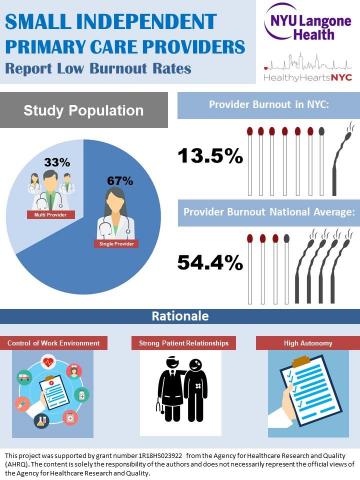
Physicians who work in small, independent primary care practices, offices with five or fewer physicians, report dramatically lower levels of burnout than the national average,
according to survey results published in the
Journal of the American Board of Family Medicine.
The findings indicate that the independence and sense of autonomy that doctors have in small practices may provide some protection against symptoms of burnout. Whether that feeling of autonomy will last as health care becomes more centralized is another issue, but for now 13.5 percent reporting being burned out in smaller practices versus 54.4 percent at large ones.
If you want to understand the spread of antibiotic resistance across Europe, sexually transmitted diseases seem to be a decent barometer.
Gonorrhea,
caused by the bacterium Neisseria gonorrhoeae, is the second most prevalent bacterial sexually transmitted disease globally. The WHO estimates that Gonorrhea infects 88 million people globally each year. Amongst other complications, it can cause pelvic inflammatory disease and infertility if left untreated, and in some cases leads to life-threatening complications such as meningitis. Transmitted during unprotected sex, many strains of Gonorrhea are now difficult to treat due to the rise in antibiotic resistance.
A new study using a massive database of scientific articles, 486,644 articles with two to nine authors published in medical journals by U.S. scientists between 1946 and 2009, suggests that minority women are not double penalized by being minorities and women, but they do have what might be called a "one-and-a-half bind." They are still worse off than other groups, but their disadvantage is less than the disadvantage of being black or Hispanic plus the disadvantage of being a woman.
There are obvious confounders. Medical journals are a small subset of journals and journals will have more academic representation, since that is the metric government panels use to give out grants, a concern private sector scientists don't have.
A.I. - artificial intelligence - has seen a resurgence of buzzword activity. It's the Internet of Things for 2018. But if the limitation is the algorithm underneath, it's not really AI.
Francisella tularensis bacteria are the cause of tularemia, a life-threatening disease spread to humans via contact with an infected animal or through the bite of a mosquito, tick or deer fly. The bacteria are able to suppress host inflammation when infecting mouse and human cells - and lipids help. A lipid is waxy, fatty acid but what helps bacterium to impair the host immune response and increase the chance of infection may also be a potent inflammation therapy against bacterial and viral diseases.
The P120C solid-fuel rocket motor that will power Ariane 6 and Vega-C at liftoff has been transferred to the test stand for its first hot firing at Europe’s Spaceport.
P120C will replace P80 as the first stage motor of Vega-C, which is expected to debut in mid-2019 and comprises four stages. Three stages will use solid-propellant motors and one will use liquid propellants. The first stage is the P120C, the largest monolithic carbon fiber solid-propellant rocket motor ever built. Two or four P120Cs will also be strapped onto Ariane 6 as boosters for liftoff.
What accounts for modern peace? There are varying ideas. When America won World War II and occupied Germany and Japan in 1945, two militant cultures were off the table, while psychologist Steven Pinker argues in 2011's "The Better Angels of Our Nature" argues that there has been a continuous decline in the relative levels of virtually all types of violence, and he writes of a “humanitarian revolution”, driven by democracy, trade and information. Perhaps World War II, and the implementation of "total war" and nuclear weapons, sent wars into decline - at least major wars.