




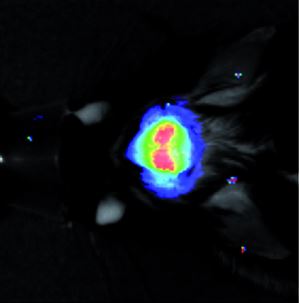
Testudinid herpesvirus 3 ( TeHV-3) is a herpes virus causing high mortality rates in several protected species of tortoises (including Hermann’s tortoise).

According to observations from the Tihany Magnetic Observatory in Hungary, the indices used by scientists to assess the Sun's geomagnetic perturbations to the Earth are unable to detect some of these events, which could put both power supply and communication networks at risk.

The Tihany Magnetic Observatory registered a solar storm similar to the largest one ever recorded while other observatories were completely unaware of the event.

Durable crystals called zircons are used to date some of the earliest and most dramatic cataclysms of the solar system. One is the super-duty collision that ejected material from Earth to form the moon roughly 50 million years after Earth formed. Another is the late heavy bombardment, a wave of impacts that may have created hellish surface conditions on the young Earth, about 4 billion years ago.

Both events are accepted but unproven and the dates were estimated from zircons retrieved from the moon during NASA's Apollo voyages in the 1970s.

Using flexible organic circuits and specialized pressure sensors, researchers have created an artificial "skin" that can sense the force of static objects. Furthermore, they were able to transfer these sensory signals to the brain cells of mice in vitro using optogenetics.

For the many people around the world living with prosthetics, such a system could one day allow them to feel sensation in their artificial limbs.

To create the artificial skin, Benjamin Tee et al. developed a specialized circuit out of flexible, organic materials. It translates static pressure into digital signals that depend on how much mechanical force is applied. A particular challenge was creating sensors that can "feel" the same range of pressure that humans can.

Could Hillary Clinton and Carly Fiorina find agreement on one of the most contentious issues dividing America's two political parties today -- climate change? Is it possible they could move past the debate about who or what causes climate change and focus on how modern technology can protect the environment and improve the lives of millions around the globe?
A study of brain imaging reveals how neural responses to different types of music really affect the emotion regulation of persons - especially in men, who process negative feelings with music and react negatively to aggressive and sad music, according to the findings.

The JAMA Neurology feature "Images in Neurology" features the case of a 25-year-old right-handed physical education student who was buried by an avalanche during a ski tour and endured 15 minutes of hypoxia (oxygen deficiency). He developed involuntary myoclonic jerking (brief, involuntary twitching of muscles) of the mouth induced by talking and of the legs by walking. Weeks later when he was trying to solve Sudoku puzzles he developed clonic seizures (rapid contractions of muscles) of the left arm. The seizures stopped when the Sudoku puzzle was discontinued. Berend Feddersen, M.D., Ph.D., of the University of Munich, Germany, and coauthors suggest oxygen deficiency most likely caused some damage to the brain.

Our ability to learn, move, and sense our world comes from the neurons in our brain. The information moves through our brain between neurons that are linked together by tens of trillions of tiny structures called synapses.

Although tiny, synapses are not simple and must be precisely organized to function properly. Indeed, diseases like autism and Alzheimer's are increasingly linked to defects in the organization and number of these tiny structures. Now researchers at Thomas Jefferson University have found a new way in which synapses organization is controlled, which could eventually lead to better treatments for neurological diseases.

In nutrition, the saying goes, 'in the old days you had to be rich to be fat, now you have to be rich to be thin.' 

We have a biological mandate to try and ride out food booms and busts by consuming as many calories as we can, when we can. Rich people can take that out of their hands by paying for people to tell them to exercise and what not to eat and so they won't get gout like they once did. Poor people, with less disposable income, will shop for calorically-dense foods. 

Try to remember a phone number, and you're using what's called your sequential memory. This kind of memory, in which your mind processes a sequence of numbers, events, or ideas, underlies how people think, perceive, and interact as social beings. 

"In our life, all of our behaviors and our process of thinking is sequential in time," said Mikhail Rabinovich, a physicist and neurocognitive scientist at the University of California, San Diego.


