Banner
Here's Where Your Backyard Was 300 Million Years Ago

We may use terms like "grounded" and terra firma to mean stability and consistency but geology...

Convergent Evolution Cheat Sheet Now 120 Million Years Old

One tenet of natural selection is a random walk of genes but nature may be more predictable than...

Synchrotron Could Shed Light On Exotic Dark Photons

There are many hypothetical particles proposed to explain dark matter and one idea to explore how...

The Pain Scale Is Broken But This May Fix It

Chronic pain is reported by over 20 percent of the global population but there is no scientific...

User picture.
News StaffRSS Feed of this column.

News Releases From All Over The World, Right To You... Read More »

Blogroll

Increasingly, the public distrusts science and medicine. Much of the reason has been due to lawsuits, some of it has been due to strange beliefs among wealthy elites in well-defined parts of the United States. Due to popularized concerns about the safety of medicine, the approval cycle and the cost is longer than ever - billions of dollars and a dozen or more years unless a disease like Ebola gets into corporate media headlines.

We've long been fascinated by but it has been fictional. Now a team of researchers has created a perceptual illusion of having an invisible body. You won't just 'feel' invisible like no one notices you in a crowd, you can actually feel invisible.

The history of literature features many well-known narrations of invisibility and its effect on the human mind, such as the myth of Gyges' ring in Plato's dialogue The Republic and the science fiction novel The Invisible Man by H.G. Wells.

Recent advances in materials science have shown that invisibility cloaking real world objects might soon be possible in the visible light spectrum. How might invisibility affect our brain and body perception?

Higher elevations around the world may be warming much faster than previously thought, according to a paper which reviewed elevation-dependent warming mechanisms such as loss of snow and ice, increased latent heat release at high altitudes, low-elevation aerosol pollutants that increase the difference in warming rates between low and high elevations, plus other factors that enhance warming with elevation in different regions, and in different seasons. 

Rapid treatment with a new anti-inflammatory called
C5aR
could have a major impact on recovery from spinal cord injury.

University of Queensland School of Biomedical Sciences researchers Dr. Marc Ruitenberg and Ph.D. student Faith Brennan said they made the discovery during laboratory trials with an experimental drug. Brennan said that excessive inflammation caused additional damage in spinal cord injuries and hindered recovery. 

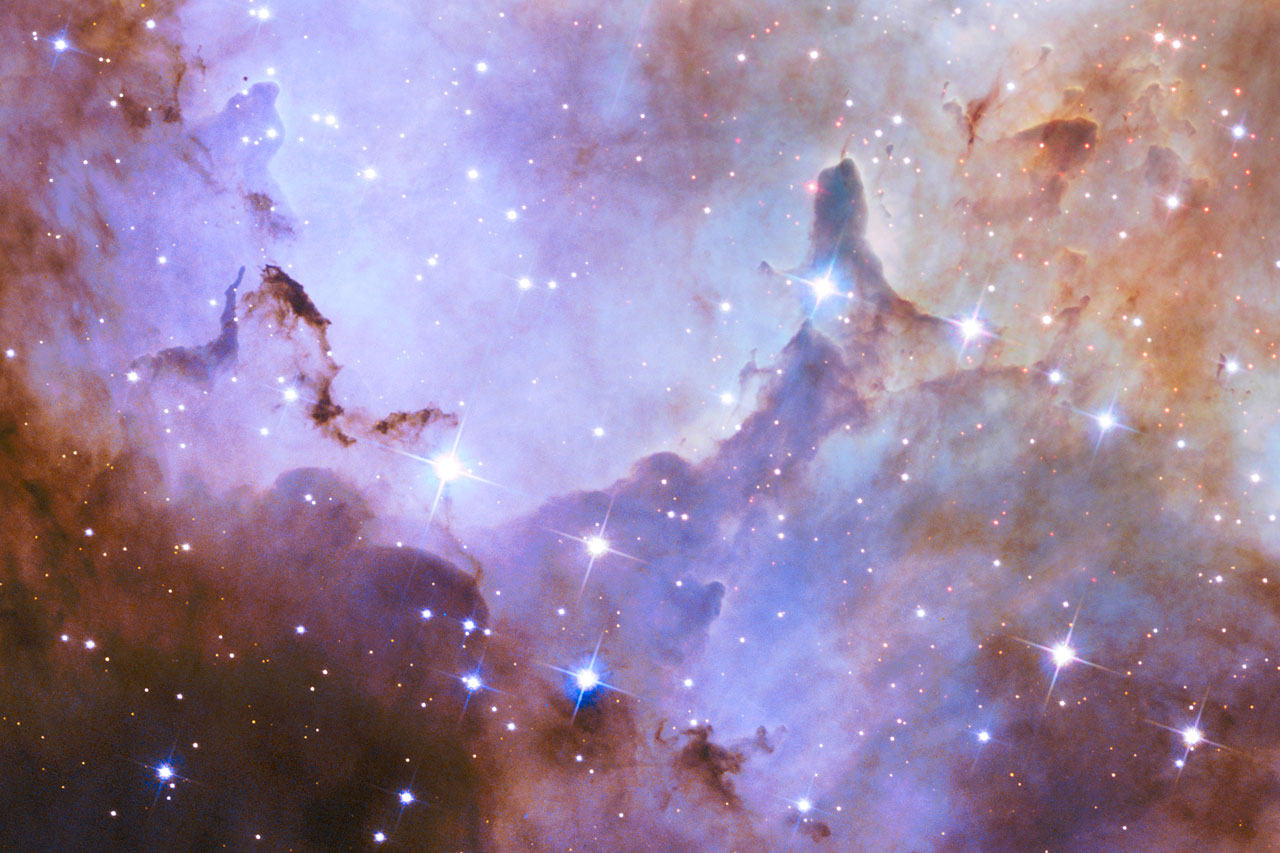
The Hubble Space Telescope is almost old enough to buy its own health insurance! 

Tomorrow, April 24th, the Hubble Space Telescope will turn 25. For much of that time, it has been a few hundred miles away, providing a peek into the cosmos. It has long exceeded its mission life (good thing too, it's successor will be a decade past its original completion date and 900% over budget, if it even goes up on the latest 2018 date) but that is okay, Hubble shows no signs of letting up.

One cornerstone of the Science 2.0 approach is the framework for making Big Data manageable. In fields from physics to biology, it's no longer a question of obtaining data, but managing it in ways that are relevant.


It's been problematic in science just as it has been in business and the public sector because relationships between the different parts of a network have been represented as simple links, regardless of how many ways they can actually interact, and that results in a loss of valuable information in science.