Banner
Here's Where Your Backyard Was 300 Million Years Ago

We may use terms like "grounded" and terra firma to mean stability and consistency but geology...

Convergent Evolution Cheat Sheet Now 120 Million Years Old

One tenet of natural selection is a random walk of genes but nature may be more predictable than...

Synchrotron Could Shed Light On Exotic Dark Photons

There are many hypothetical particles proposed to explain dark matter and one idea to explore how...

The Pain Scale Is Broken But This May Fix It

Chronic pain is reported by over 20 percent of the global population but there is no scientific...

User picture.
News StaffRSS Feed of this column.

News Releases From All Over The World, Right To You... Read More »

Blogroll

Invasive plants animals and plants spreading is not new but predicting the dynamics of these invasions is difficult - and of great ecological and socioeconomical interest. Scientists at Eawag and University of Zurich are now using computer simulations and small artificial laboratory worlds, to study how rapid evolution makes invaders spread even faster. 

A new study of animal behavior suggests that evolution is hard at work when it comes to the acrobatic courtship dances of  male golden-collared manakins, a tropical bird species.

There are about 60 different species of manakins, most of which perform, to some degree, a physically complex display behavior to both court females and to compete with other males. The new study says the ability to detect testosterone in the body regulates the acrobatic courtship and competitive behavior - bird brawn.  
Neutrinos are among the more mysterious elementary particles in the universe: Billions of them pass through every cell of our bodies every second, yet these ghostly particles are incredibly difficult to detect, because they don’t appear to interact with ordinary matter.

Scientists have set theoretical limits on neutrino mass, but researchers have yet to precisely detect it.

51 Pegasi b, about 50 light-years from Earth in the constellation of Pegasus, was discovered in 1995 and was the the first confirmed exoplanet to be found orbiting an ordinary star like our Sun. It is the archetypal Hot Jupiter -- a class of planets similar in size and mass to Jupiter but orbiting much closer to their parent stars.

Since that landmark discovery, more than 1,900 exoplanets in 1,200 planetary systems have been confirmed, but 51 Pegasi b now has another "first" - it has been directly detected in visible light.

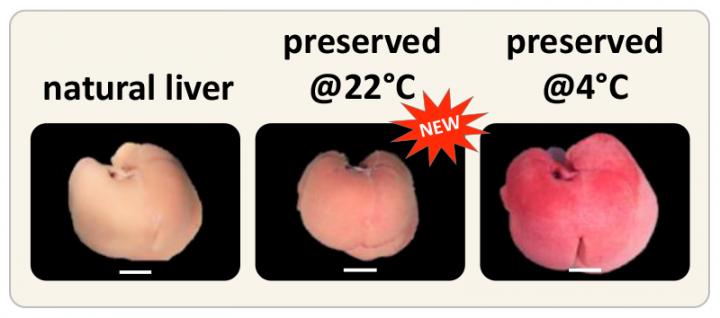
While growing new organs from a patient's own stem cells is the future much of science is working toward, there are people who need replacements right now. Lots of people are signed up for organ donations in the case of death but willing donors is not the biggest obstacle.

It's time.

 Typically, donor organs have to kept in preservation solution at a static temperature of 4 °C and the clock begins ticking immediately. They have short preservation times; about 6 hours for hearts and lungs, 12 hours for livers, and 20 hours for kidneys.
The widely held belief that depression is due to low levels of serotonin in the brain and that raising those levels is an effective treatment is invalid, according to David Healy, Professor of Psychiatry at the Hergest psychiatric unit in North Wales. Instead it is "the marketing of a myth."

The serotonin reuptake inhibiting (SSRI) group of drugs came on stream in the late 1980s, nearly two decades after first being mooted, writes Healy.  The delay centered on finding an indication.