Banner
Here's Where Your Backyard Was 300 Million Years Ago

We may use terms like "grounded" and terra firma to mean stability and consistency but geology...

Convergent Evolution Cheat Sheet Now 120 Million Years Old

One tenet of natural selection is a random walk of genes but nature may be more predictable than...

Synchrotron Could Shed Light On Exotic Dark Photons

There are many hypothetical particles proposed to explain dark matter and one idea to explore how...

The Pain Scale Is Broken But This May Fix It

Chronic pain is reported by over 20 percent of the global population but there is no scientific...

User picture.
News StaffRSS Feed of this column.

News Releases From All Over The World, Right To You... Read More »

Blogroll

Scientists should reduce antibiotic use in lab experiments - according to a researcher at the University of East Anglia.

Microbiology, molecular biology and genetic research such as the Human Genome Project use antibiotics in experiments.

But it all adds to the global problem of antibiotic resistance according to Dr Laura Bowater, from UEA's Norwich Medical School.

A new article published today in the Journal of Antimicrobial Chemotherapy highlights the problem.

Dr Bowater said: "The discovery of antibiotics was heralded as a magic bullet for modern medicine. Using antibiotics in research has transformed scientific discovery. But now antibiotic resistance is a catastrophic threat -and it threatens the achievements of modern medicine.

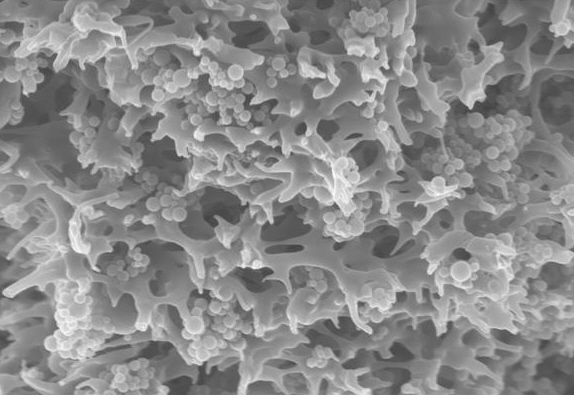
Recycling plastic works, additives to biodegrade plastic do not, according to a new study from Michigan State University which finds that several additives that claim to break down polyethylene (i.e., plastic bags) and polyethylene terephthalate (i.e., soda bottles) simply don't work in common disposal situations such as landfills or composting.

"Making improper or unsubstantiated claims can produce consumer backlash, fill the environment with unwanted polymer debris and expose companies to legal penalties," said Susan Selke, co-author of the study and MSU packaging professor.

Credit: Courtesy of MSU

Like dancers swirling on the dance floor with bystanders looking on, protons and neutrons that have briefly paired up in the nucleus have higher-average momentum, leaving less for non-paired nucleons. Using data from nuclear physics experiments carried out at the Department of Energy's Thomas Jefferson National Accelerator Facility, researchers have now shown for the first time that this phenomenon exists in nuclei heavier than carbon, including aluminum, iron and lead.

In January of 2015 the European Food Safety Authority (EFSA) lowered the threshold value for bisphenol A in packaging.  The scientific determination behind that is irrelevant at this point, the only times Europe backs off on bizarre science assertions are when it comes to things like making ugly fruit illegal to sell or claiming water does not cure thirst, so companies are stuck with creating dubious alternatives or just using less, but the public is often educated by advertising so they want less of it in the environment.
Chronic pain is a common complaint affecting millions of people worldwide. Because it is often a non-specific symptom, proper treatment strategies are more like 'keep doing things until something works'.

A new study has identified a cellular mechanism in the brain of mice that contributes to the development of chronic pain, which the authors believe can lead to a novel pharmacological treatment strategy for chronic pain.  
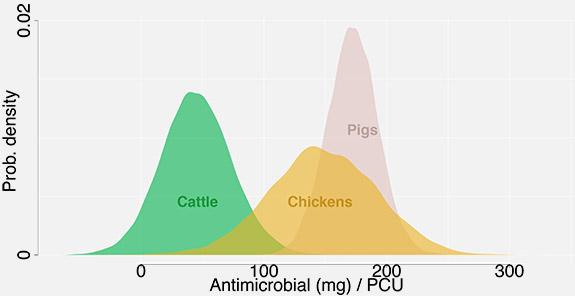
Antibiotic consumption in livestock worldwide could rise by 67 percent from 2010 levels by 2030. What will that mean for the effectiveness of antimicrobials in humans?

Five countries - Brazil, Russia, India, China and South Africa - will experience a growth of 99 percent in antibiotic consumption, compared with an expected 13 percent growth in their human populations over the same period. In the United States, antibiotic consumption in animals represents is the overwhelming majority of total antimicrobial sales.