Banner
Here's Where Your Backyard Was 300 Million Years Ago

We may use terms like "grounded" and terra firma to mean stability and consistency but geology...

Convergent Evolution Cheat Sheet Now 120 Million Years Old

One tenet of natural selection is a random walk of genes but nature may be more predictable than...

Synchrotron Could Shed Light On Exotic Dark Photons

There are many hypothetical particles proposed to explain dark matter and one idea to explore how...

The Pain Scale Is Broken But This May Fix It

Chronic pain is reported by over 20 percent of the global population but there is no scientific...

User picture.
News StaffRSS Feed of this column.

News Releases From All Over The World, Right To You... Read More »

Blogroll

A new paper says that breastfeeding and other factors influence a baby's immune system development and susceptibility to allergies and asthma by what's in their gut. The findings, from a series of studies further advance the so-called hygiene hypothesis theory that early childhood exposure to microorganisms affects the immune system's development and onset of allergies, says Christine Cole Johnson, Ph.D., MPH, chair of Henry Ford's Department of Public Health Sciences and principal research investigator.

Human pluripotent stem cells, which include both human embryonic stem cells(hESCs) and adult stem cells like induced pluripotent stem cells (iPSCs), need large numbers for transplantation into patients but the process of translating their potential into effective, real-world treatments involves deciphering and resolving a host of daunting complexities, according to a new study.

The authors say they have definitively shown that the culture conditions in which stem cells are grown and mass-produced can affect their genetic stability.
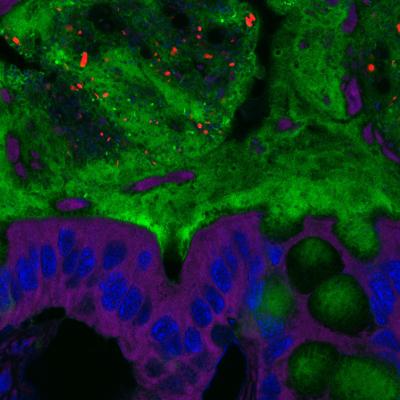
Emulsifiers, which are added to processed foods to aid texture and extend shelf life, can alter the gut microbiota composition and localization to induce intestinal inflammation in mice that promotes the development of inflammatory bowel disease and metabolic syndrome, according to a new study.

The team fed mice two commonly used emulsifiers, polysorbate 80 and carboxymethylcellulsose, at doses seeking to model the broad consumption of the numerous emulsifiers that are incorporated into almost all processed foods. They observed that emulsifier consumption changed the species composition of the gut microbiota and did so in a manner that made it more pro-inflammatory. 

Gender and personality matter in how people cope with physical and mental illness, according to a paper by a Washington State University scientist and colleagues at the University of the Thai Chamber of Commerce.

Men are less affected by a single-symptom illness than women, but are more affected when more than one symptom is present. The number of symptoms doesn't change how women are affected, according to Robert Rosenman, WSU professor in the Department of Economic Sciences. Rosenman worked with Dusanee Kesavayuth and Vasileios Zikos, both at UTCC in Bangkok, Thailand, on the study.

It's hard to hide from a bat: The camouflage and mimicry techniques that animals use to avoid becoming a meal aren't much use against a predator using echolocation. But a new study shows that moths can outsmart sonar with a flick of their long tails.

The study appearing in the Proceedings of the National Academy of Sciences shows luna moths spin their trailing hindtails as they fly, confusing the sonar cries bats use to detect prey and other objects.

What started as an evolutionary protection against starvation has become a biological "bad joke" for people who need to lose weight. The human body doesn't distinguish between dieting and possible starvation, so when there is a decrease in calories consumed, human metabolism increases its energy efficiency and weight loss is resisted.