Banner
Here's Where Your Backyard Was 300 Million Years Ago

We may use terms like "grounded" and terra firma to mean stability and consistency but geology...

Convergent Evolution Cheat Sheet Now 120 Million Years Old

One tenet of natural selection is a random walk of genes but nature may be more predictable than...

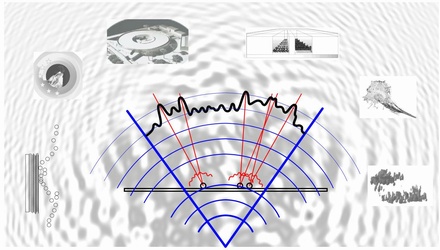
Synchrotron Could Shed Light On Exotic Dark Photons

There are many hypothetical particles proposed to explain dark matter and one idea to explore how...

The Pain Scale Is Broken But This May Fix It

Chronic pain is reported by over 20 percent of the global population but there is no scientific...

User picture.
News StaffRSS Feed of this column.

News Releases From All Over The World, Right To You... Read More »

Blogroll

Recent research has linked autism with a lack of "pruning" in developing brain connections, but a new Dartmouth study suggests instead it is the excessive growth of new connections that causes sensory overload in people with the disorder.

The results, which have broad implications for understanding the neurobiological basis of autism spectrum disorders, appear in The Journal of Neuroscience. A PDF of the study is available on request.

Every business wants to capitalize on imagination and innovation - but a corporate structure may be the wrong way to promote it. And if you really want to kill creativity, have social authoritarians in government controlling your culture.

Collectivism is bad for the imagination. It's hard to think about art when you have to think about the good of the state, according to a paper in the Journal of Business Research, which compared nearly 300 individuals from Taiwan, a collectivist society, and Canada, slightly more individualistic.

Scientists may be on the way to genetically modifying plants to naturally protect against pests in new ways. That is good news for people in developing nations and fans of the environment. Older insecticides present environmental and health risks and insects develop resistance to them, complicating pest-control strategies. 

Along with that, millions of deaths result from diseases transmitted by insects each year, not to mention economic losses totaling billions of dollars annually.
In 1722, when Europeans arrived on Easter Island, nearly 2,300 miles off the west coast of Chile, the native Polynesian culture known as Rapa Nui were already in a demographic tailspin from which they would not recover.

Pick a fad belief of the moment, and someone has correlated it to Easter Island. Environmental damage? Easter Island. Climate change? Easter Island. Add in political partisanship and lifestyle diseases and you can also find a correlation-causation arrow being abused. 

Will there ever be an answer? Hard to say, but a new paper attempts at least some clarification.

Coating the mouth with foods stored in containers that used bisphenol A (BPA), like soup, does not lead to high levels of BPA in blood.

BPA is used to make some plastics and to seal canned food containers against bacterial contamination. Food which picks up trace amounts of BPA from packaging is the major source of human exposure, according to environmental critics, and the health concerns about BPA center on potential to mimic certain hormones at really high exposures.
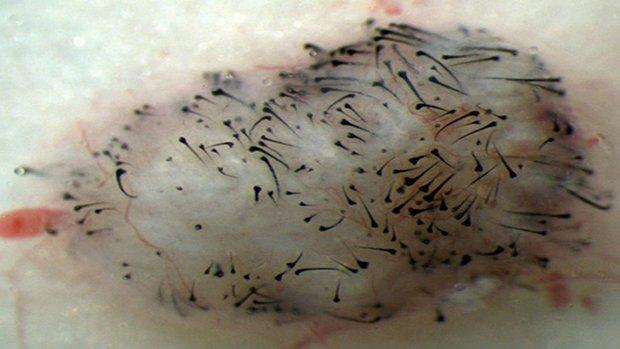
Researchers have used human induced pluripotent stem cells (iPSCs) to generate new hair, the first step toward the development of a cell-based treatment for people with hair loss. 

In the United States alone, more than 40 million men and 21 million women are affected by hair loss. The research team developed a protocol that induced human pluripotent stem cells to become dermal papilla cells. They are a unique population of cells that regulate hair-follicle formation and growth cycle. 

Human dermal papilla cells on their own are not suitable for hair transplants because they cannot be obtained in necessary amounts and rapidly lose their ability to induce hair-follicle formation in culture.