Banner
Here's Where Your Backyard Was 300 Million Years Ago

We may use terms like "grounded" and terra firma to mean stability and consistency but geology...

Convergent Evolution Cheat Sheet Now 120 Million Years Old

One tenet of natural selection is a random walk of genes but nature may be more predictable than...

Synchrotron Could Shed Light On Exotic Dark Photons

There are many hypothetical particles proposed to explain dark matter and one idea to explore how...

The Pain Scale Is Broken But This May Fix It

Chronic pain is reported by over 20 percent of the global population but there is no scientific...

User picture.
News StaffRSS Feed of this column.

News Releases From All Over The World, Right To You... Read More »

Blogroll
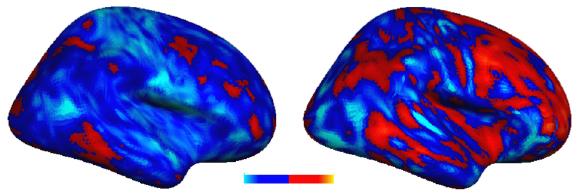
Autism Spectrum Disorder, a broad range of behavioral and cognitive issues that usually impair learning ability, has been studied for many years but there remain far more questions than answers. Some research into the brain functions of individuals with autism spectrum have found a lack of synchronization ('connectivity') between different parts of the brain that normally work in tandem, while other studies have found the opposite: over-synchronization. 

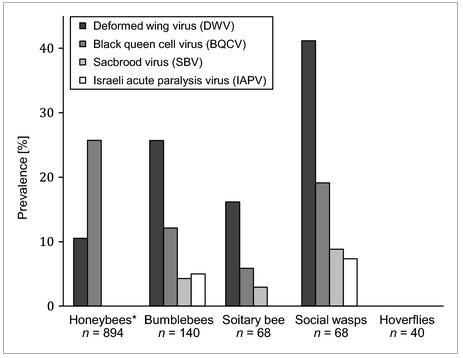
A new review of other studies concludes that viruses carried by commercial bees can jump to wild pollinator populations with potentially devastating effects. Pollinators in some regions have suffered declines and various hypotheses have been offered as to why.

A stem cell capable of regenerating both bone and cartilage has been identified in bone marrow of mice. The discovery by researchers at Columbia University Medical Center (CUMC) is reported today in the online issue of the journal Cell.

The cells, called osteochondroreticular (OCR) stem cells, were discovered by tracking a protein expressed by the cells. Using this marker, the researchers found that OCR cells self-renew and generate key bone and cartilage cells, including osteoblasts and chondrocytes. Researchers also showed that OCR stem cells, when transplanted to a fracture site, contribute to bone repair.

Over 10 percent of patients using aspirin therapy for primary cardiovascular disease prevention shouldn't be doing so, according to a recent paper. 

They were likely either inappropriately prescribed it or do it over the counter, according to a new study that examined practice variations in aspirin therapy by accessing data from the National Cardiovascular Disease Registry Practice Innovation and Clinical Excellence (PINNACLE) Registry. The authors examined a nationwide sample of 68,808 patients receiving aspirin for primary cardiovascular disease prevention and evaluating aspirin guidelines by the American Heart Association, the U.S. Preventative Services Task Force, and other organizations.

Considering environmental effects such as a gravitational tidal force spread over a scale much larger than a galaxy cluster will be indispensable to explain the distribution and evolution of dark matter halos around galaxies, according to a comparison between theory and simulations by researchers at Kavli IPMU and collaborators.

Researchers at the Montreal Heart Institute announced today results showing that patients with cardiovascular disease and the appropriate genetic background benefit greatly from the new medication dalcetrapib, with a reduction of 39% in combined clinical outcomes including heart attacks, strokes, unstable angina, coronary revascularizations and cardiovascular deaths. These patients also benefit from a reduction in the amount of atherosclerosis (thickened walls) in their vessels. The detailed results are published in the prestigious Journal Circulation Cardiovascular Genetics. This discovery may also pave the way for a new era in cardiovascular medicine, with personalized or precision drugs.